

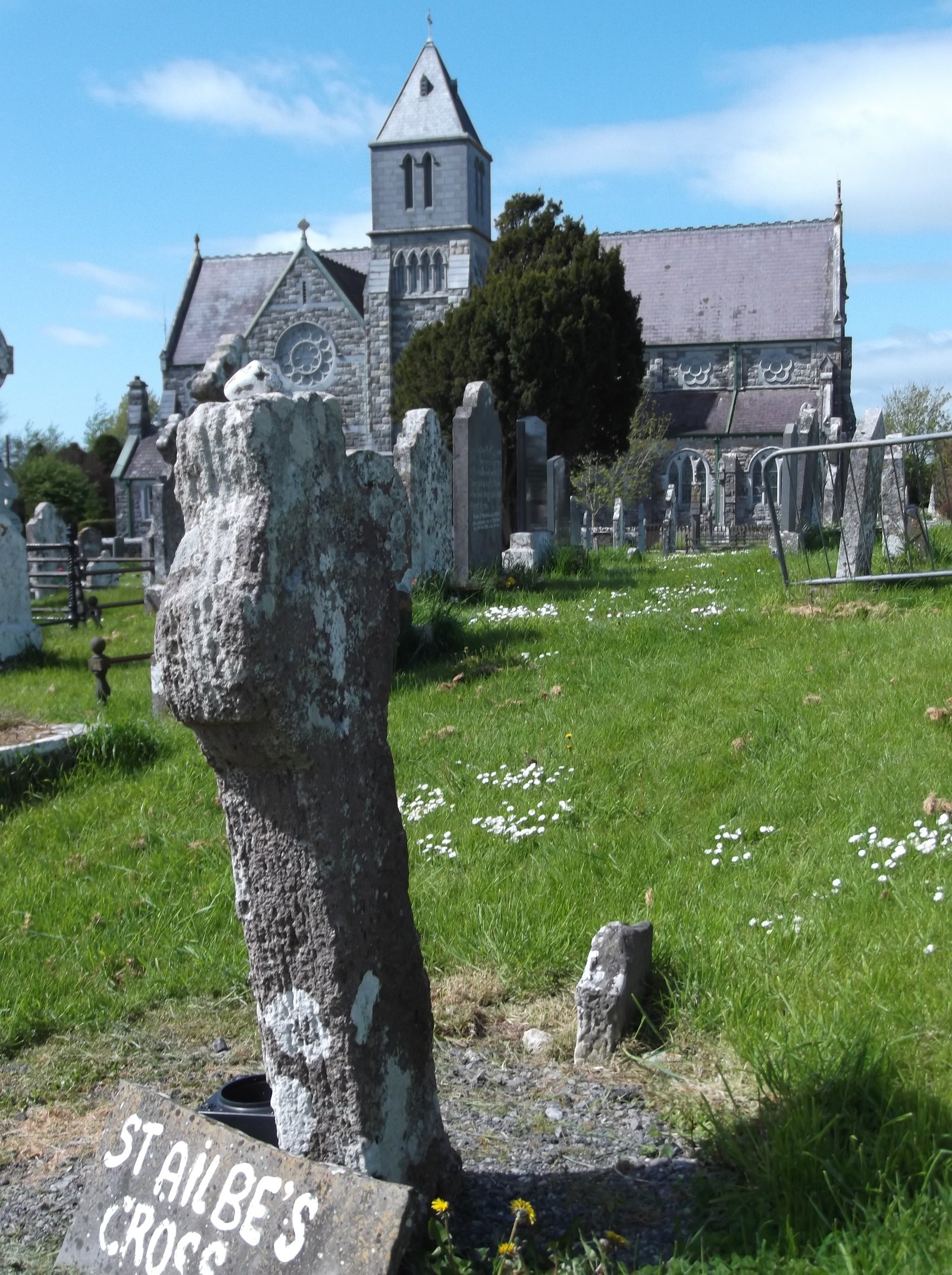
A Catholic church in rural Tipperary dedicated to an early Irish saint, built in the 1880s to replace its predecessor and housing medieval stonework.
At a glance
St Ailbe’s Church stands in Emly, County Tipperary, as a modest but historically significant Catholic parish church. Constructed during the Victorian era, it incorporates earlier ecclesiastical traditions and houses medieval fragments connected to the locality’s patron saint.
History
The church was built in the 1880s as a replacement for an earlier structure erected in 1809. It is dedicated to Ailbe of Emly, an early Irish saint who died in 529. The building’s construction reflects the expansion of Catholic institutional presence in rural Ireland during the nineteenth century.
What you see
The church features a sandstone font at its entrance, believed to date from the medieval period. This substantial baptismal vessel represents one of the oldest surviving elements associated with Christian worship at the site. The Victorian-era architecture itself is characteristic of mid-to-late nineteenth-century Catholic church building in Ireland.
Cultural significance
The church serves as a focal point for devotion to St Ailbe, one of Ireland’s early Christian figures. The adjacent graveyard contains St Ailbe’s Cross, reputedly the saint’s own tombstone, linking the modern parish church to centuries of spiritual tradition and local veneration.
Key facts
- Location: Emly, County Tipperary, Ireland
- Coordinates: 52.4632, −8.3519
- Built: 1880s
- Dedicated to: Ailbe of Emly (d. 529)
- Notable feature: Medieval sandstone font
Practical information & getting there
St Ailbe’s Church is located in the village of Emly in County Tipperary. The church and its adjoining graveyard, including St Ailbe’s Cross, are accessible to visitors. For current visiting hours and services, contact the local parish or check the Diocese of Cashel and Emly website.
Sources & resources
Find it on the map
See this place and what’s around it →📷 Become a Cultural Heritage Online photographer
Share your photos of places: they stay published under your name as the author. The more they're seen, the more you get noticed — and soon a contest will reward the most appreciated photos.
Log in or sign up free to add a photoIs this page about you?
This page is read by travellers and heritage enthusiasts who find it on Google. Tell us how you are connected to this place and we will take it from there.