
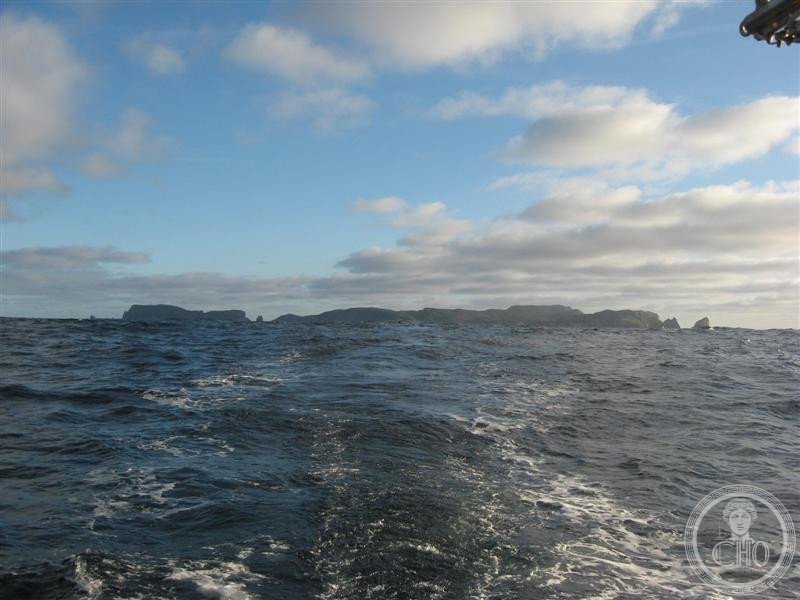
A remote, uninhabited archipelago 200 kilometres south of New Zealand’s South Island, Snares Islands (Māori: Tini Heke) remains one of the country’s most isolated outposts—a wild sanctuary for seabirds and marine life untouched by human settlement.
At a glance
The Snares consist of three main landforms: North East Island, Broughton Island, and Alert Stack, supplemented by the Western Chain Islands positioned about 5 kilometres to the west-southwest. Together they encompass just 3.4 square kilometres of land. Their extreme isolation, lying roughly 200 kilometres south of the South Island and southwest of Stewart Island / Rakiura, has preserved them as a pristine natural environment.
History
The Snares remain officially unnamed in Māori tradition beyond the collective designation Tini Heke. The islands have never sustained permanent human habitation. Their isolation has defined their entire recorded history, serving principally as a refuge for wildlife rather than a place of settlement or development.
What you see
No human structures occupy the Snares. The landscape consists of natural rocky formations, coastal cliffs, and vegetation adapted to subantarctic conditions. The islands’ geography—rugged coastlines, small beaches, and steep terrain—reflects their creation and sculpting by wind and sea rather than human intervention.
Cultural significance
The Snares hold profound ecological importance as a sanctuary for endemic and vulnerable bird species, particularly penguins and seabirds found nowhere else. They represent an untouched corner of New Zealand’s natural heritage and a living laboratory for understanding subantarctic ecosystems undisturbed by human presence.
Key facts
- Country: New Zealand
- Location: Approximately 200 km south of the South Island; southwest of Stewart Island / Rakiura
- Coordinates: 48°01′S, 166°32′E
- Total land area: 3.4 square kilometres
- Status: Uninhabited Area Outside Territorial Authority
- Māori name: Tini Heke
Practical information & getting there
The Snares Islands are closed to public access. Their remote location south of the South Island makes them accessible only by specialized marine expedition, typically to researchers conducting ecological studies. The islands’ protected status ensures their continued isolation and preservation.
Sources & resources
- Snares Islands (Wikipedia)
- Cultural Heritage Online
Find it on the map
See this place and what’s around it →📷 Become a Cultural Heritage Online photographer
Share your photos of places: they stay published under your name as the author. The more they're seen, the more you get noticed — and soon a contest will reward the most appreciated photos.
Log in or sign up free to add a photo