
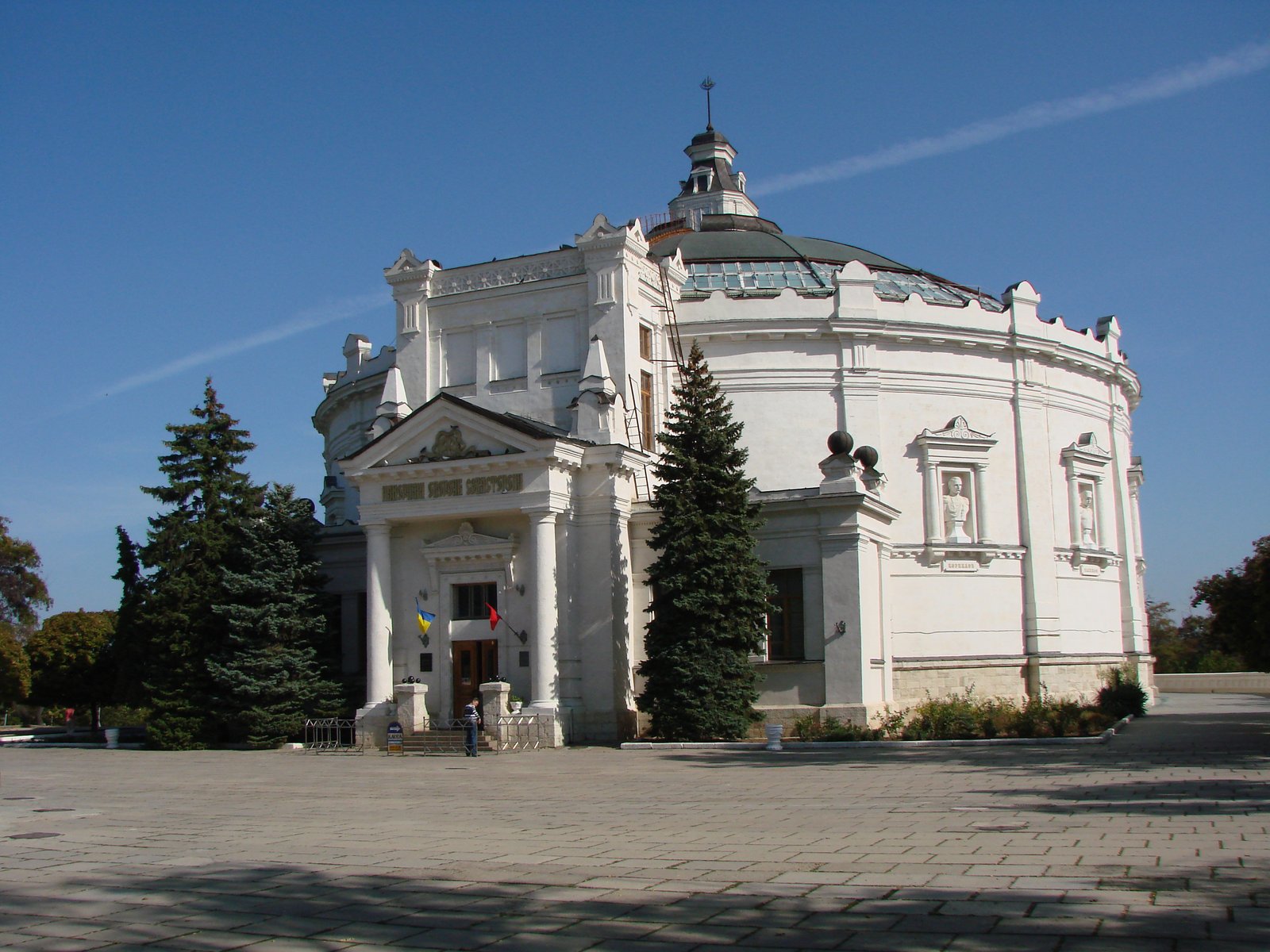
A vast circular canvas by Franz Roubaud recreates the Allied assault on the Malakhov Battery in 1855, wrapping visitors inside the noise and smoke of the Crimean War.
At a glance
Painted between 1902 and 1904, the panorama measures 115 metres in length and 14 metres in height. It was unveiled in 1905 inside a purpose-built rotunda in Sevastopol, timed to mark the fiftieth anniversary of the siege it depicts.
History
Franz Roubaud began preparatory work in 1901. He visited the battle site, examined historical records and interviewed surviving participants before sketching the composition in Saint Petersburg. The full-size painting was then executed by Shenhena Merten, Frosch and twenty students of the Bavarian Academy of Fine Arts. It arrived in Sevastopol in summer 1904 and opened to the public on 14 May 1905. Russian veterans of the siege stood among the first visitors. The building suffered heavy damage during the 1942 siege of Sevastopol; its cupola was shattered and the canvas partly burned. The painting was evacuated on the destroyer leader Tashkent, the last ship to leave the besieged city, which fought off aerial attack en route to Novorossiysk. Between 1951 and 1954 a team led by Vasily Nikolaevich Yakovlev recreated the work on new canvas, adding scenes beyond Roubaud’s original design. A fire at the Museum of Defence of Sevastopol later damaged this restored version, though fragments of Roubaud’s original, kept apart from the main canvas, survived.
What you see
The panorama surrounds its viewers. Painted troops advance across a scarred landscape toward the Malakhov Battery, the central strongpoint of Sevastopol’s defence. Roubaud included portraits of identifiable figures: the naval commander Pavel Nakhimov, the nurse Dasha, and the surgeon Nikolay Pirogov. Smoke, ranks of soldiers and shattered earthworks fill the curved surface. A foreground of real earth and debris, typical of panorama staging, blends into the painted middle ground. The scale is deliberately overwhelming. Standing at the centre, a viewer faces battle from every direction at once.
Cultural significance
The work belongs to the tradition of monumental battle panoramas popular across Europe in the late nineteenth century, of which Roubaud was among the most accomplished practitioners. It commemorates a defining episode of the Crimean War, when 75,000 Russian defenders held off some 173,000 British and French troops at the Malakhov Battery. The panorama’s survival through two wartime disasters, evacuation under fire in 1942 and later fire damage, has made its story almost as significant as its subject. It remains a heritage-listed monument and a touchstone of Russian civic memory around Sevastopol’s defence.
Key facts
- Artist: Franz Roubaud, with assistants Shenhena Merten, Frosch and students of the Bavarian Academy of Fine Arts
- Painted: 1902–1904; unveiled 14 May 1905
- Dimensions: 115 metres long, 14 metres high
- Depicts the Allied assault on the Malakhov Battery, 6/18 June 1855
- Evacuated in 1942 aboard the destroyer leader Tashkent
- Restored 1951–1954 by a team led by Vasily Nikolaevich Yakovlev
- Heritage-listed monument, located in Sevastopol
Practical information & getting there
The panorama is housed in its dedicated rotunda building in Sevastopol, on Crimea’s Black Sea coast. You can reach the city by road or rail connections into the peninsula; check current conditions before travel, as the region has experienced ongoing conflict and periodic closures. Visiting hours and access should be confirmed locally given the site’s history of damage and restoration.
Sources & resources
Find it on the map
See this place and what’s around it →📷 Become a Cultural Heritage Online photographer
Share your photos of places: they stay published under your name as the author. The more they're seen, the more you get noticed — and soon a contest will reward the most appreciated photos.
Log in or sign up free to add a photoIs this page about you?
This page is read by travellers and heritage enthusiasts who find it on Google. Tell us how you are connected to this place and we will take it from there.