
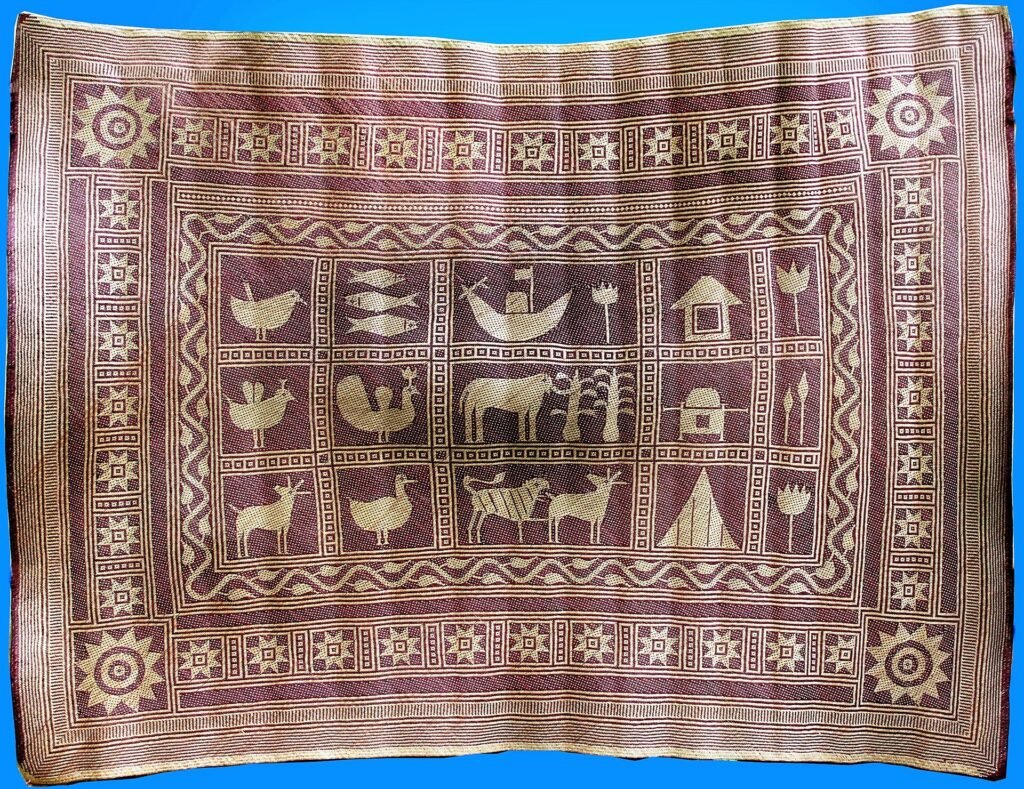
Weavers transform murta plant fibres into mats that stay naturally cool to the touch—a tactile craft perfected over generations in Bangladesh’s waterside regions.
In UNESCO’s words
Shital Pati is the traditional art of making a handcrafted mat by weaving together strips of a green cane known as ‘Murta’. The mat is used by people all over Bangladesh as a sitting mat, bedspread or prayer mat. The main bearers and practitioners are weavers living mostly in the low-lying villages in the greater Sylhet region of Bangladesh, but there are also pockets of Shital Pati weavers in other areas of the country. Both men and women participate in collecting and processing Murta, with women being more involved in the weaving process. The craft is a major source of livelihood and a strong marker of identity; primarily a family-based craft, it helps to reinforce family bonding and create a harmonious social atmosphere. Mastery of the technique commands social prestige, and the practice empowers underprivileged communities, including women. The government promotes awareness of the element through local and national craft fairs, and Shital Pati communities are increasingly being organized into cooperatives to ensure the efficient safeguarding and transmission of the craft and guarantee its profitability. Safeguarding efforts involve the direct participation of the communities concerned and the practice is primarily transmitted from generation to generation within the families of craftspeople.
Official description, UNESCO Intangible Cultural Heritage List — Traditional art of Shital Pati weaving of Sylhet
At a glance
Shital Pati is a handcrafted mat made by weaving together strips of green cane called Murta. Used throughout Bangladesh as a sitting mat, bedspread, or prayer mat, it is produced by weavers living mainly in low-lying villages of the greater Sylhet region, with smaller pockets of makers elsewhere in the country. Both men and women participate in collecting and processing the cane, though women are more involved in the actual weaving.
Origins & history
The craft originated in the wetland regions where Murta cane grows abundantly. It has been passed down as a family-based practice through generations of craftspeople, with transmission occurring primarily within families rather than through formal institutions.
The practice
Weavers collect and process Murta strips before weaving them together on looms. Both men and women work in collection and processing, but women take the lead in the weaving process itself. The finished mats serve multiple purposes—as sitting surfaces, bedspreads, and prayer mats—for people across Bangladesh.
Cultural significance
The craft is a major source of livelihood and a strong marker of identity for weavers and their communities. Mastery commands social prestige and empowers underprivileged communities, particularly women. The practice reinforces family bonds and creates social harmony. The government supports awareness through craft fairs, and communities are increasingly organized into cooperatives to safeguard the tradition, ensure its transmission, and guarantee profitability.
Key facts
- Country: Bangladesh
- Inscribed: 2017
- UNESCO list: Representative List of the Intangible Cultural Heritage of Humanity
- UNESCO reference: 01112
- UNESCO vocabulary: Carpets; Weaving
- Map: Sylhet — the locality named in UNESCO’s official description of this element
Where to experience it
Shital Pati weavers live mostly in the low-lying villages of the greater Sylhet region in northeastern Bangladesh, where the murta plant thrives and family-based workshops continue their generations-old practice. Pockets of weavers exist in other areas across the country as well. Visitors can encounter the craft through local and national craft fairs, where the government promotes awareness of this essential tradition, and through cooperatives that increasingly organize weaving communities to support both the craft's transmission and its economic viability.
Sources & resources
- UNESCO — official element page: Traditional art of Shital Pati weaving of Sylhet
- UNESCO — open data record: Intangible Heritage List, reference 01112
- UNESCO — official video: UNESCO film on this element — embedded on this page
- UNESCO — official photograph: Banitosh Dey Gurudas collecting raw materials for shital pati, Murta, in Hinganagar, Tangail — Monirul Masum, Bangladesh, 2014
- Reference — Wikipedia (secondary): Shital Pati — consulted as a secondary reference, not as confirmation
- Cultural Heritage Online: Our archive and city guides

Find it on the map
See this place and what’s around it →📷 Become a Cultural Heritage Online photographer
Share your photos of places: they stay published under your name as the author. The more they're seen, the more you get noticed — and soon a contest will reward the most appreciated photos.
Log in or sign up free to add a photo