

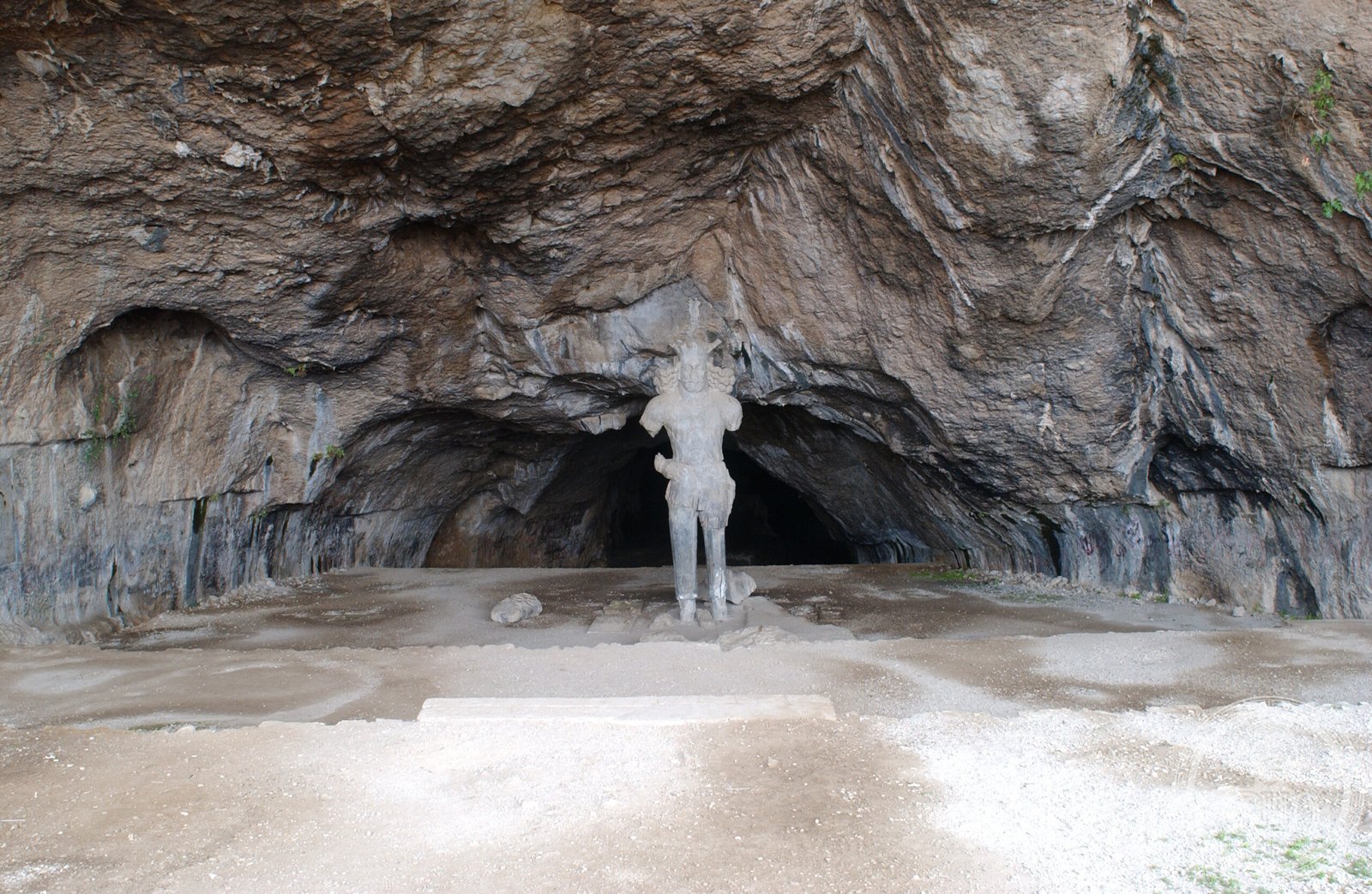
In the Zagros Mountains of southern Iran, this UNESCO-listed cave shelters a monumental stone portrait of Shapur I, the Sasanian Empire’s second ruler—carved from a single stalagmite and standing seven metres tall after its twentieth-century restoration.
At a glance
Shapur Cave lies in the Chogan valley near Kazerun, housing one of the finest surviving monuments of Sasanian statuary. The colossal statue, seven metres high with shoulders spanning two metres and arms extending three metres, dominates the cave’s fourth terrace and represents a pinnacle of ancient Persian sculptural ambition.
History
The statue commemorates Shapur I, who ruled the Sasanian Empire during its height of power. Following the Muslim conquest of Persia and the empire’s collapse roughly 1,400 years ago, the figure was deliberately toppled and one leg fractured. For fourteen centuries it lay prone on the cave floor. In 1957, Mohammad Reza Pahlavi, Iran’s last Shah, ordered military personnel to restore the statue to an upright position, reinforcing the broken foot with iron and cement. A subsequent earthquake, approximately seventy years before modern documentation, damaged portions of the arms.
What you see
The statue was carved from a single stalagmite—a technical feat that speaks to Sasanian mastery of stone work. Its monumental scale and frontal pose exemplify the imperial portraiture conventions of the era. Two inscriptions mark the cave: one translates Shapur’s own inscription found at Naqsh-e Rajab, while the other records the twentieth-century restoration undertaken by the Imperial Iranian army.
Cultural significance
Shapur Cave stands as a major archaeological site for understanding Sasanian art, power, and religious expression. The survival of this portrait—despite centuries of neglect and natural forces—testifies to both the durability of ancient ambition and the vulnerability of cultural heritage to conquest and time.
Key facts
- Country: Iran
- Location: Near Kazerun, Chogan valley, Zagros Mountains
- Coordinates: 29.81°N, 51.61°E
- Statue height: 7 metres
- UNESCO World Heritage Site (one of eight sites in the Sassanid Archaeological Landscape of Fars Region)
Practical information & getting there
The cave is accessible from Kazerun in southern Iran. Conditions and accessibility vary seasonally; consult local authorities or guides before visiting. The remote mountain location requires careful planning and appropriate transportation.
Sources & resources
Find it on the map
See this place and what’s around it →📷 Become a Cultural Heritage Online photographer
Share your photos of places: they stay published under your name as the author. The more they're seen, the more you get noticed — and soon a contest will reward the most appreciated photos.
Log in or sign up free to add a photo