
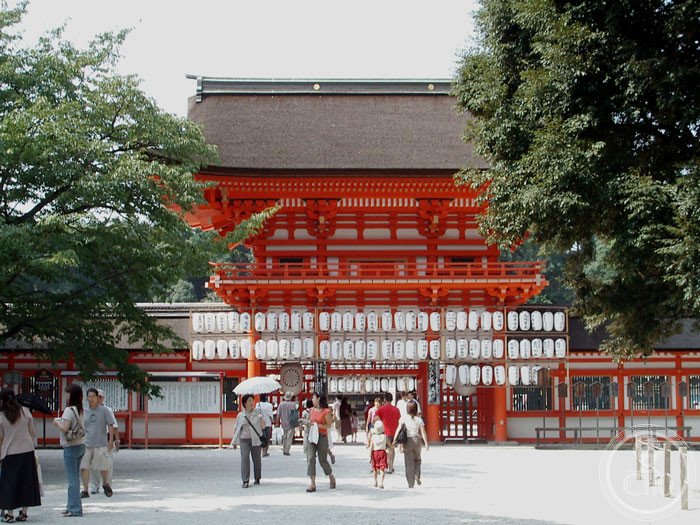
One of Japan’s oldest Shinto sanctuaries, Shimogamo Shrine has guarded Kyoto since the 6th century. This UNESCO World Heritage site honors the Kamo family of deities within a primeval forest.
At a glance
Shimogamo Shrine (formally Kamo-mioya Shrine) stands in Kyoto’s Sakyō ward as a principal Shinto sanctuary predating the city’s establishment as Japan’s capital by nearly two centuries. The shrine forms part of the Kamo-jinja—a pair of traditionally linked sacred sites that includes Kamigamo Shrine, with Shimogamo being the older by approximately one hundred years.
History
Dating to the 6th century, Shimogamo Shrine was established centuries before Kyoto became Heian-kyō in 794. The sanctuary perpetuates the sacred traditions of the Kamo clan, early inhabitants of the region whose descendants continue to inhabit the surrounding area. For more than fourteen centuries, the shrine has functioned as a protector of Kyoto against malign influences, a role central to its spiritual significance.
What you see
The shrine encompasses grounds within Tadasu no Mori, a wooded area preserving remnants of the primeval forest that once covered this landscape. The natural setting forms an integral part of the sanctuary’s identity and spiritual atmosphere.
Cultural significance
Shimogamo Shrine venerates Tamayori-hime, the spirit-inviting maiden, and her father Kamo Taketsunomi. The deities honored here—including Kamo Wakeikazuchi, the thunder-divider—are variously associated with thunder and lightning. Together with Kamigamo Shrine, Shimogamo forms a defining element of Kyoto’s spiritual geography. In 1994, the shrine received UNESCO World Heritage designation as one of seventeen Historic Monuments of Ancient Kyoto.
Key facts
- Country: Japan
- City: Kyoto, Sakyō ward
- Coordinates: 35.03888889° N, 135.7725° E
- Founded: 6th century
- UNESCO World Heritage Site: Historic Monuments of Ancient Kyoto (1994)
Practical information & getting there
Shimogamo Shrine is located in the Shimogamo district of Kyoto’s Sakyō ward. Visitors can access the sanctuary year-round to experience its forested grounds and historical structures. For current opening hours and access details, check locally or consult official Kyoto tourism resources.
Sources & resources
Find it on the map
See this place and what’s around it →📷 Become a Cultural Heritage Online photographer
Share your photos of places: they stay published under your name as the author. The more they're seen, the more you get noticed — and soon a contest will reward the most appreciated photos.
Log in or sign up free to add a photoIs this page about you?
This page is read by travellers and heritage enthusiasts who find it on Google. Tell us how you are connected to this place and we will take it from there.