
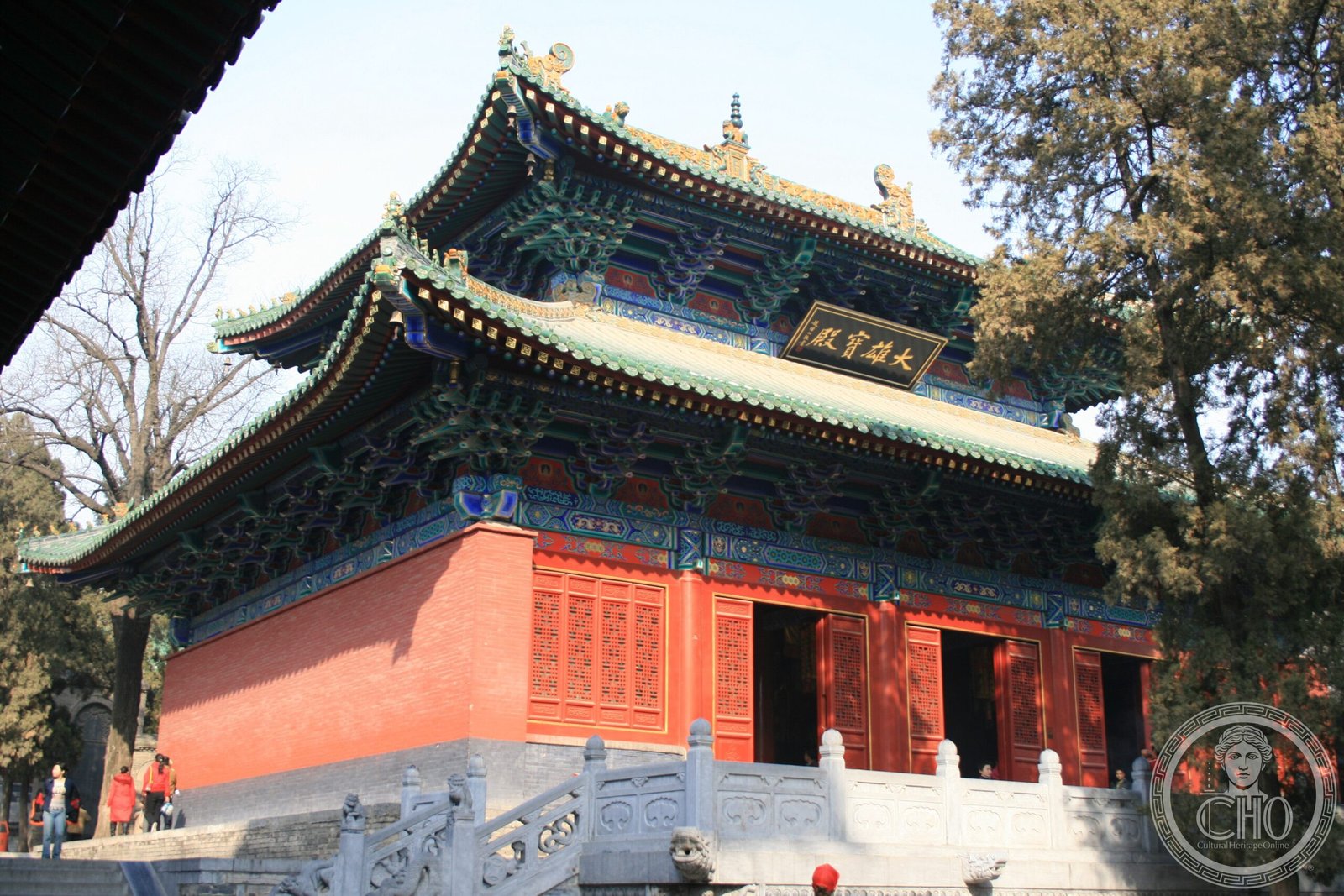
Birthplace of Chan Buddhism and legendary cradle of Shaolin kung fu, this Mahayana Buddhist monastery stands at the foot of Mount Song, one of China’s Five Holy Peaks, blending spiritual practice with martial tradition for nearly fifteen centuries.
At a glance
Shaolin Monastery is a living center of Chan Buddhism and martial arts located in Dengfeng, Henan Province, approximately 48 kilometers southeast of Luoyang and 72 kilometers southwest of Zhengzhou. The temple’s architectural complex is inscribed on the UNESCO World Heritage List and remains an active monastic community.
History
The monastery was founded by its first abbot, Batuo, who devoted himself to translating Buddhist texts and teaching doctrine to hundreds of followers. According to tradition, Bodhidharma, the 28th patriarch of Mahayana Buddhism, arrived from India in 527 and spent nine years meditating in a cave of Wuru Peak. His teachings initiated the Chan Buddhist tradition at Shaolin, establishing Bodhidharma as the first patriarch of Chan Buddhism. Mount Song itself held sacred status among Chinese peaks since at least the 1st century BC, when it was proclaimed one of the Five Holy Peaks.
What you see
The temple’s historical architectural complex is recognized for its great aesthetic value and profound cultural meaning. The site includes structures arranged across the Wuru Peak landscape, with Bodhidharma’s meditation cave remaining a significant spiritual focal point within the monastery grounds.
Cultural significance
Shaolin Monastery represents the convergence of four pillars: Chan Buddhism, martial arts, Buddhist art, and traditional Chinese medicine. This integration defines daily monastic life and has made the temple a symbol of Chinese culture globally. Shaolin monks pioneered and continuously developed kung fu as both spiritual discipline and physical practice. The monastery’s influence extends worldwide through official cultural centers and foreign disciples, establishing Shaolin culture as a distinctive vehicle for international cultural exchange.
Key facts
- Location: Dengfeng, Henan Province, China
- Coordinates: 34.508141°N, 112.935396°E
- Founded: 5th–6th century
- UNESCO status: World Heritage site
- Religious tradition: Mahayana Buddhism, Chan school
Practical information & getting there
Shaolin Monastery welcomes visitors for pilgrimage and cultural exchange. The temple is accessible from both Zhengzhou and Luoyang. For current opening hours, admission fees, and visitor facilities, consult official sources before your visit.
Sources & resources
Find it on the map
See this place and what’s around it →📷 Become a Cultural Heritage Online photographer
Share your photos of places: they stay published under your name as the author. The more they're seen, the more you get noticed — and soon a contest will reward the most appreciated photos.
Log in or sign up free to add a photoIs this page about you?
This page is read by travellers and heritage enthusiasts who find it on Google. Tell us how you are connected to this place and we will take it from there.