

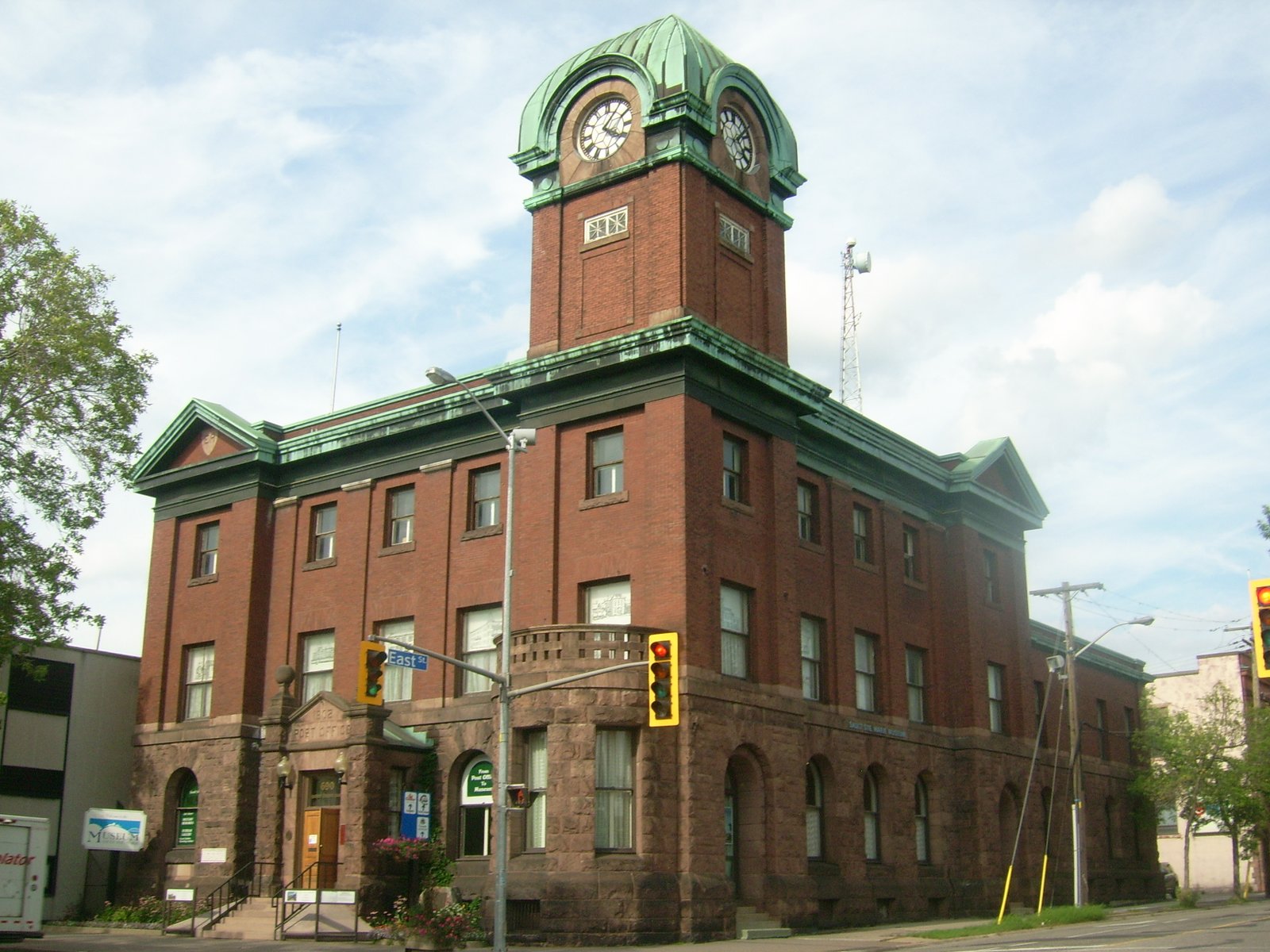
A former post office turned cultural institution, this building documents the history and heritage of Ontario’s gateway city on the St. Mary’s River.
At a glance
Housed in a Beaux-Arts structure originally serving as the city’s federal post office, the museum preserves local history and civic memory. Today it operates as a community-focused institution celebrating the region’s industrial, military and cultural legacy.
History
Construction of the post office began on 1 May 1904 and the building opened on 31 March 1906, serving the growing community of Sault Ste. Marie. For three-quarters of a century it functioned in that civic capacity before the City of Sault Ste. Marie purchased the property in 1981; the museum opened in December 1983. The transition reflected a broader shift toward preserving architectural heritage and local identity in the region.
What you see
The structure reflects early 20th-century Canadian public building design, with period architectural details characteristic of Edwardian civic architecture. The restored interior accommodates exhibitions and displays about the city’s past.
Cultural significance
The museum serves as a repository for Sault Ste. Marie’s identity during a transformative era, when the city developed as an industrial and transportation hub. It represents the community’s effort to preserve tangible connections to its formative years.
Key facts
- Country: Canada
- City: Sault Ste. Marie, Ontario
- Coordinates: 46.50805, −84.32788
- Built: 1904–1906 as a post office (opened 31 March 1906)
- Became a museum: 1983
- Operated by: Sault Ste. Marie & 49th Field Regiment R.C.A. Historical Society
Practical information & getting there
The museum is located in downtown Sault Ste. Marie. For current visiting hours, admission details, and directions, consult the operating society or local tourism information.
The clock and bell arrived from London in 1912 and the tower had to be raised to take them; the chime could be heard as far as Gore Street.
Sources & resources
Find it on the map
See this place and what’s around it →📷 Become a Cultural Heritage Online photographer
Share your photos of places: they stay published under your name as the author. The more they're seen, the more you get noticed — and soon a contest will reward the most appreciated photos.
Log in or sign up free to add a photoIs this page about you?
This page is read by travellers and heritage enthusiasts who find it on Google. Tell us how you are connected to this place and we will take it from there.
This entry stays online and free either way — and a free account lets you add to it yourself.