
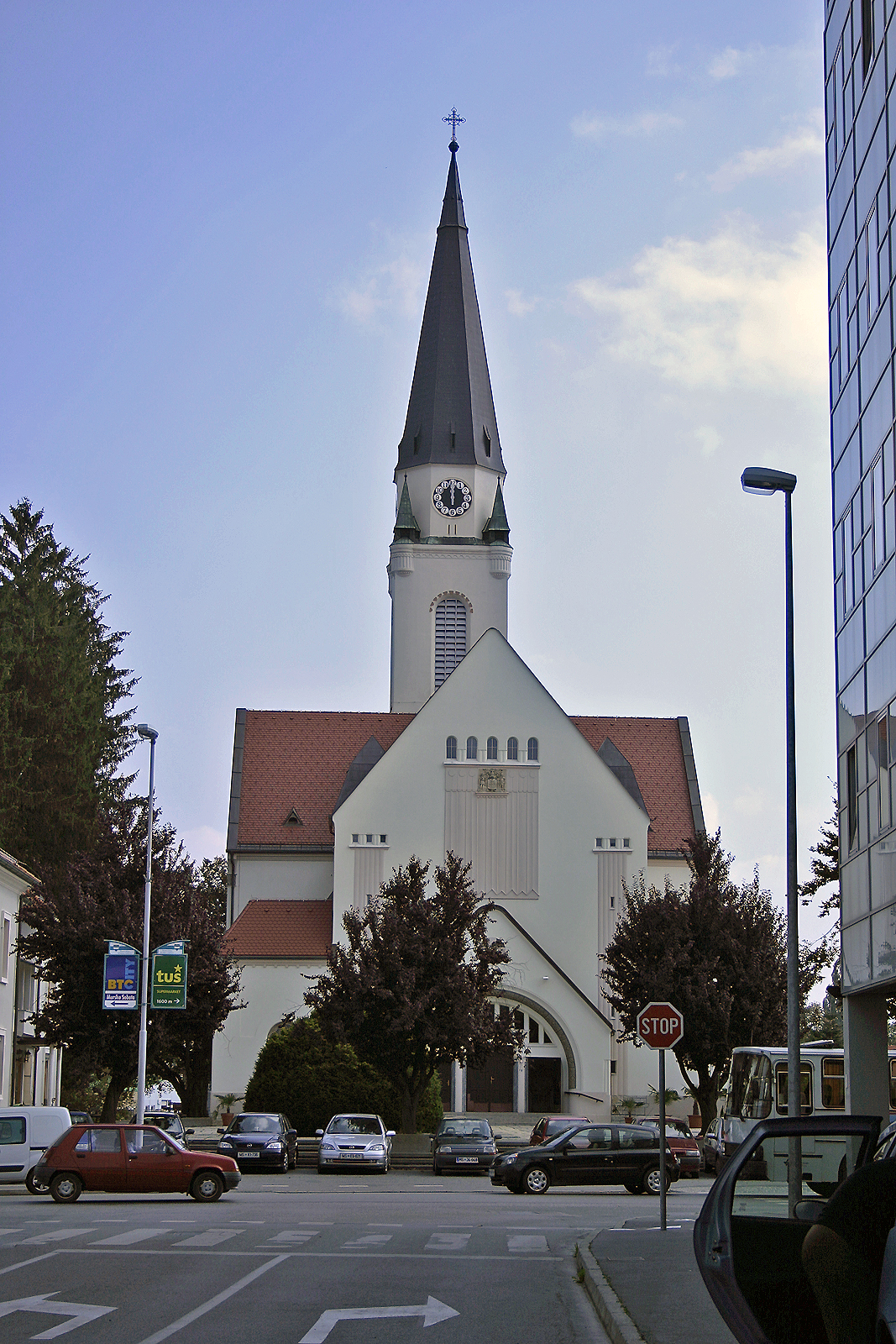
A Neo-Romanesque cathedral dedicated to Saint Nicholas, built on a sacred site with roots reaching back to Roman temples and a wooden church from 1071.
At a glance
Murska Sobota Cathedral has served as the episcopal seat of the diocese of Murska Sobota since 2006. The current building, constructed in 1912, replaced a medieval cathedral dating to 1350. Its design blends Neo-Romanesque architecture with decorative elements of the Jugendstil movement, making it a distinctive example of early 20th-century ecclesiastical design in Slovenia.
History
The site’s religious significance extends back millennia. Roman temples once stood where the cathedral now rises. After Hungarian settlers in the area converted to Christianity, a wooden church was erected in 1071. During the Middle Ages, Murska Sobota developed into an important religious centre. A second cathedral, built in 1350, served the community for over five centuries before its replacement became necessary.
The present cathedral was constructed in 1912 using reinforced concrete—a modern material choice for its era. This building incorporated four bells salvaged from the medieval predecessor, preserving continuity with the site’s sacred past. A significant addition came in 1992 when a new organ with 37 registers was installed, establishing it as one of the largest organs in Slovenia.
What you see
The cathedral exemplifies Neo-Romanesque design with characteristic rounded arches and solid masonry proportions. Jugendstil decorative elements introduce Art Nouveau curves and ornamental details, creating visual interest across the façade and interior spaces. The use of reinforced concrete in its construction represents early 20th-century building innovation. The belfry houses four historic bells transferred from the 1350 cathedral. Inside, the 37-register organ dominates the liturgical space.
Cultural significance
The cathedral embodies Murska Sobota’s transformation from a pagan settlement to a Christian religious centre. Its successive structures—wooden church, medieval cathedral, and modern basilica—chart the region’s spiritual and architectural evolution. As the seat of the diocese since 2006, it remains a focal point for Catholic life in northeastern Slovenia and represents the continuity of faith across nearly a thousand years.
Key facts
- Country: Slovenia
- City: City Municipality of Murska Sobota
- Completed: 1912
- Architectural style: Neo-Romanesque with Jugendstil elements
- Diocese: Murska Sobota (established 2006)
- Organ: 37 registers (installed 1992)
- Construction material: Reinforced concrete
- Coordinates: 46.6578°N, 16.1701°E
Practical information & getting there
Located in Murska Sobota, the cathedral serves as both a working parish church and diocesan centre. It remains active for worship and occasional tourism. For visiting hours, current services, and accessibility details, contact local tourism information or the diocese directly.
Sources & resources
Find it on the map
See this place and what’s around it →📷 Become a Cultural Heritage Online photographer
Share your photos of places: they stay published under your name as the author. The more they're seen, the more you get noticed — and soon a contest will reward the most appreciated photos.
Log in or sign up free to add a photoIs this page about you?
This page is read by travellers and heritage enthusiasts who find it on Google. Tell us how you are connected to this place and we will take it from there.