

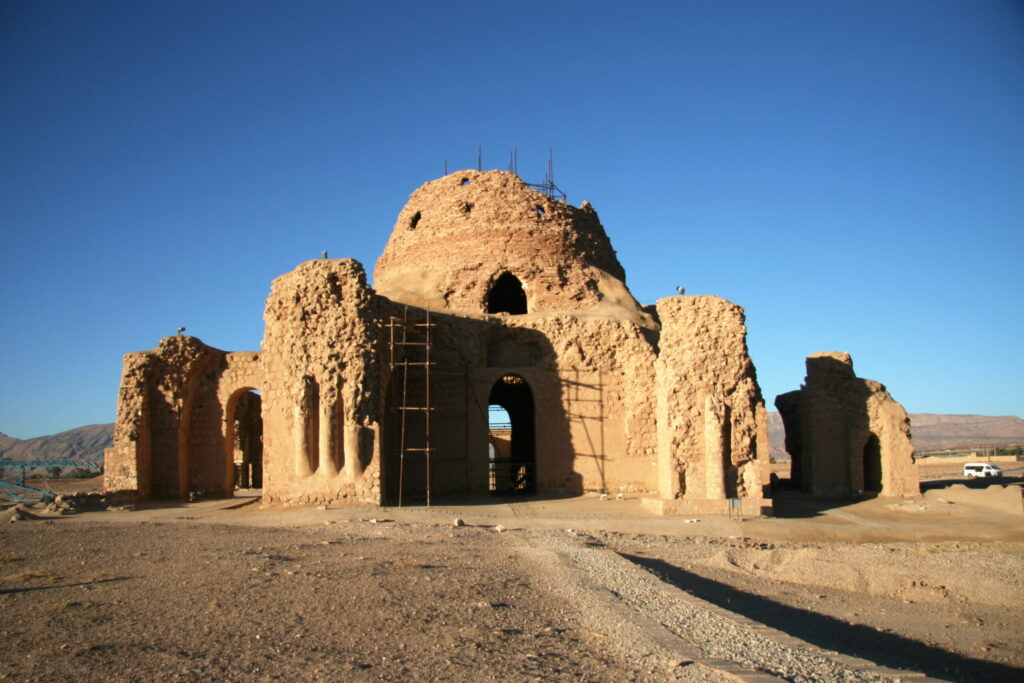
A masterwork of Sassanid architecture, this seventh-century palace stands as a testament to the engineering sophistication of Persian imperial rule. Whether conceived as a gubernatorial seat or sacred fire temple, it remains one of the most significant archaeological monuments of the Sassanid era.
At a glance
The Sarvestan Palace occupies a commanding position in southwestern Iran, roughly 90 kilometres southeast of Shiraz. Its monumental stone construction and refined spatial organisation exemplify the architectural ambitions of the Sassanid dynasty at the height of its power.
History
Built during the seventh century AD, the palace emerged in the final centuries of Sassanid rule, before the Islamic conquest of Persia. Its dual purpose—possibly serving as either a residence for a regional governor or a Zoroastrian fire temple—reflects the complex religious and administrative functions such structures embodied. The ambiguity surrounding its original use underscores the sophisticated intertwining of secular and sacred authority in Sassanid society.
What you see
The palace demonstrates the characteristic features of Sassanid palace architecture. Its monumental scale and carefully articulated stone masonry reveal sophisticated construction techniques. The building’s spatial organisation, typical of the period, balances functional design with symbolic grandeur.
Cultural significance
The Sarvestan Palace ranks among the most important archaeological sites in Sassanid studies. It provides invaluable evidence of architectural practice, administrative structures, and religious life during the late Sassanid period. In 2018, the palace was designated as part of the Sassanid Archaeological Landscape of Fars Region, a single UNESCO World Heritage property composed of eight archaeological sites at Firuzabad, Bishapur and Sarvestan.
Key facts
- Country: Iran
- City: Sarvestan
- Period: 7th century AD
- Coordinates: 29.1956, 53.2308
- UNESCO World Heritage Site (part of Sassanid Archaeological Landscape of Fars Region)
Practical information & getting there
The palace is located in Sarvestan, approximately 90 kilometres southeast of Shiraz. Plan your visit during daylight hours to appreciate the stone masonry and spatial design. For current access information and visitor facilities, contact local Sarvestan tourism authorities.
Sources & resources
Find it on the map
See this place and what’s around it →
Advertisement. Pictured, from the Cleveland Museum of Art (CC0) and not for sale: Latz commode, Meissen group, Paul Storr tureen. How we handle this
📷 Become a Cultural Heritage Online photographer
Share your photos of places: they stay published under your name as the author. The more they're seen, the more you get noticed — and soon a contest will reward the most appreciated photos.
Log in or sign up free to add a photoIs this page about you?
This page is read by travellers and heritage enthusiasts who find it on Google. Tell us how you are connected to this place and we will take it from there.
This entry stays online and free either way — and a free account lets you add to it yourself.