
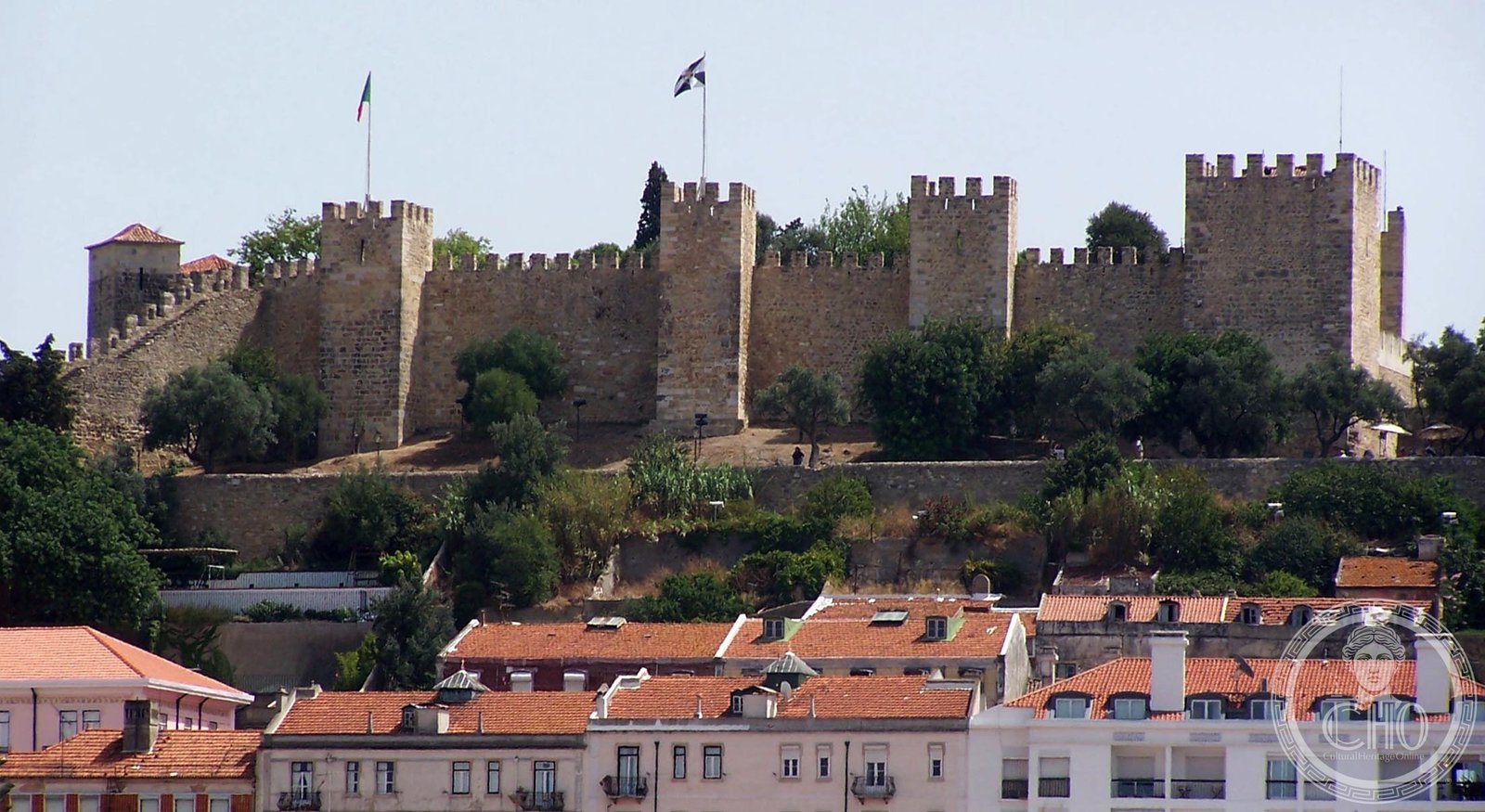
Perched above Lisbon’s Alfama district, this fortress commands the city from a hill occupied since antiquity. Its stones bear witness to successive waves of conquest—Phoenician, Carthaginian, Roman, Moorish—before Portuguese forces took control in 1147.
At a glance
São Jorge Castle stands on one of Lisbon’s highest points, dominating the cityscape. The site has been fortified for over two millennia, though the castle as it exists today largely reflects medieval and later Portuguese occupation and renovation.
History
Human settlement on the castle hill dates to at least the 8th century BC. Fortifications emerged in the 2nd century BC, when the site became a strategic stronghold. Phoenicians, Carthaginians, Romans, and later Moors all occupied the fortifications in succession.
The Siege of Lisbon in 1147 marked a turning point. Portuguese forces conquered the castle, ending Moorish control and establishing it as a key stronghold in the newly independent Portuguese kingdom. From the 12th century onward, the castle evolved with the nation’s needs—serving as royal residence, military installation, and archive.
What you see
The castle comprises fortified walls, towers, and gateways arranged across the hilltop. Medieval Portuguese masonry predominates, though earlier foundations and materials remain embedded in the structure. The site preserves archaeological evidence of its layered history.
Cultural significance
São Jorge Castle embodies Lisbon’s transformation from a multicultural trading hub under Islamic rule to a Christian capital. It anchors the identity of the Alfama, Lisbon’s oldest district, and remains deeply woven into Portuguese national memory as a symbol of reconquest and sovereignty.
Key facts
- Country: Portugal
- City: Lisbon
- Coordinates: 38.71388889, -9.13361111
- Current status: National monument and museum
Practical information & getting there
The castle is open to visitors as a museum. Its location in Santa Maria Maior, in the heart of Lisbon’s historic center, makes it accessible by public transport and on foot from the lower city. The hilltop setting offers panoramic views across the capital.
Sources & resources
Find it on the map
See this place and what’s around it →📷 Become a Cultural Heritage Online photographer
Share your photos of places: they stay published under your name as the author. The more they're seen, the more you get noticed — and soon a contest will reward the most appreciated photos.
Log in or sign up free to add a photoIs this page about you?
This page is read by travellers and heritage enthusiasts who find it on Google. Tell us how you are connected to this place and we will take it from there.