

In the summer of 1225 Francis of Assisi was waiting for an eye operation in Rieti. He spent more than fifty days as the guest of the priest of San Fabiano, beside a small vineyard. The pilgrims who came to see him ate so many grapes that there was almost nothing left to harvest. Francis had the few remaining bunches pressed in a stone vat anyway. Tradition says the vat yielded more than twice the wine of the previous year, when the harvest had been untouched.
About the Sanctuary of La Foresta
Before Francis’s presence gave it wider fame, the site now known as the Sanctuary of La Foresta was a modest country church dedicated to San Fabiano. A priest tended it and supported himself with a small vineyard, an adjoining garden, a parish house and a cottage. In the summer of 1225 Cardinal Ugolino — the future Pope Gregory IX — invited Francis to Rieti to be treated by a highly regarded local eye doctor. Francis reached the city gates, but was wary of the public reception awaiting him and withdrew instead to this isolated spot. He stayed as the priest’s guest at San Fabiano for more than fifty days while awaiting his operation.
The site is remembered above all for the “miracle of the grapes”. Pilgrims flocking to see Francis during his stay ate so many of the vineyard’s grapes that the harvest that year appeared ruined. Francis ordered the few remaining bunches pressed anyway, in a stone vat still preserved at the site today. The resulting yield reportedly exceeded, by more than double, the wine produced the previous year from a full and untouched harvest.
At the start of the 14th century a community of hermits, the Romiti, transformed the parish house adjoining San Fabiano into a church. In 1346 these hermits were accused of heresy and compelled to hand their complex over to the Bishop of Rieti. Followers of Angelo Clareno, known as the Clareni, took their place and remained until 1568, when their community was suppressed and absorbed into the Roman province of the Franciscan Friars. Tradition also links La Foresta, alongside its neighbouring Franciscan sites, to the composition of Francis’s celebrated Canticle of the Creatures in this same period. Modern scholarship, however, generally attributes the poem to San Damiano rather than to La Foresta itself.
Key facts
- Pre-Franciscan era: a modest country church dedicated to San Fabiano, with a small vineyard.
- Summer 1225: Francis stays over 50 days at San Fabiano, awaiting eye treatment in Rieti.
- The grape miracle: the stone vat used to press the few remaining grapes, still preserved at the site.
- Early 14th century: hermits (Romiti) convert the parish house into a church.
- 1346: the hermits, accused of heresy, cede the complex to the Bishop of Rieti.
- To 1568: the Clareni, followers of Angelo Clareno, occupy the site until their suppression.
- Tradition: some accounts link the site to the Canticle of the Creatures, though scholarship favours San Damiano.
History
At La Foresta an apparently ruined harvest yielded more than double the previous year’s full crop, after Francis ordered the remaining grapes pressed regardless. The episode belongs to a broader Franciscan tradition of miracles of abundance drawn from apparent scarcity. That theme recurs across the saint’s hagiography, and it reinforced his followers’ trust in providence even amid visible material loss.
The site was later occupied first by the Romiti hermits, accused of heresy, and then by the Clareni, a rigorist Franciscan splinter movement that was itself eventually suppressed. That sequence places La Foresta inside the turbulent internal disputes over religious poverty and observance which divided the wider Franciscan movement in the century after Francis’s own death.
Scholars disagree over whether Francis composed the Canticle of the Creatures at La Foresta or at San Damiano. The disagreement reflects a wider difficulty: the early Franciscan sources often prioritised spiritual and devotional resonance over strict documentary precision, which makes precise biographical detail hard to reconstruct. La Foresta’s tranquil setting near Rieti remains closely associated with the same 1225 period in which Francis, already gravely ill, composed his most celebrated poetic work.
What you see
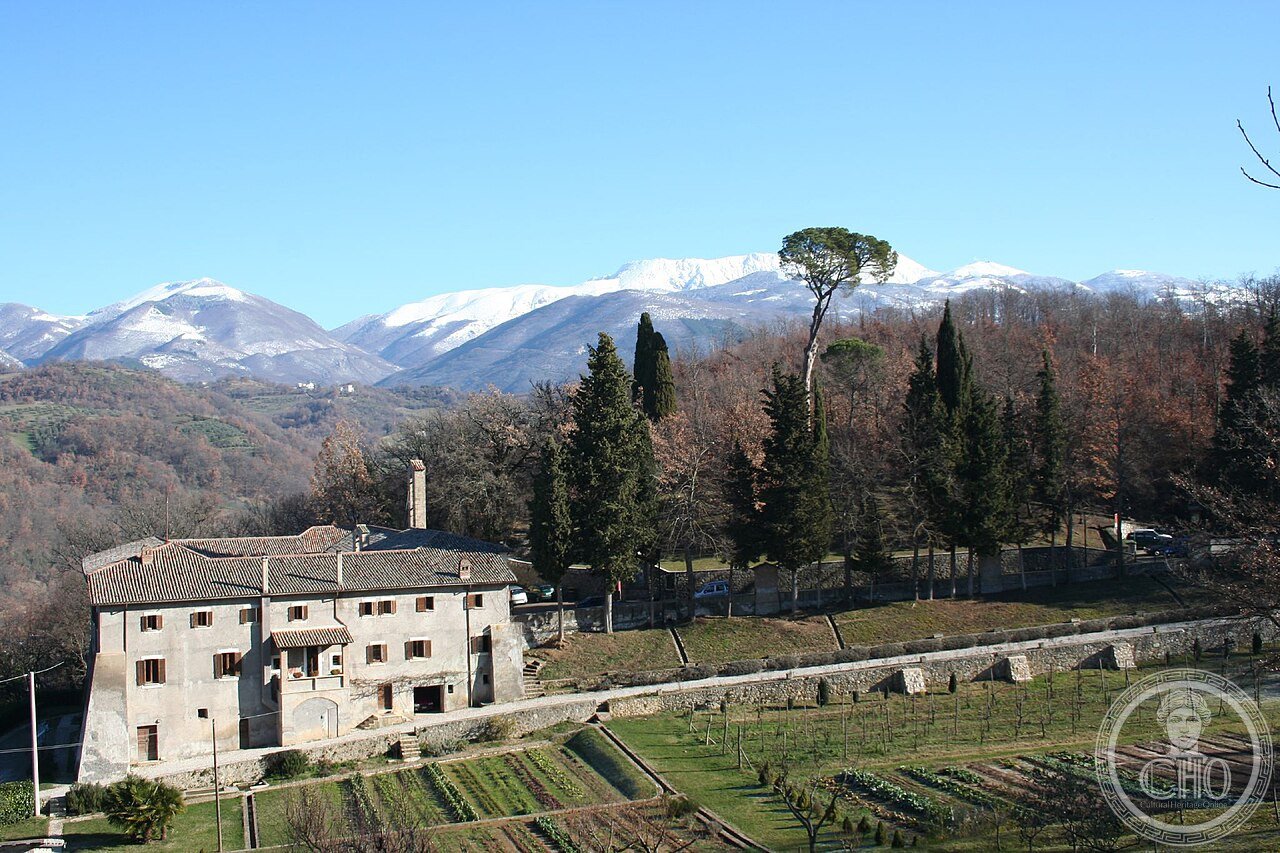
The sanctuary complex, developed from the original country church of San Fabiano into its present form across the 14th to 16th centuries under successive hermit and Franciscan communities, preserves the stone vat associated with the 1225 grape miracle. Set within the wooded countryside near Rieti, with Mount Terminillo visible in the background, the site retains the tranquil, isolated character that first drew Francis to it during his 1225 stay.
Practical information
- Opening hours: generally open daily with seasonal variation; check current hours before visiting; free admission (donations welcome).
- Address: Santuario della Foresta, 02100 Rieti, Italy.
Getting there
The Sanctuary of La Foresta is reachable by car from Rieti (approximately 15 minutes) in the Valle Santa, Lazio. GPS: 42.4366° N, 12.8745° E.
Nearby
- Rieti — approximately 15 minutes away; the provincial capital.
- Mount Terminillo — the mountain visible from the sanctuary grounds.
- Sanctuary of Fonte Colombo — another of the four Franciscan sanctuaries of the Valle Santa.
Sources
- Wikipedia — “Santuario della Foresta” (it.wikipedia.org).
- Santuari della Valle Santa — “Santuario La Foresta” (santuarivallesanta.com).
- San Francesco Patrono d’Italia — “La Foresta del Cantico delle Creature” (sanfrancescopatronoditalia.it).
Find it on the map
See this place and what’s around it →📷 Become a Cultural Heritage Online photographer
Share your photos of places: they stay published under your name as the author. The more they're seen, the more you get noticed — and soon a contest will reward the most appreciated photos.
Log in or sign up free to add a photo