
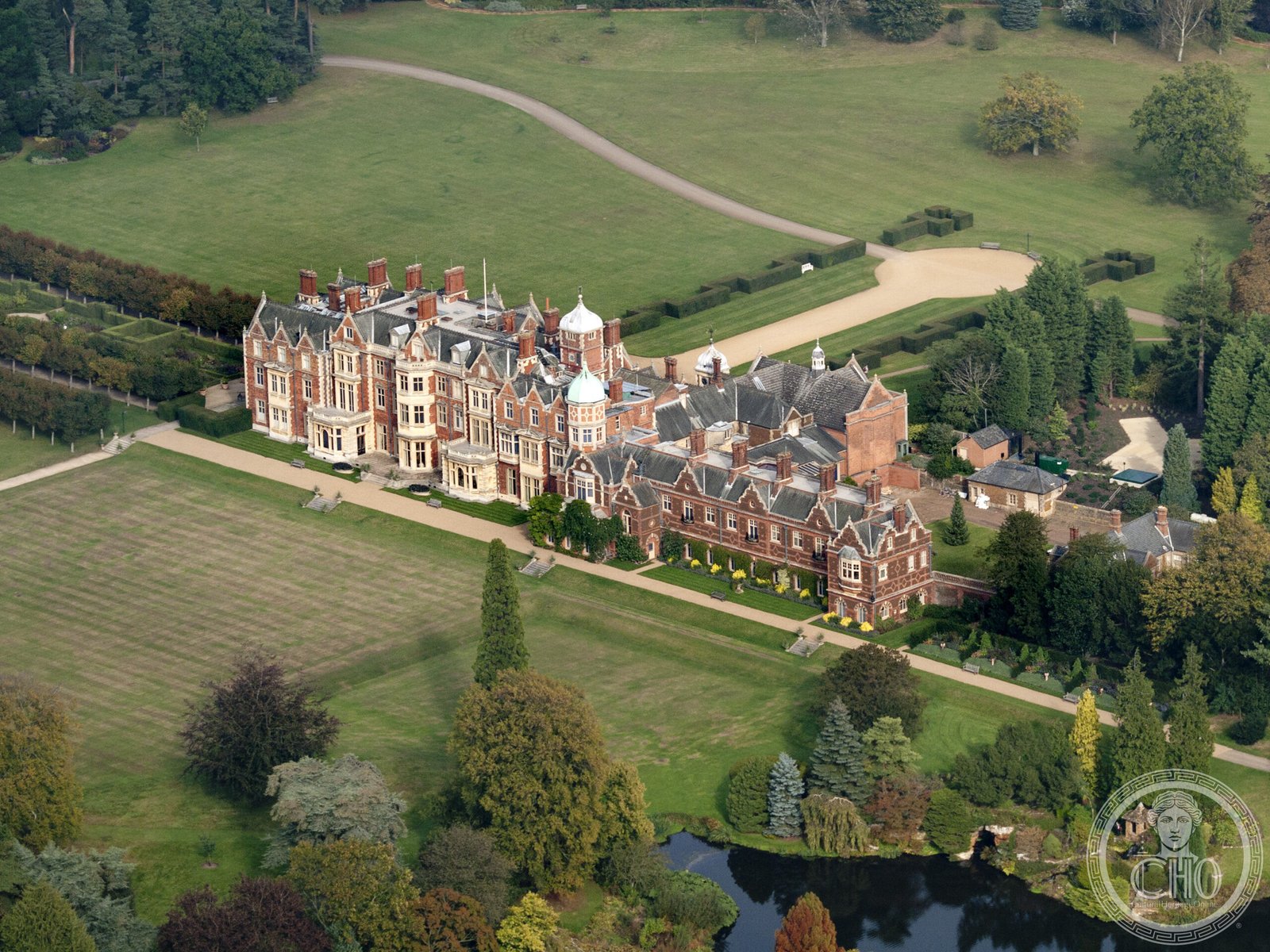
A royal country residence in Norfolk, England, where three British monarchs have died. This Grade II* listed house anchors a 20,000-acre estate and has been a setting for pivotal moments in the modern monarchy, from the first royal Christmas broadcast to the first televised message from a reigning sovereign.
At a glance
Sandringham House stands within the Norfolk Coast Area of Outstanding Natural Beauty, its landscaped gardens, park and woodlands protected on the National Register of Historic Parks and Gardens. Unlike Crown-owned palaces such as Buckingham or Windsor, Sandringham is the personal property of the reigning monarch.
History
Elizabethan occupants first built a manor on the site. A Georgian mansion replaced it in 1771 for the Hoste Henleys. In 1836, London merchant John Motteux acquired the estate; his death in 1843 transferred it to Charles Spencer Cowper, whose extravagant lifestyle left the property mortgaged by the 1860s.
In 1862, Prince Albert Edward (later Edward VII) purchased Sandringham for £220,000 as a country home for himself and his future wife, Princess Alexandra of Denmark. Between 1870 and 1900, the house underwent near-total reconstruction. Edward VII died in 1910, and his son George V inherited the house he called “dear old Sandringham, the place I love better than anywhere else in the world.” The first royal Christmas broadcast originated from the house in 1932. George V died there on 20 January 1936.
Edward VIII briefly owned it before his abdication; his brother George VI purchased it and remained devoted to the residence until his death on 6 February 1952. Elizabeth II inherited it and spent roughly two months each winter on the estate. In 1977, to commemorate her Silver Jubilee, she opened Sandringham to the public for the first time. Charles III became owner following Elizabeth II’s death in 2022.
What you see
Pevsner described the rebuilt structure as “frenetic Jacobean” in style. The house reflects the dramatic Victorian and Edwardian redesign rather than any single historical period, with the Jacobean vocabulary applied enthusiastically across the facade and interior spaces.
Cultural significance
Sandringham holds profound symbolic weight in twentieth-century British history. It was the setting for the first royal Christmas broadcast in 1932 and Elizabeth II’s maiden televised Christmas address in 1957—moments that brought the monarchy into homes across the Commonwealth. The house marks the private devotion of monarchs: each sovereign from Edward VII onward expressed personal attachment to it, distinguishing it from the formal state residences.
Key facts
- Location: Sandringham, Norfolk, United Kingdom (52.8297°N, 0.5139°E)
- Estate size: 20,000 acres (8,100 hectares)
- Listing: Grade II*
- Current owner: Charles III (as personal property of the reigning monarch)
- Major rebuild: 1870–1900 in Jacobean style
- Three monarchs died here: George V (1936), George VI (1952), and Elizabeth II did not die there but was notably attached to it
Practical information & getting there
Sandringham House is situated in Norfolk, eastern England, accessible by car via the A149 road. Opening times and admission information vary by season; visitors should check ahead before travelling, as the house remains the personal residence of the monarch and access is subject to the royal schedule.
Sources & resources
- Sandringham House – Wikipedia
- Cultural Heritage Online
Find it on the map
See this place and what’s around it →📷 Become a Cultural Heritage Online photographer
Share your photos of places: they stay published under your name as the author. The more they're seen, the more you get noticed — and soon a contest will reward the most appreciated photos.
Log in or sign up free to add a photoIs this page about you?
This page is read by travellers and heritage enthusiasts who find it on Google. Tell us how you are connected to this place and we will take it from there.