
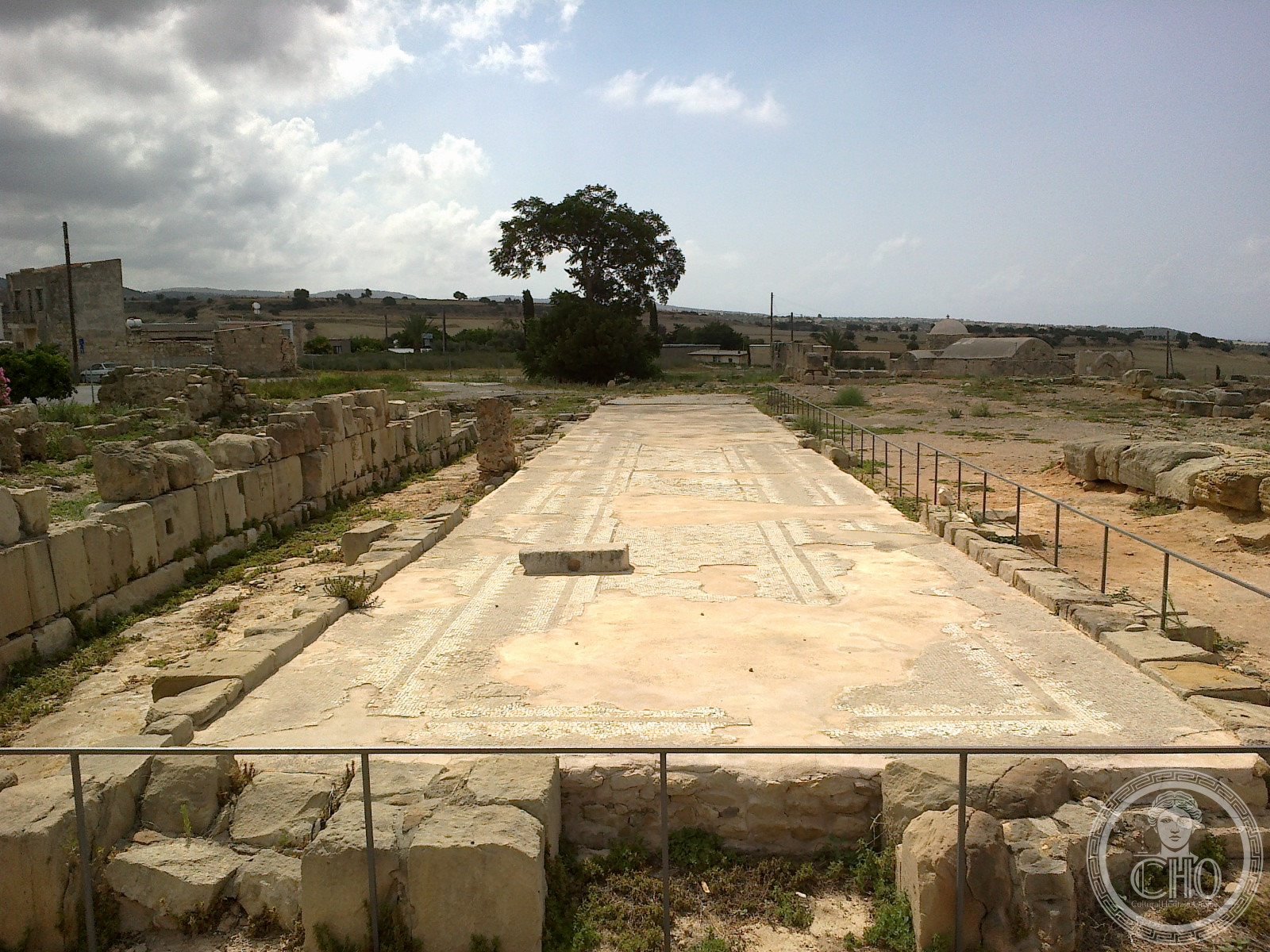
An ancient sanctuary dedicated to the goddess Aphrodite, believed to mark her legendary birthplace and one of the classical world’s most significant pilgrimage destinations.
At a glance
The Sanctuary of Aphrodite Paphia stands on the site where Greek mythology locates Aphrodite’s emergence from the sea. For centuries, pilgrims from across the ancient Mediterranean travelled here to honour the goddess of love and beauty. The sanctuary held religious authority as Aphrodite’s principal temple in the ancient world.
History
Located in ancient Paphos, this sanctuary developed around the legendary birthplace of Aphrodite. The site attracted worshippers and pilgrims throughout antiquity, establishing itself as the foremost sanctuary dedicated to the goddess. Its religious prominence drew visitors from distant lands, making it a vital centre of devotion in the classical Mediterranean.
What you see
Today visitors encounter the ruins of the ancient sanctuary. These remains testify to the site’s original sacred purpose and its importance within the religious landscape of antiquity.
Cultural significance
The sanctuary’s association with Aphrodite’s birth gave it unparalleled symbolic weight in the Greco-Roman world. It functioned not merely as a temple but as a threshold between myth and reality—a place where the divine narrative of the goddess became tangible through pilgrimage and ritual. The site embodies the enduring power of mythological geography to structure ancient religious life.
Key facts
- Country: Cyprus
- Location: Paphos
- Coordinates: 34.7075°N, 32.574°E
- UNESCO World Heritage status: Inscribed 1980
Practical information & getting there
The sanctuary lies in the Paphos region of southwestern Cyprus. You can reach the site via the town of Paphos, which has both road and air connections to the island. Consult local tourism information for current access conditions and visiting hours.
Sources & resources
Find it on the map
See this place and what’s around it →📷 Become a Cultural Heritage Online photographer
Share your photos of places: they stay published under your name as the author. The more they're seen, the more you get noticed — and soon a contest will reward the most appreciated photos.
Log in or sign up free to add a photoIs this page about you?
This page is read by travellers and heritage enthusiasts who find it on Google. Tell us how you are connected to this place and we will take it from there.