
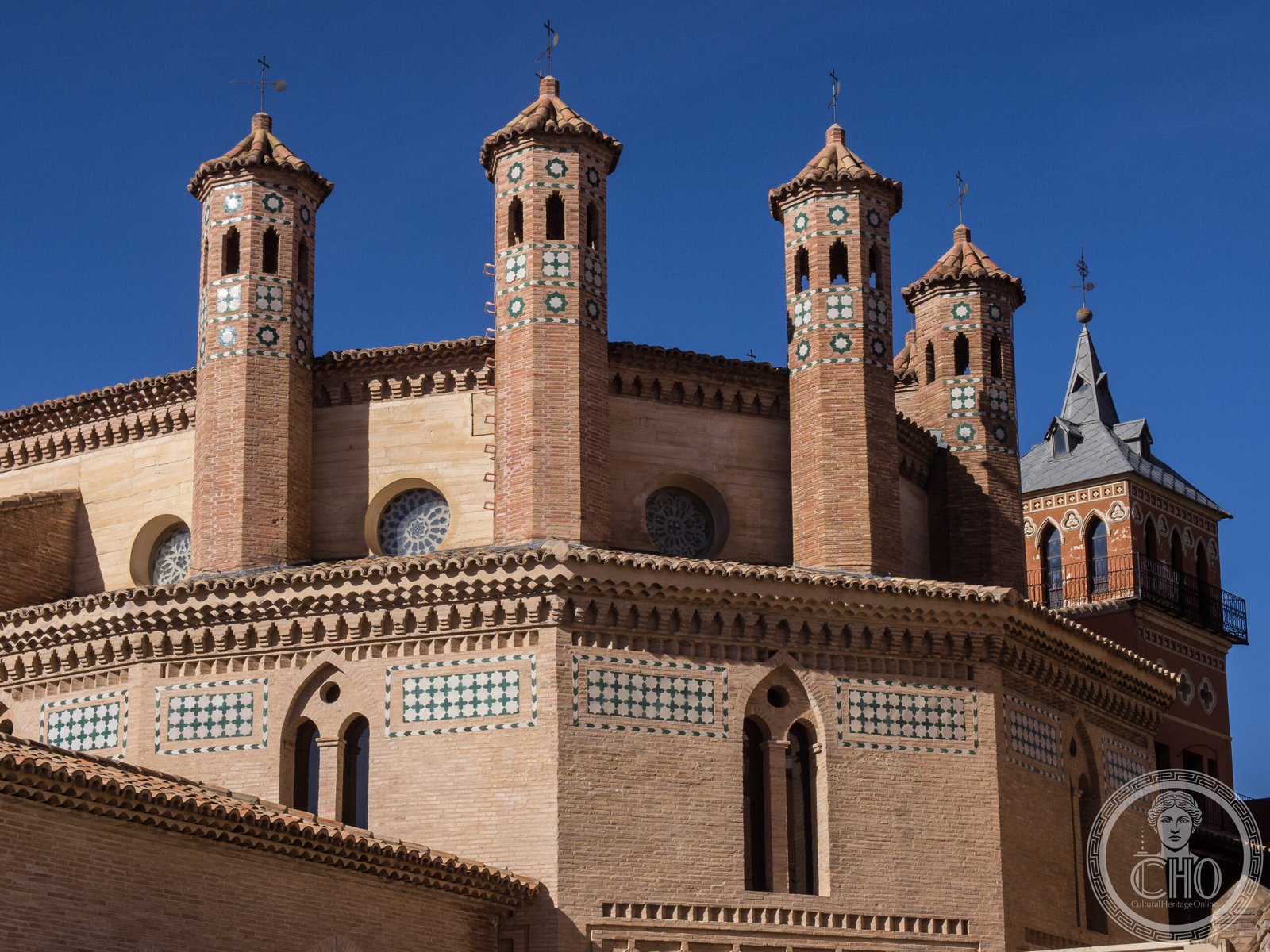
A striking medieval ensemble in Aragon, where a 13th-century bell tower rises above a 14th-century church, showcasing the Mudéjar architectural tradition of northeastern Spain.
At a glance
St. Peter’s Church combines two distinct periods of construction. The bell tower predates the church by roughly a century, creating an architectural dialogue between Mudéjar and Gothic forms. Both elements remain integral to Teruel’s skyline and cultural identity.
History
The bell tower was constructed in the 13th century, establishing a vertical landmark in medieval Teruel. The church itself followed in the 14th century, built around or alongside the existing tower. The ensemble reflects Teruel’s position within the Kingdom of Aragon during the late medieval period, a region where Islamic and Christian architectural traditions intersected.
What you see
The bell tower displays characteristic Mudéjar brickwork and patterning typical of 13th-century Aragonese construction. The church structure from the subsequent century integrates this tower as a dominant feature. The interplay of materials, proportions, and decorative techniques reveals the craftsmanship of medieval Spanish builders adapting diverse influences into a unified composition.
Cultural significance
San Pedro is part of Teruel’s Mudéjar heritage, a style recognized for its synthesis of Islamic and Christian artistic vocabularies. The monument exemplifies how medieval Spain’s multicultural exchanges produced distinctive architectural achievements. Its preservation has made it central to understanding Aragonese building traditions and medieval urban development.
Key facts
- Location: Teruel, Province of Teruel, Aragon, Spain
- Coordinates: 40.3426, −1.1063
- UNESCO World Heritage Site: Yes
- Bell tower: 13th century
- Church: 14th century
Practical information & getting there
San Pedro is located in Teruel’s historic center. As a UNESCO World Heritage property, visitor information and access details are available through Teruel’s official tourism office and heritage authorities. Check locally for current opening hours and any special access requirements.
Sources & resources
Find it on the map
See this place and what’s around it →📷 Become a Cultural Heritage Online photographer
Share your photos of places: they stay published under your name as the author. The more they're seen, the more you get noticed — and soon a contest will reward the most appreciated photos.
Log in or sign up free to add a photoIs this page about you?
This page is read by travellers and heritage enthusiasts who find it on Google. Tell us how you are connected to this place and we will take it from there.