

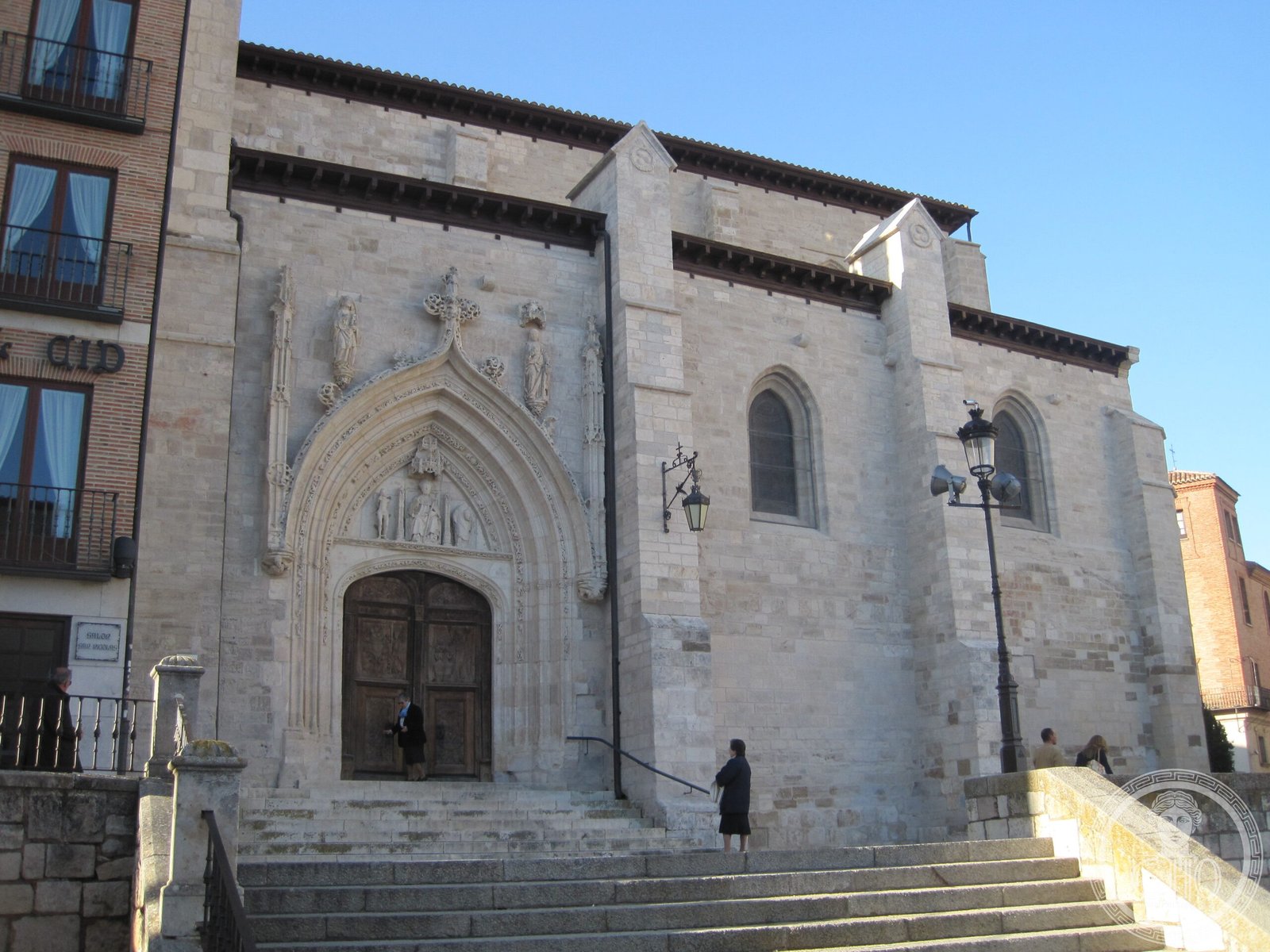
A Catholic parish church distinguished by Spain’s largest altarpiece, uniquely carved from limestone rather than the traditional wood.
At a glance
San Nicolás de Bari stands on Fernán González street in central Burgos, immediately adjacent to the Camino de Santiago pilgrimage route and positioned behind the city’s celebrated Cathedral. The church now serves as the seat of the parish of San Esteban, following the conversion of the original Church of San Esteban into a museum.
History
The church underwent an important transition in its role when the Church of San Esteban was repurposed as a museum. San Nicolás de Bari was designated to assume the administrative and spiritual functions of the San Esteban parish, making it a living center of worship for its community.
What you see
The church’s defining artistic feature is its monumental altarpiece—one of the largest in Spain and the only major altarpiece in the country executed in limestone. This unusual material choice, departing from the wooden altarpieces typical of Spanish religious architecture, makes the work architecturally and aesthetically distinctive.
Cultural significance
San Nicolás de Bari represents an important waypoint along the Camino de Santiago, one of Christianity’s most significant pilgrimage routes. Its limestone altarpiece is a rare testament to alternative artistic traditions in Spanish ecclesiastical decoration, offering visitors insight into regional variations in religious art and craftsmanship.
Key facts
- Location: Fernán González street, Burgos, Spain
- Coordinates: 42.34°N, 3.71°W
- Notable feature: Largest limestone altarpiece in Spain
- Current role: Seat of the parish of San Esteban
Practical information & getting there
The church is centrally located in Burgos, accessible from the Cathedral and along the Camino de Santiago route. Its position on a major pilgrimage way makes it an accessible stop for both pilgrims and visitors exploring the city’s religious architecture.
Sources & resources
Find it on the map
See this place and what’s around it →📷 Become a Cultural Heritage Online photographer
Share your photos of places: they stay published under your name as the author. The more they're seen, the more you get noticed — and soon a contest will reward the most appreciated photos.
Log in or sign up free to add a photoIs this page about you?
This page is read by travellers and heritage enthusiasts who find it on Google. Tell us how you are connected to this place and we will take it from there.