

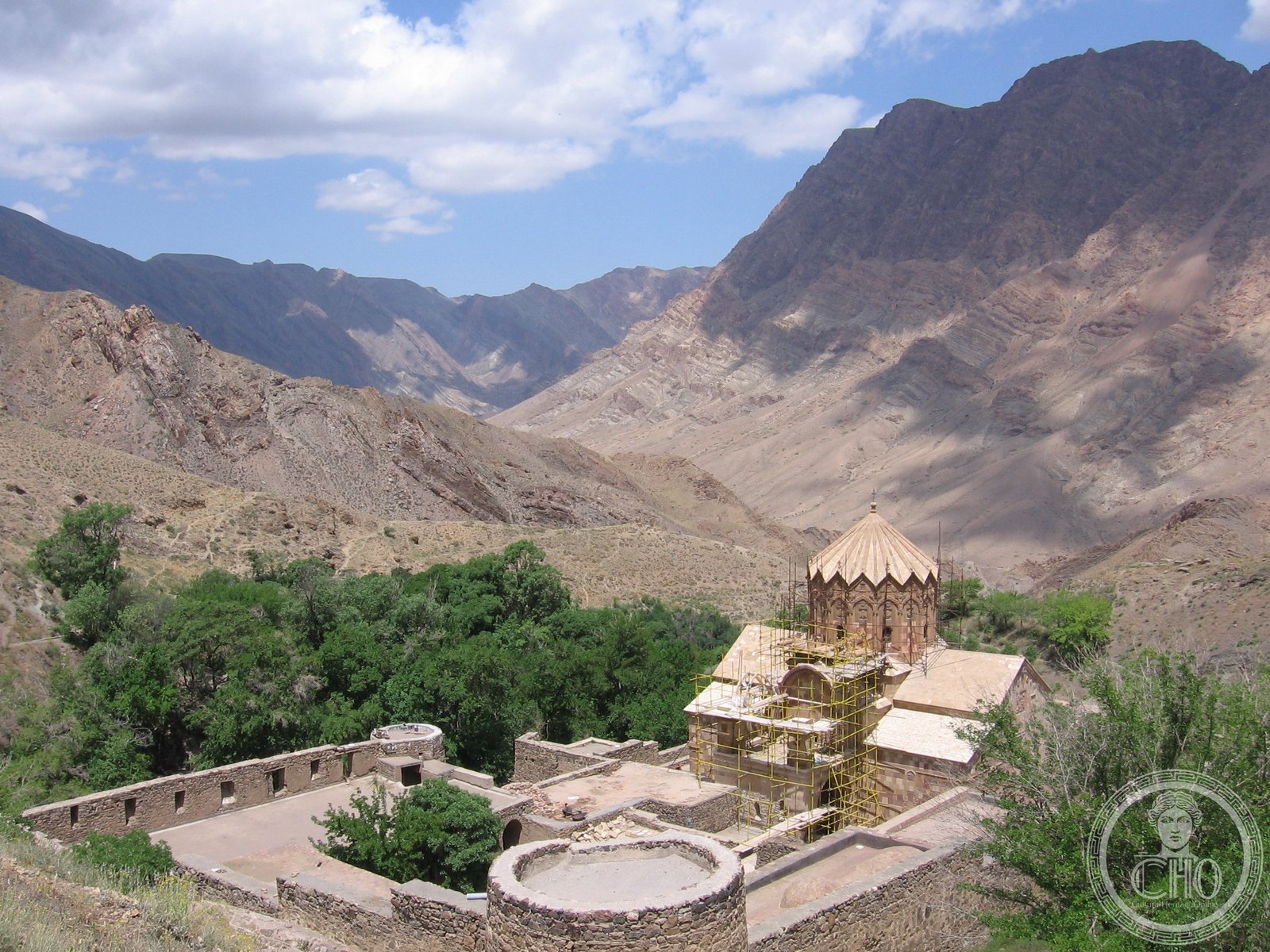
An Armenian monastery carved into a deep canyon along the Araxes River, rebuilt through centuries of conflict and natural disaster, now a UNESCO World Heritage site.
At a glance
Saint Stepanos Monastery stands 15 km northwest of Julfa in northwestern Iran, perched above the Araxes on the Iranian side of the Iran–Nakhchivan border. The site combines architectural heritage with dramatic landscape—a monastery set within a canyon rather than upon a hilltop.
History
The monastery was originally constructed in the ninth century. Over the centuries, wars and earthquakes damaged the structure repeatedly. During the Safavid era, substantial rebuilding restored the complex to working condition. The site endured as an active religious center through centuries of regional upheaval, though its precise construction dates and early phases remain partly obscured by time.
What you see
The monastery occupies a dramatic setting within a deep canyon carved by the Araxes. Its stone structures reflect both original ninth-century Armenian construction and later Safavid-era restoration work. The canyon location shapes the entire complex—walls and buildings integrate with the natural rock formations that frame the site.
Cultural significance
Saint Stepanos represents a crucial example of Armenian monastic architecture and spiritual continuity. It exemplifies how Armenian communities maintained religious life across centuries of political transition and natural disaster. The monastery is part of the Armenian Monastic Ensembles of Iran, a UNESCO World Heritage inscription recognizing the broader cultural landscape of Armenian Christianity in the region.
Key facts
- Country: Iran
- Region: East Azarbaijan province
- Location: Approximately 15 km northwest of Julfa
- Coordinates: 38.9794, 45.4733
- Original construction: 9th century
- Major reconstruction: Safavid era
- UNESCO status: Part of Armenian Monastic Ensembles of Iran World Heritage site
Practical information & getting there
The monastery is accessible from Julfa in East Azarbaijan. The site’s canyon location and border proximity affect access—check current travel conditions and permissions before visiting. Local guides familiar with the site and regional history are recommended.
Sources & resources
- Saint Stepanos Monastery – Wikipedia
- Cultural Heritage Online
Find it on the map
See this place and what’s around it →📷 Become a Cultural Heritage Online photographer
Share your photos of places: they stay published under your name as the author. The more they're seen, the more you get noticed — and soon a contest will reward the most appreciated photos.
Log in or sign up free to add a photoIs this page about you?
This page is read by travellers and heritage enthusiasts who find it on Google. Tell us how you are connected to this place and we will take it from there.