
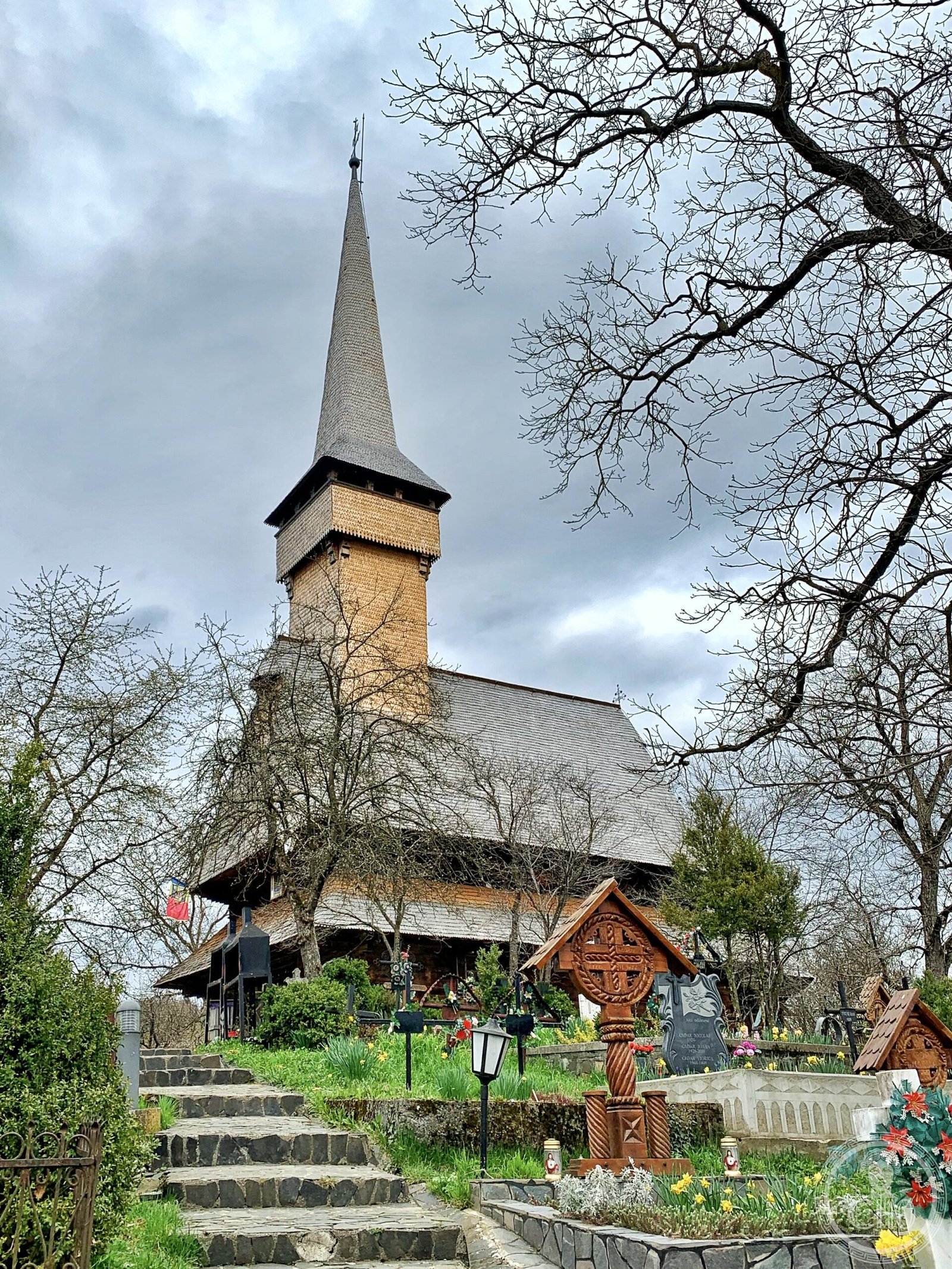
A wooden Orthodox church built in 1770, Saint Parascheva stands among Maramureș’s most significant architectural survivors—part of a UNESCO-protected ensemble of eight timber churches that represent the region’s distinctive building tradition.
At a glance
Saint Parascheva Church is a Romanian Orthodox timber structure located in Desești Commune, Maramureș County. Constructed in 1770, it belongs to the Wooden Churches of Maramureș, a UNESCO World Heritage Site encompassing eight related buildings that exemplify the region’s traditional wooden architecture.
History
Built in 1770, Saint Parascheva Church emerged during a period when wooden construction remained the predominant building method in rural Maramureș. The church has endured for over 250 years, surviving environmental and historical pressures to remain a functioning Orthodox place of worship and cultural landmark.
What you see
The church exemplifies Maramureș wooden architecture, a building tradition that distinguishes the region throughout Eastern Europe. Its timber construction and Orthodox design reflect centuries of local craftsmanship and religious practice specific to the region’s communities.
Cultural significance
Saint Parascheva Church holds dual recognition: it is part of the Wooden Churches of Maramureș UNESCO World Heritage Site and is designated as a historic monument by Romania’s Ministry of Culture and Religious Affairs. These designations acknowledge both its architectural importance and its role in preserving regional Orthodox heritage.
Key facts
- Built: 1770
- Location: Desești Commune, Maramureș County, Romania
- Coordinates: 47.77405, 23.85511
- UNESCO World Heritage Site: Wooden Churches of Maramureș (one of eight buildings)
- Protected status: Historic monument (Romanian Ministry of Culture and Religious Affairs)
Practical information & getting there
Saint Parascheva Church is located in Desești Commune, accessible via road in Maramureș County. The church remains an active Orthodox place of worship. Contact local tourism offices or the Ministry of Culture and Religious Affairs for visiting hours and any restrictions.
Sources & resources
Find it on the map
See this place and what’s around it →📷 Become a Cultural Heritage Online photographer
Share your photos of places: they stay published under your name as the author. The more they're seen, the more you get noticed — and soon a contest will reward the most appreciated photos.
Log in or sign up free to add a photoIs this page about you?
This page is read by travellers and heritage enthusiasts who find it on Google. Tell us how you are connected to this place and we will take it from there.