

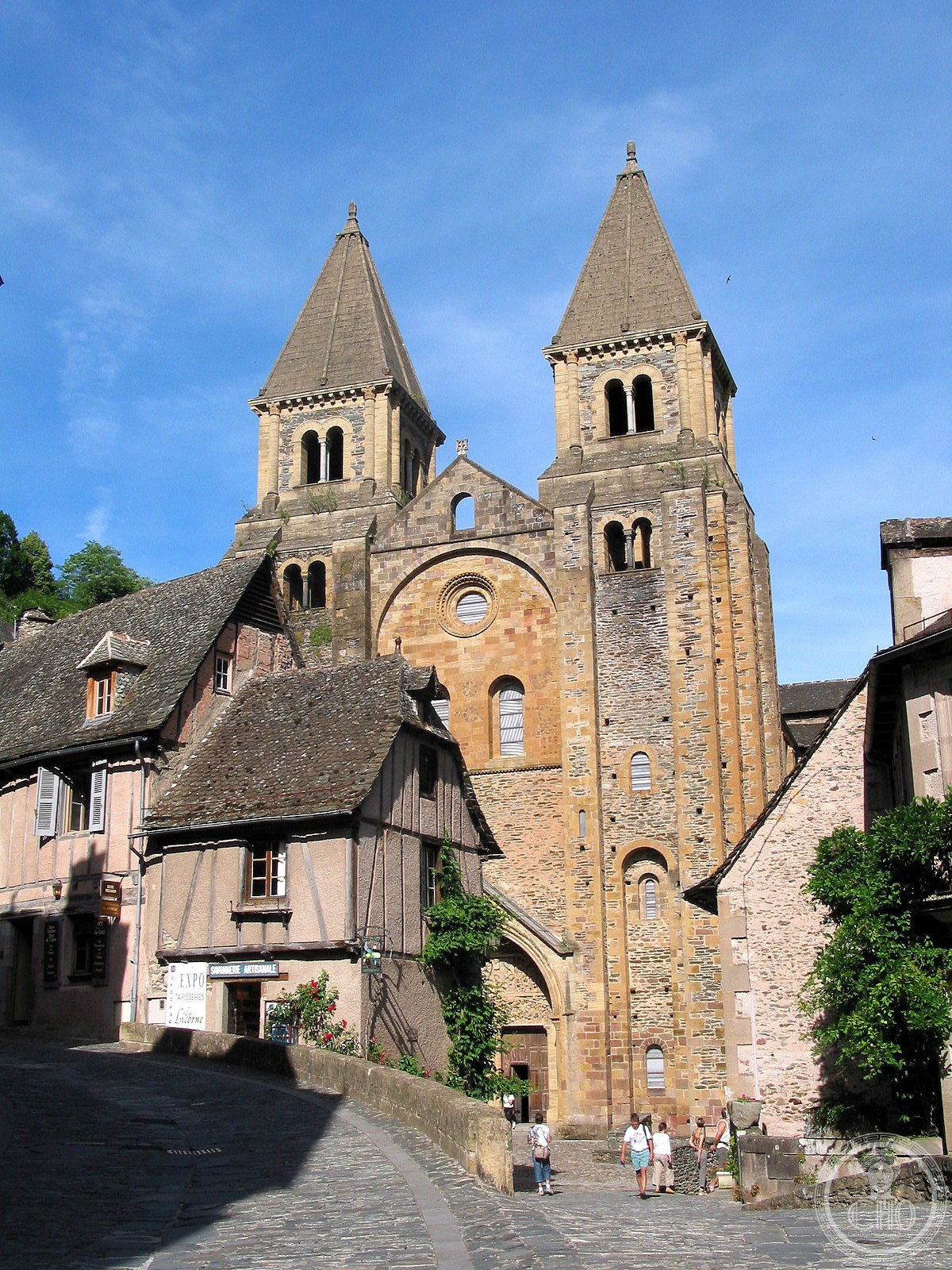
A Romanesque pilgrimage church whose relics of Saint Foy drew medieval travelers on the Way of St. James, then survived centuries of religious conflict and neglect to become a restored monument to faith and French heritage.
At a glance
The Abbey Church of Sainte-Foy stands in Conques, a remote village in southwestern France. Built to house the relics of a fourth-century martyr, it served as a major pilgrimage destination for those journeying to Santiago de Compostela in Spain. The church remains active today, functioning as both a parish and pilgrimage site while hosting musical performances.
History
The relics of Sainte Foy arrived in Conques through an audacious theft in 866. After failing to acquire other holy remains, abbey authorities dispatched a monk to Sélestat who spent nearly a decade posing as a loyal guardian before stealing the relics from St. Faith’s Church.
Medieval pilgrims flocked to Conques throughout the 11th and 12th centuries. By the 13th century, however, the abbey’s fortunes declined as Saint Foy’s veneration faded and the village’s isolation proved a disadvantage. In 1537, the Benedictine order lost control when Bishop Georges d’Armagnac transferred the abbey to a chapter of regular canons.
The Wars of Religion brought devastation in 1568 when Protestants seized Conques, burning much of the abbey including its original towers. A modest revival followed in the 17th century, but the French Revolution brought fresh ruin and the expulsion of the canons. Villagers, facing poverty, quarried the buildings for stone.
Restoration began in the 19th century through the efforts of Prosper Mérimée and Étienne Boissonnade. The church was reconstructed, its towers rebuilt, and Premonstratensian monks from Mondaye Abbey returned to serve it.
What you see
The Abbey Church displays Romanesque architecture characteristic of pilgrimage churches on the Santiago route. The structure encompasses the abbey buildings alongside the main church, which features the reconstructed towers completed during 19th-century restoration work. The interior spaces reflect both medieval design and later interventions.
Cultural significance
Sainte-Foy represents a vital junction in medieval pilgrimage networks. The church’s history mirrors broader European tensions between religious devotion and worldly destruction—from its founding through Reformation violence to revolutionary upheaval.
The abbey’s survival and restoration exemplify 19th-century French commitment to monument preservation. It remains a living symbol of faith, artistry, and cultural continuity across centuries of conflict.
Key facts
- Country: France
- Location: Conques
- Relics arrived: 866
- Coordinates: 44.5992, 2.3981
- Protected status: Classified as a national monument (monument historique classé) since 1840
Practical information & getting there
The Abbey Church of Sainte-Foy functions as an active parish and pilgrimage site. You can attend services and experience the restored interior where choral and organ performances are hosted. The church remains part of the Santiago de Compostela pilgrimage network, accessible to modern pilgrims following traditional routes.
Sources & resources
Find it on the map
See this place and what’s around it →📷 Become a Cultural Heritage Online photographer
Share your photos of places: they stay published under your name as the author. The more they're seen, the more you get noticed — and soon a contest will reward the most appreciated photos.
Log in or sign up free to add a photoIs this page about you?
This page is read by travellers and heritage enthusiasts who find it on Google. Tell us how you are connected to this place and we will take it from there.