
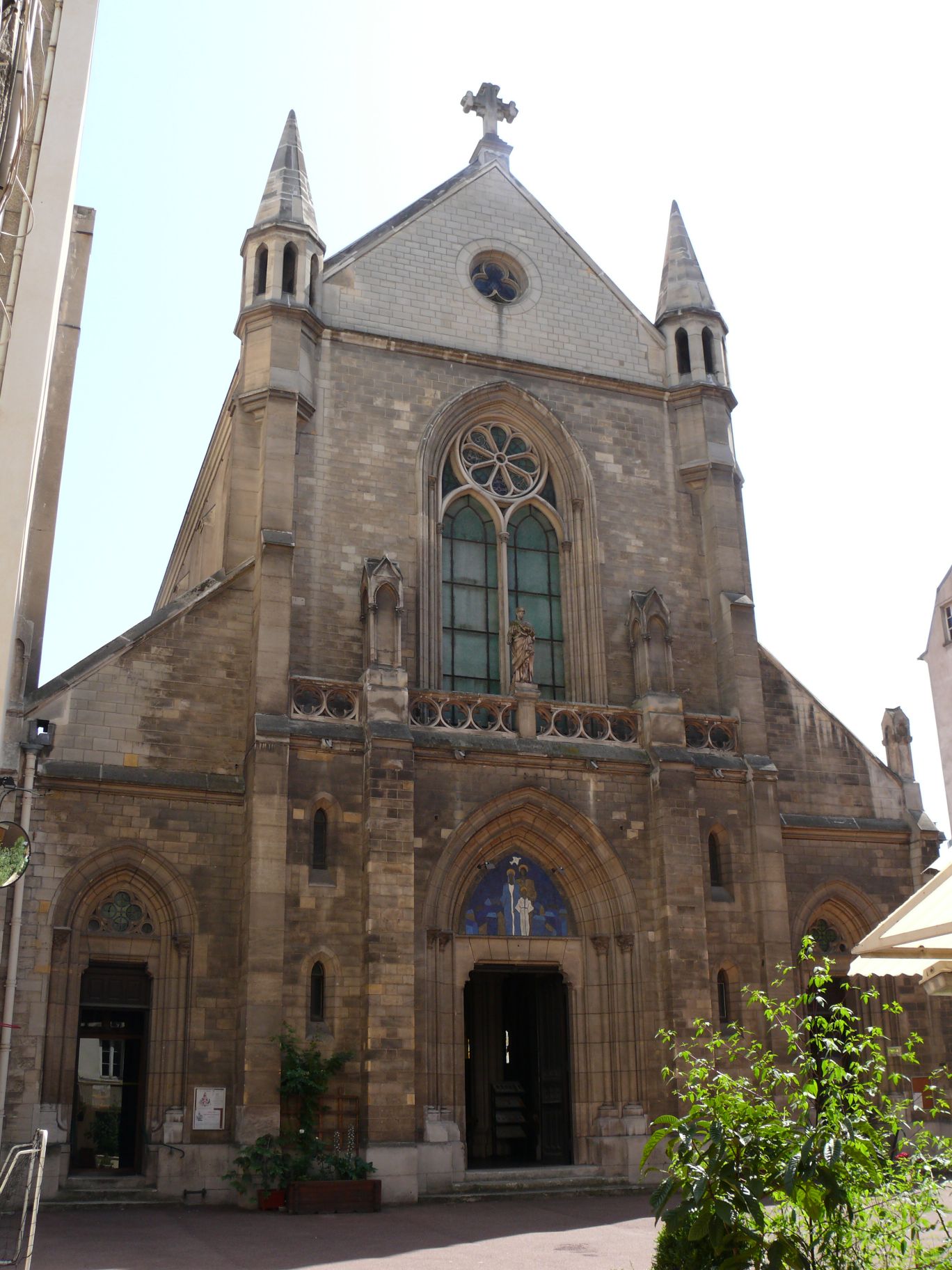
A Neogothic parish church in central Paris, built during the Second Empire by architect Lucien Douillard to serve the growing industrial and working-class population of the 10th arrondissement.
At a glance
Saint-Joseph-Artisan stands on rue Lafayette as a testament to mid-19th-century Parisian religious architecture. The church’s dedication to Saint Joseph the Artisan reflects its mission to the working-class community. Its Neogothic style aligns with the architectural revival movement that dominated European church design of the era.
History
Built between 1865 and 1866, the church was conceived during a period of rapid urban expansion in Paris. Architect Lucien Douillard designed the structure to meet the spiritual needs of the 10th arrondissement’s growing population. The choice of dedicating the church to Saint Joseph Artisan—the patron saint of workers—underscores its role within a predominantly working-class neighborhood undergoing industrialization.
What you see
The church exemplifies Neogothic architecture, the dominant ecclesiastical style of the 19th century. Douillard employed the characteristic pointed arches, ribbed vaults, and verticality associated with the Gothic revival movement. The building’s design reflects both scholarly reverence for medieval forms and contemporary construction techniques.
Cultural significance
As one of Lucien Douillard’s major works, Saint-Joseph-Artisan demonstrates the architect’s command of Neogothic idiom. The church remains an important marker of Second Empire religious patronage and urban planning. Its presence on rue Lafayette connects ecclesiastical and civic heritage in one of Paris’s defining thoroughfares.
Key facts
- Country: France
- City: 10th arrondissement, Paris
- Completed: 1866
- Architect: Lucien Douillard
- Coordinates: 48.88147, 2.36771
Practical information & getting there
The church is located at 214 rue Lafayette in Paris’s 10th arrondissement. You can reach it via the Paris Métro or by bus. Hours and visiting conditions should be confirmed in advance with local sources.
Sources & resources
Find it on the map
See this place and what’s around it →📷 Become a Cultural Heritage Online photographer
Share your photos of places: they stay published under your name as the author. The more they're seen, the more you get noticed — and soon a contest will reward the most appreciated photos.
Log in or sign up free to add a photoIs this page about you?
This page is read by travellers and heritage enthusiasts who find it on Google. Tell us how you are connected to this place and we will take it from there.