
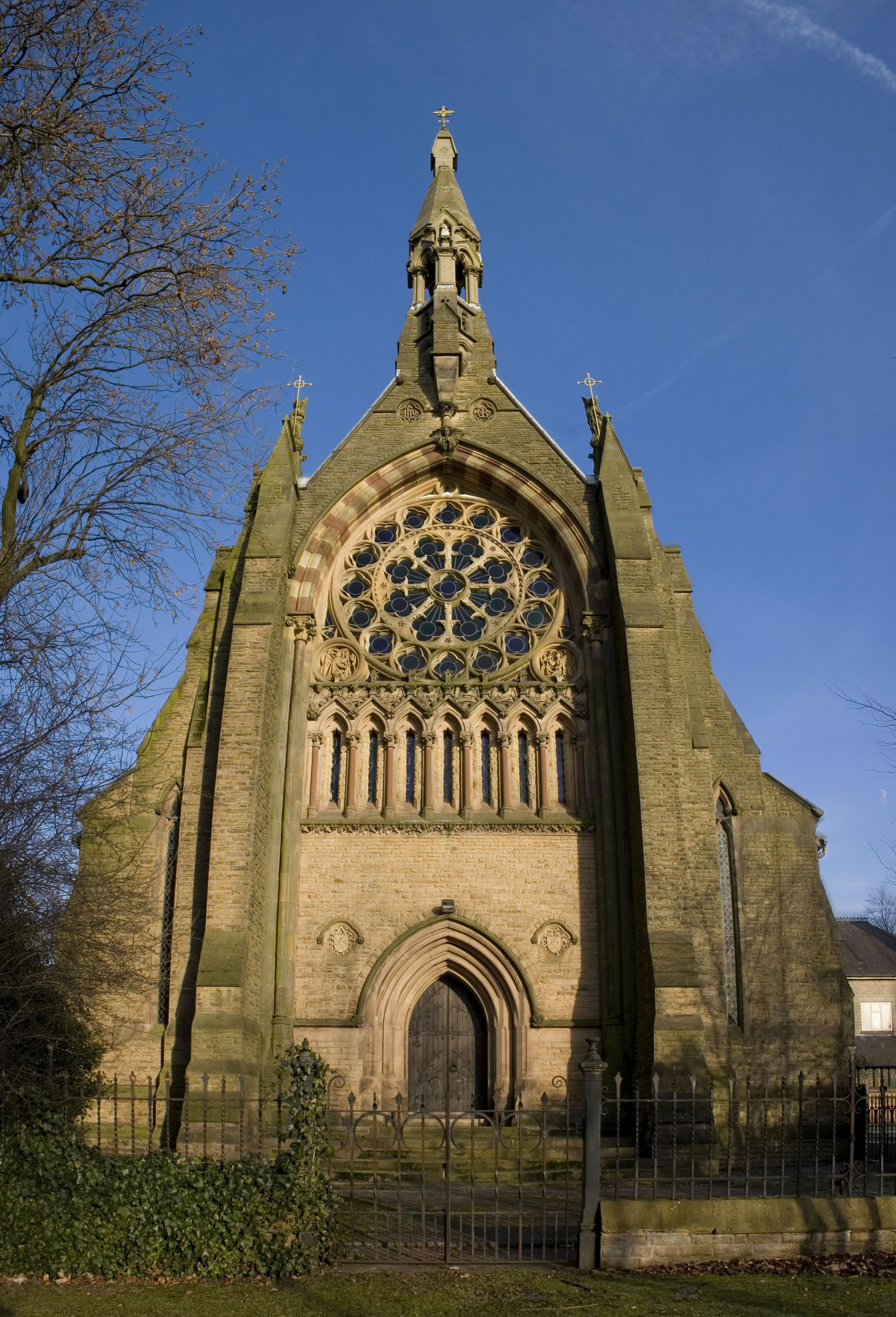
A Gothic Revival masterpiece designed by E. W. Pugin for a Lancashire patron, this Roman Catholic parish church stands as one of the architect’s finest achievements.
At a glance
All Saints’ Church is a Grade I listed Roman Catholic parish church located between Dumplington and Barton upon Irwell, near Urmston in Greater Manchester. Built in 1867–1868, it occupies a prominent site on Redclyffe Road close to the Manchester Ship Canal.
History
The church was commissioned by Sir Humphrey de Trafford and constructed between 1867 and 1868. Since 1928, it has been served by priests from the Conventual Franciscans, who continue to minister to the parish.
What you see
E. W. Pugin designed the building in the Gothic Revival style, drawing on medieval ecclesiastical traditions. Architectural historian Nikolaus Pevsner deemed it “the masterpiece of [Pugin’s] life, without any doubt,” recognising its exceptional quality among the architect’s body of work.
Cultural significance
The church represents a high point of Victorian Catholic architectural patronage in Lancashire. Its Grade I listing reflects its importance as both a religious and architectural landmark, exemplifying the revival of Gothic design principles in nineteenth-century church building.
Key facts
- Country: United Kingdom
- City: Trafford, Greater Manchester
- Coordinates: 53.4727, −2.3519
- Designed by: E. W. Pugin
- Completed: 1868
- Grade I listed building
- Active ministry: Conventual Franciscans since 1928
Practical information & getting there
The church is located on Redclyffe Road between Dumplington and Barton upon Irwell, accessible from Urmston in the London Borough of Trafford. For visiting hours and service times, contact the parish directly or consult the church’s official information.
Sources & resources
Find it on the map
See this place and what’s around it →📷 Become a Cultural Heritage Online photographer
Share your photos of places: they stay published under your name as the author. The more they're seen, the more you get noticed — and soon a contest will reward the most appreciated photos.
Log in or sign up free to add a photoIs this page about you?
This page is read by travellers and heritage enthusiasts who find it on Google. Tell us how you are connected to this place and we will take it from there.