

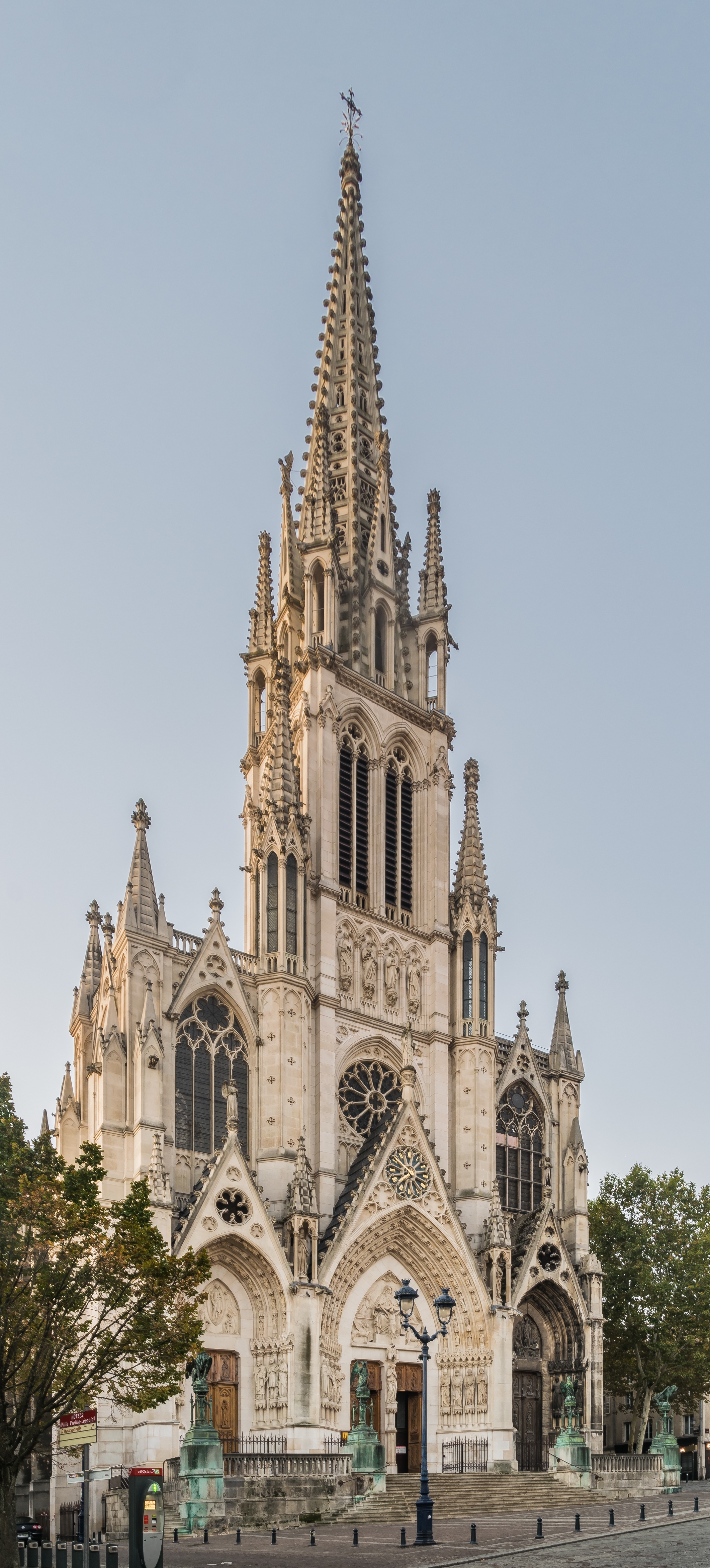
A masterwork of Rayonnant neogothic design, this 19th-century basilica rises above Nancy with soaring verticality and intricate stone tracery characteristic of its architectural movement.
At a glance
Saint-Epvre Basilica exemplifies the 19th-century revival of Gothic architecture in France. Built by architect Prosper Morey, it showcases the refined linearity and decorative precision of Rayonnant neogothic style—a movement that celebrated the technical and aesthetic achievements of medieval Gothic art.
History
Constructed during the 19th century, the basilica represents a period of renewed interest in Gothic revival across Europe. Architect Prosper Morey designed the structure to honor medieval religious heritage while employing contemporary construction techniques and materials available in his era.
What you see
The basilica displays hallmarks of Rayonnant neogothic style: pointed arches, ribbed vaults, and tracery windows that dissolve solid walls into delicate stone frameworks. Morey’s design emphasizes vertical thrust and luminosity—principles central to authentic Gothic cathedrals, reinterpreted for a modern age.
Cultural significance
Saint-Epvre stands as a testament to 19th-century historicism and the enduring power of Gothic aesthetics. Its construction reflected broader European movements to preserve and reinterpret medieval architectural traditions during a period of industrial transformation.
Key facts
- Country: France
- City: Nancy
- Coordinates: 48.69589, 6.17993
- Architect: Prosper Morey
- Style: Rayonnant neogothic
- Date: 19th century
Practical information & getting there
Saint-Epvre Basilica is located in Nancy, in the Lorraine region of northeastern France. For visiting hours, admission details, and current accessibility information, consult local tourism resources or the basilica’s official channels.
Sources & resources
Find it on the map
See this place and what’s around it →📷 Become a Cultural Heritage Online photographer
Share your photos of places: they stay published under your name as the author. The more they're seen, the more you get noticed — and soon a contest will reward the most appreciated photos.
Log in or sign up free to add a photoIs this page about you?
This page is read by travellers and heritage enthusiasts who find it on Google. Tell us how you are connected to this place and we will take it from there.