

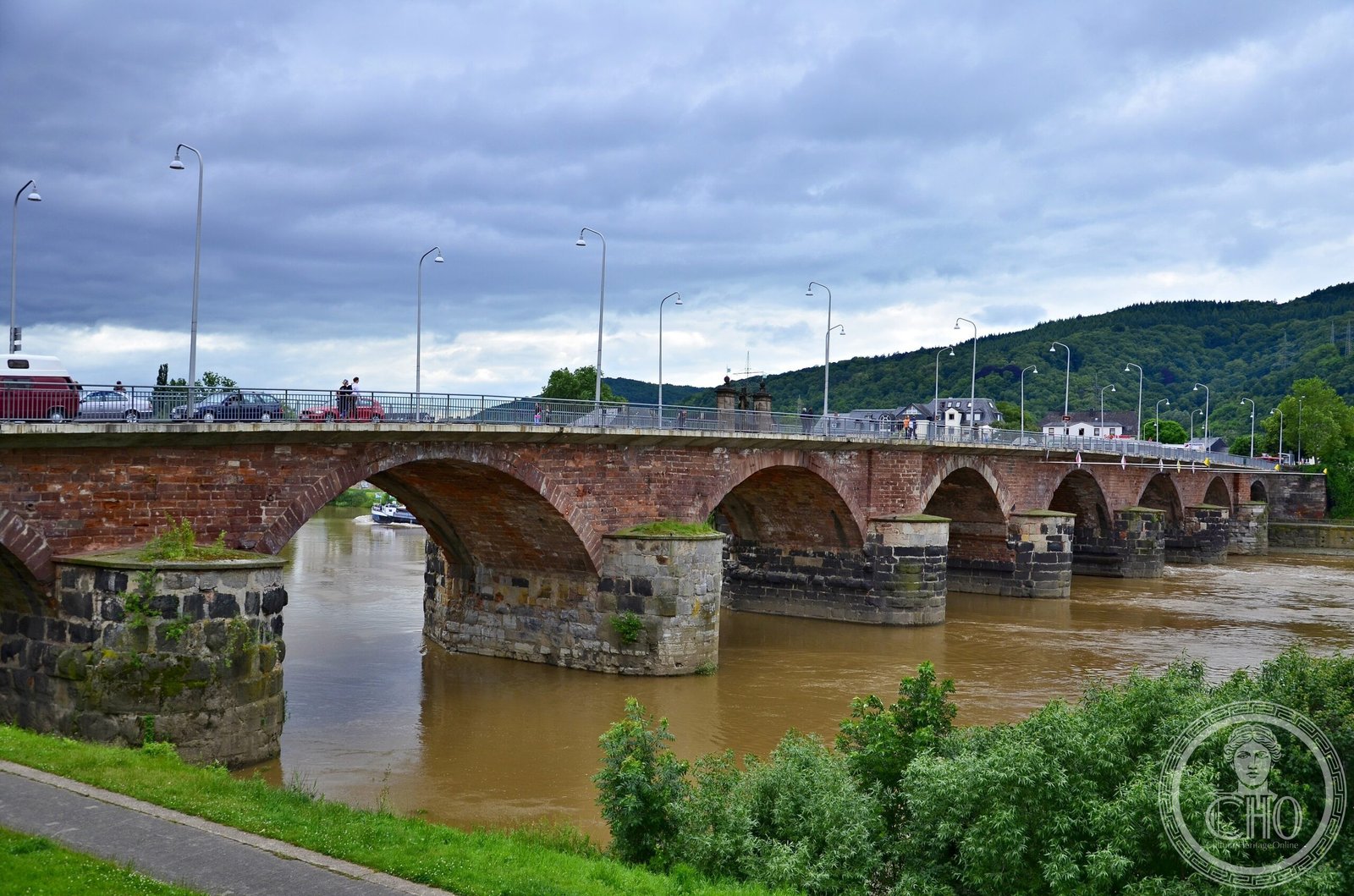
Germany’s oldest standing bridge and the oldest Roman span north of the Alps, this engineering feat has crossed the Moselle for nearly two millennia, its nine stone pillars a testament to Roman durability and craft.
At a glance
The Roman Bridge connects ancient Trier across the Moselle River using nine pillars constructed in the 2nd century AD. Its upper superstructure has been rebuilt twice—in the early 12th and early 18th centuries—following wartime damage, yet the Roman stone foundations endure.
History
The bridge replaced two earlier wooden structures dating back at least to 17 BC. Roman engineers chose the site strategically, and the nine pillars they raised in the 2nd century AD proved so robust they survived centuries of use and conflict. Medieval and early modern rebuilding campaigns preserved the Roman core while adapting the bridge to contemporary needs.
What you see
Nine imposing stone pillars rise from the riverbed, their Roman masonry visible today as it was two thousand years ago. The bridge’s current upper deck reflects 18th-century construction, yet the Roman substructure dominates the composition. Pillar arches reveal the engineering logic that kept traffic and pedestrians crossing the swift Moselle.
Cultural significance
In Roman times, travelers cast coins into the Moselle from the bridge as offerings for safe passage and good fortune. Modern surveys suggest approximately one million coins may rest in the riverbed below. The bridge stands as a living link between Roman frontier life and the medieval city that grew around it, embodying both engineering prowess and the continuity of European settlement patterns.
Key facts
- Country: Germany
- City: Trier
- Coordinates: 49.7519, 6.6265
- UNESCO World Heritage: Inscribed 1986 as part of Roman Monuments, Cathedral and Church of Our Lady in Trier
- Original construction: 2nd century AD
- Oldest Roman bridge: North of the Alps
Practical information & getting there
The bridge remains open to pedestrians and serves as a central crossing in Trier’s historic landscape. It lies within the UNESCO-inscribed zone encompassing Roman and Early Gothic monuments. For current visiting hours and seasonal conditions, consult local tourism resources or the city’s heritage office.
Sources & resources
Find it on the map
See this place and what’s around it →📷 Become a Cultural Heritage Online photographer
Share your photos of places: they stay published under your name as the author. The more they're seen, the more you get noticed — and soon a contest will reward the most appreciated photos.
Log in or sign up free to add a photo