
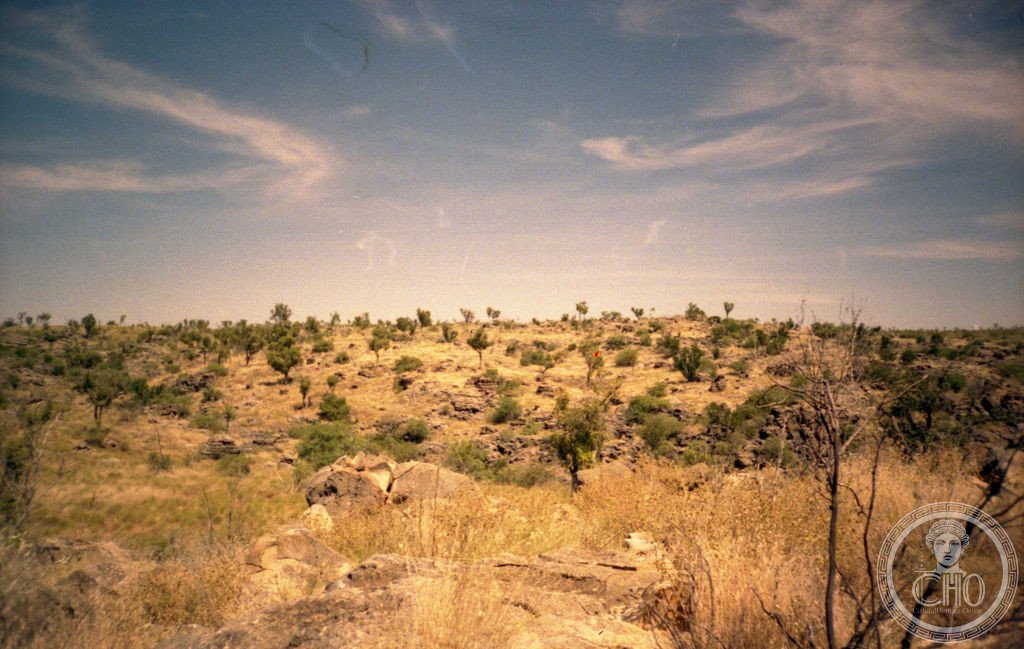
Australia’s premier fossil repository, Riversleigh preserves three-dimensional remains of ancient mammals, birds, and reptiles in soft freshwater limestone, revealing an ecosystem from when Queensland was a wet rainforest.
At a glance
Spanning approximately 100 square kilometres in north-west Queensland near the Gregory River, Riversleigh contains some of the world’s most exceptionally preserved fossils from the Oligocene and Miocene epochs. The site’s unique geology and preservation conditions have yielded species found nowhere else on Earth.
History
Fossils were first noted in the area in 1901. An initial exploration survey was conducted in 1963, followed by systematic investigation beginning in 1976. The site achieved World Heritage designation in 1994 when co-listed with South Australia’s Naracoorte Caves National Park. It now functions as an extension of Boodjamulla National Park.
What you see
The fossiliferous limestone system formed in an environment of ancient karst caves and crevices created by water erosion. Limestone caves served as natural pitfall traps and predator feeding grounds, periodically sealed and preserved. The uncompacted soft limestone retained animal remains in three dimensions rather than the crushed state typical of most fossil sites—a preservation advantage unique among major fossil locations.
Large assemblages of fossilised bats are particularly abundant, their guano having aided conservation of associated remains.
Cultural significance
Riversleigh documents a critical period in Australian natural history, capturing the transformation of Queensland’s climate and vegetation as Gondwanan continents separated and Australia drifted northward. The Riversleigh fauna—species known only from this site—provides irreplaceable evidence of Cenozoic mammal evolution and the evolution of Australia’s ecosystems from tropical rainforest to increasingly arid conditions.
Key facts
- Country: Australia
- Location: North-west Queensland, near Gregory River
- Area: Approximately 100 square kilometres (39 sq mi)
- Period: Late Oligocene to recent geological periods
- UNESCO World Heritage Site: Listed 1994
- Coordinates: 19.033°S, 138.630°E
Practical information & getting there
The site lies within the catchment of the Gregory River in remote north-west Queensland. Access and visitor facilities information should be obtained from Boodjamulla National Park or Queensland’s parks authority before visiting.
Sources & resources
Find it on the map
See this place and what’s around it →📷 Become a Cultural Heritage Online photographer
Share your photos of places: they stay published under your name as the author. The more they're seen, the more you get noticed — and soon a contest will reward the most appreciated photos.
Log in or sign up free to add a photoIs this page about you?
This page is read by travellers and heritage enthusiasts who find it on Google. Tell us how you are connected to this place and we will take it from there.