
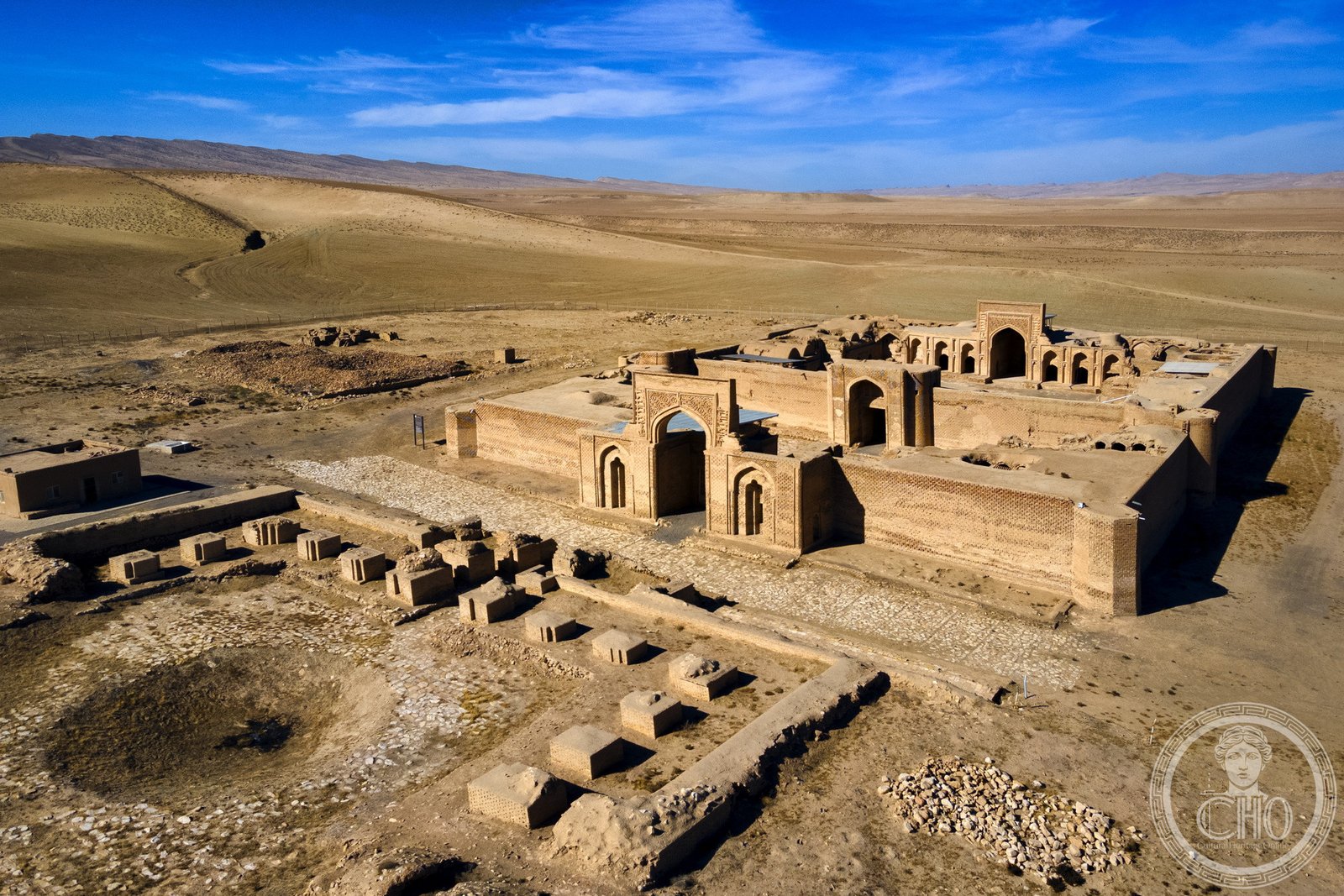
Ribat-i Sharaf
A fortified caravanserai built in 1114–15, Ribat-i Sharaf embodied the architectural traditions of medieval Islamic travel infrastructure on the Silk Road between Merv and Nishapur.
At a glance
Ribat-i Sharaf is a 12th-century caravanserai—a fortified inn designed to shelter merchants and travellers crossing Central Asia. Its exterior presents a defensive rectangular form, while its interior follows the four-iwan courtyard plan fundamental to Islamic and Iranian architecture. The building survives as a testament to medieval hospitality infrastructure.
History
Construction began in 1114–15, during the height of Silk Road commerce. The caravanserai occupied a strategic position between the ancient cities of Merv and Nishapur, offering essential rest and security to merchants traversing dangerous trade routes. The fortified design reflected the practical need for defence against bandits and the elements.
What you see
The building’s exterior reads as a robust fortified rectangle—a visual statement of security and permanence. Inside, the traditional four-iwan floor plan organises the structure around a central courtyard, with vaulted halls opening onto this open space. This layout provided accommodation, storage, and protection while maintaining the social and commercial functions essential to caravanserai life.
Cultural significance
Ribat-i Sharaf exemplifies the architectural and social infrastructure that enabled long-distance trade in medieval Asia. The caravanserai represents a synthesis of practical construction and established Islamic architectural principles, showing how standardised forms met real needs across vast distances and centuries.
Key facts
- Built 1114–15
- Located in Razavi Khorasan Province, Iran
- Coordinates: 36.2664, 60.6555
- Type: Caravanserai (merchant inn)
- Architectural plan: Four-iwan courtyard design
Practical information & getting there
Ribat-i Sharaf is located in Razavi Khorasan Province, in eastern Iran, positioned between the historical cities of Merv and Nishapur. Detailed access information and current visiting conditions should be verified through regional tourism resources.
Sources & resources
Find it on the map
See this place and what’s around it →📷 Diventa un fotografo di Cultural Heritage Online
Condividi le tue foto dei luoghi: restano pubblicate con la tua firma come autore. Più vengono viste, più ti fai conoscere — e presto un concorso premierà le foto più apprezzate.
Accedi o registrati gratis per aggiungere una fotoDo you manage this place?
This page is read by travellers and heritage enthusiasts who find it on Google. Keep it accurate — and make it work for you. Free for non-profit heritage institutions.