
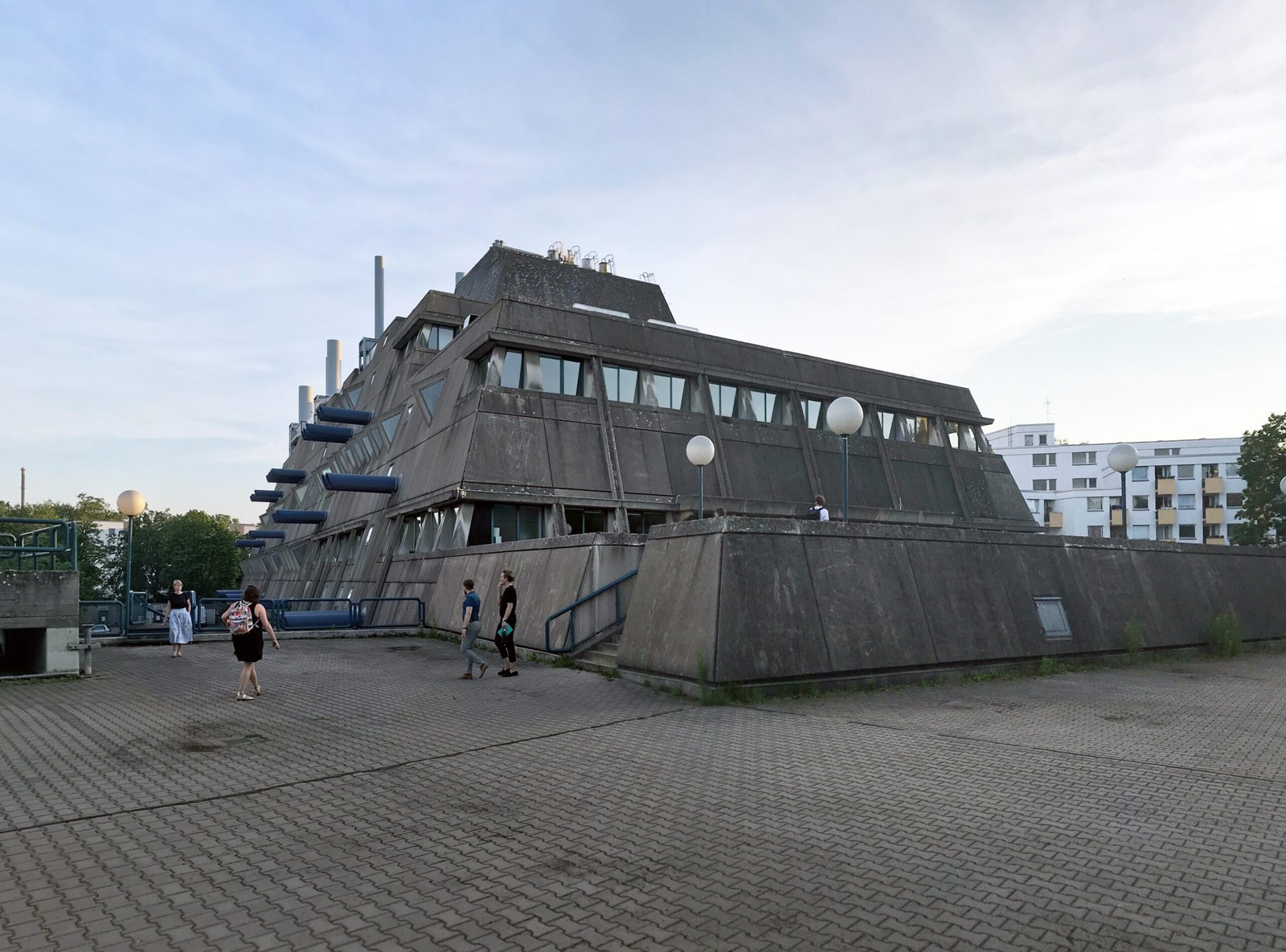
A Berlin research facility known colloquially as the Mouse Bunker, this institution has served biomedical science for decades.
At a glance
The Research Institutes for Experimental Medicine occupy a distinctive bunker-like structure in the Steglitz-Zehlendorf district of Berlin. The facility’s vernacular name—Mouse Bunker, or Mäusebunker—reflects its primary role in housing laboratory animals for research purposes.
History
Until 2003, the building served officially as the Central Animal Laboratories of the Free University of Berlin. The facility’s institutional evolution mirrors the postwar development of scientific research infrastructure in West Berlin.
What you see
The structure’s bunker-like form suggests mid-20th-century modernist design adapted to scientific function. Its austere, fortress-like appearance is characteristic of institutional buildings designed primarily for laboratory work rather than public engagement.
Cultural significance
The Mouse Bunker represents a significant chapter in the history of biomedical research in Berlin and Cold War-era scientific infrastructure. Its distinctive architecture and colloquial name have made it a recognizable landmark within local consciousness, embodying the relationship between institutional science and urban landscape.
Key facts
- Country: Germany
- City: Berlin (Steglitz-Zehlendorf district)
- Coordinates: 52.4368, 13.3171
- Former official name: Central Animal Laboratories of the Free University of Berlin (until 2003)
Practical information & getting there
The facility is located in the Steglitz-Zehlendorf district of southwestern Berlin. As an active research institution, public access is not available. The site remains architecturally significant and visible from surrounding areas.
Sources & resources
Find it on the map
See this place and what’s around it →📷 Become a Cultural Heritage Online photographer
Share your photos of places: they stay published under your name as the author. The more they're seen, the more you get noticed — and soon a contest will reward the most appreciated photos.
Log in or sign up free to add a photoIs this page about you?
This page is read by travellers and heritage enthusiasts who find it on Google. Tell us how you are connected to this place and we will take it from there.