
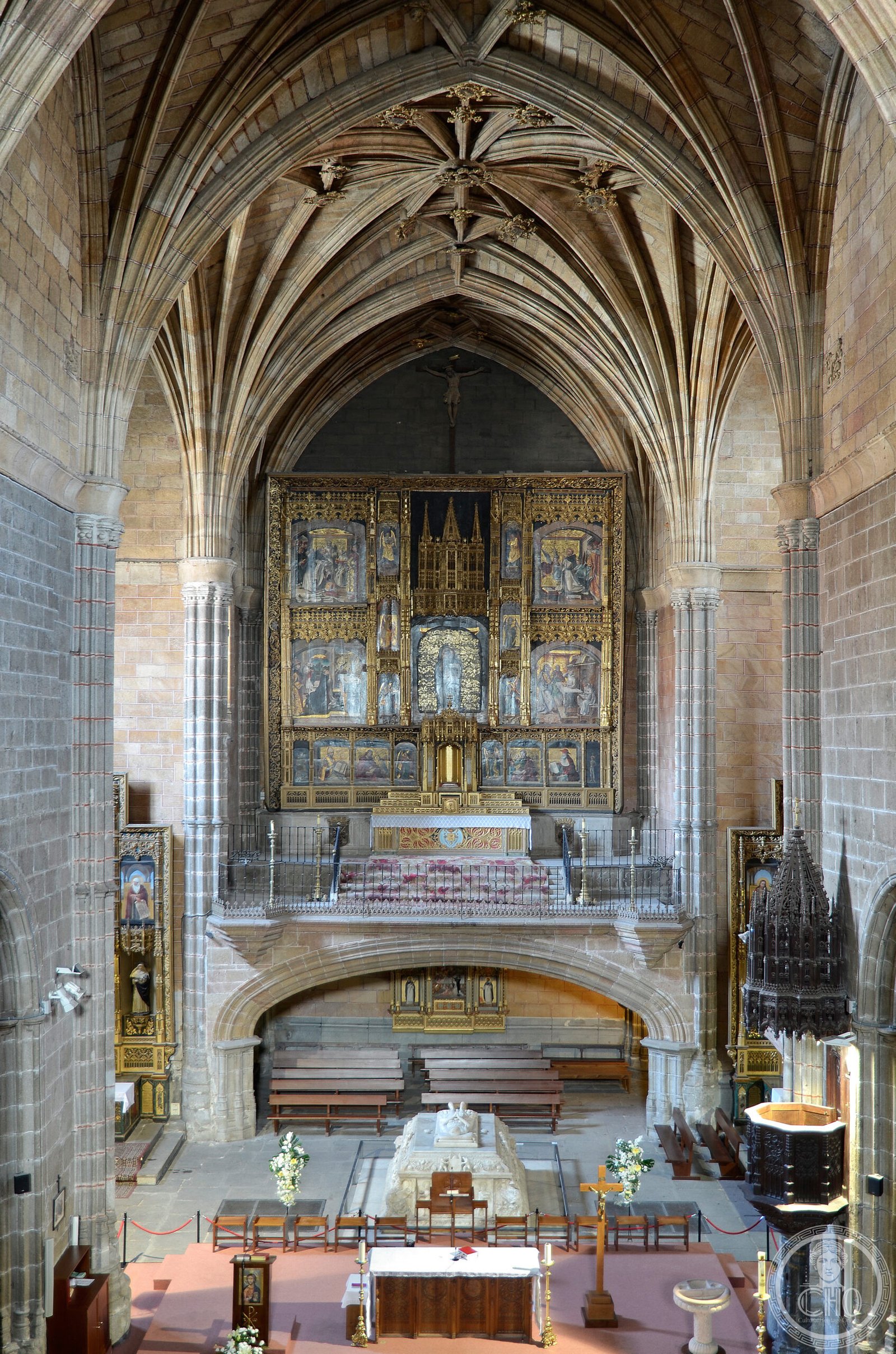
A Gothic monastery founded by Spain’s Catholic Monarchs to honour Saint Thomas Aquinas, this Dominican convent became a royal burial site and now houses museums alongside active religious life.
At a glance
The Royal Monastery of St. Thomas is a Gothic structure in Ávila that blends monastic tradition with royal patronage. Originally established as a Dominican convent, it has evolved into a multifaceted cultural institution combining sacred space, secular scholarship, and artistic collections.
History
Founded in 1482 by the Catholic Monarchs, the monastery was dedicated to Saint Thomas Aquinas, the Dominican friar and philosopher. The church gained prominence as a burial place for John, Prince of Asturias, cementing its significance in Spanish royal history. Since the 1970s, the monastic church has functioned as a parish church, adapting to contemporary pastoral needs while preserving its historical character.
What you see
The monastery exemplifies Gothic architectural style typical of late-15th-century Spanish religious architecture. The complex reflects the formal severity and spiritual ambitions of its royal founders through its design and spatial organization.
Cultural significance
As a monument to both Dominican intellectual tradition and Spanish royal power, the monastery represents the intersection of faith and governance in Renaissance Spain. Its transformation into a repository of natural sciences and oriental art demonstrates how religious spaces evolve to serve broader cultural missions.
Key facts
- Founded: 1482
- Country: Spain
- City: Ávila
- Coordinates: 40.6503, −4.68885
- Architectural style: Gothic
- Current use: Parish church, museum complex
Practical information & getting there
The monastery is located in Ávila. It houses a museum of natural sciences and a museum of oriental art alongside the active parish church. Contact local tourism offices for visiting hours, admission fees, and guided tour availability.
Sources & resources
Find it on the map
See this place and what’s around it →📷 Become a Cultural Heritage Online photographer
Share your photos of places: they stay published under your name as the author. The more they're seen, the more you get noticed — and soon a contest will reward the most appreciated photos.
Log in or sign up free to add a photoIs this page about you?
This page is read by travellers and heritage enthusiasts who find it on Google. Tell us how you are connected to this place and we will take it from there.