

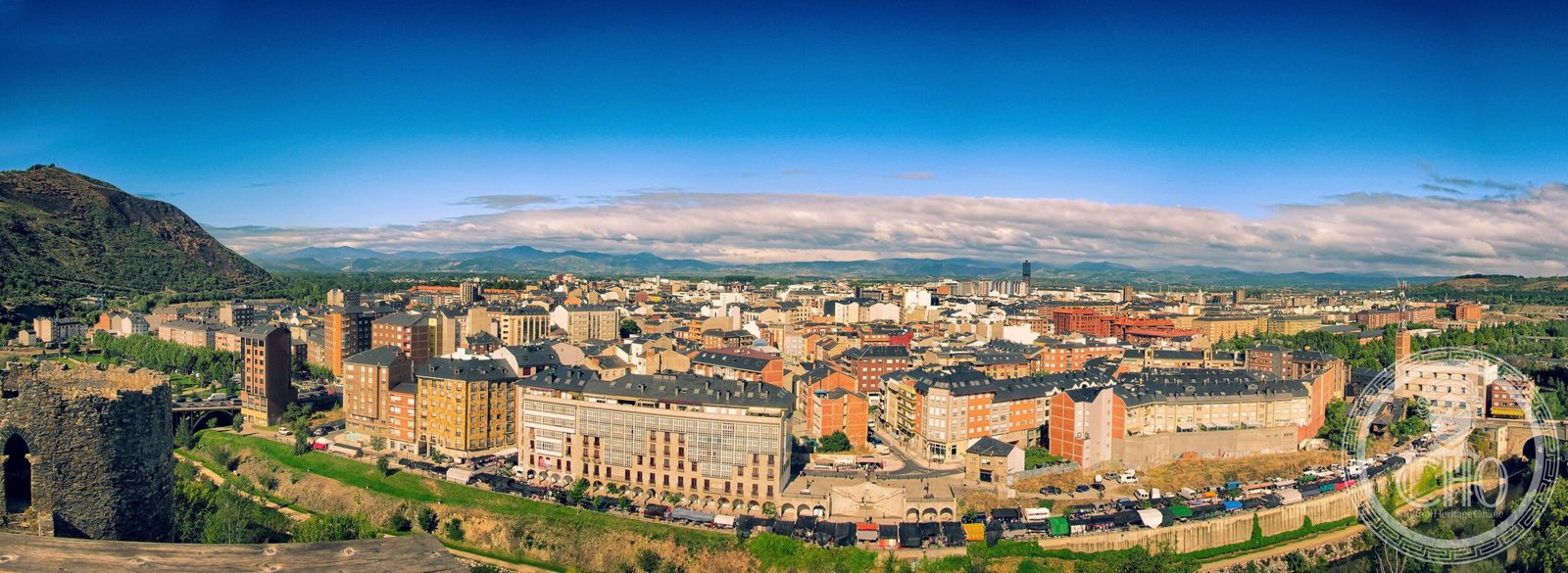
A mountain-ringed city on Spain’s Sil River, Ponferrada serves as the last major stop for pilgrims on the French Way toward Santiago de Compostela.
At a glance
Ponferrada is the second most populated municipality in the Province of León and administrative capital of El Bierzo, the region’s only legally recognized comarca. The city’s strategic position on the Camino de Santiago—Christianity’s most famous pilgrimage route—has shaped its identity for centuries.
History
The city’s name derives from its medieval stone bridge across the Sil River. As a crucial waypoint on the pilgrimage road to Santiago de Compostela, Ponferrada grew in importance during the Middle Ages, serving thousands of devotees traveling from France toward Galicia.
What you see
The surrounding mountains create a dramatic setting for the city’s historic core. The Sil River, which the city straddles, remains central to Ponferrada’s geography and character.
Cultural significance
Ponferrada’s prominence rests on its role as the final major urban center on the French route of the Camino de Santiago before pilgrims reach their destination. This religious and cultural function has defined the city’s purpose and identity across centuries.
Key facts
- Country: Spain
- Region: Castile and León, Province of León
- Administrative role: Capital of El Bierzo
- Coordinates: 42.55°N, 6.58°W
- Population (2021): 63,747
Practical information & getting there
Ponferrada is accessible by road and rail within Spain. The city serves as a natural rest point for Camino de Santiago walkers and cyclists traveling the French Way. Local tourism services support pilgrims with accommodation and facilities.
Sources & resources
Find it on the map
See this place and what’s around it →📷 Become a Cultural Heritage Online photographer
Share your photos of places: they stay published under your name as the author. The more they're seen, the more you get noticed — and soon a contest will reward the most appreciated photos.
Log in or sign up free to add a photoIs this page about you?
This page is read by travellers and heritage enthusiasts who find it on Google. Tell us how you are connected to this place and we will take it from there.