
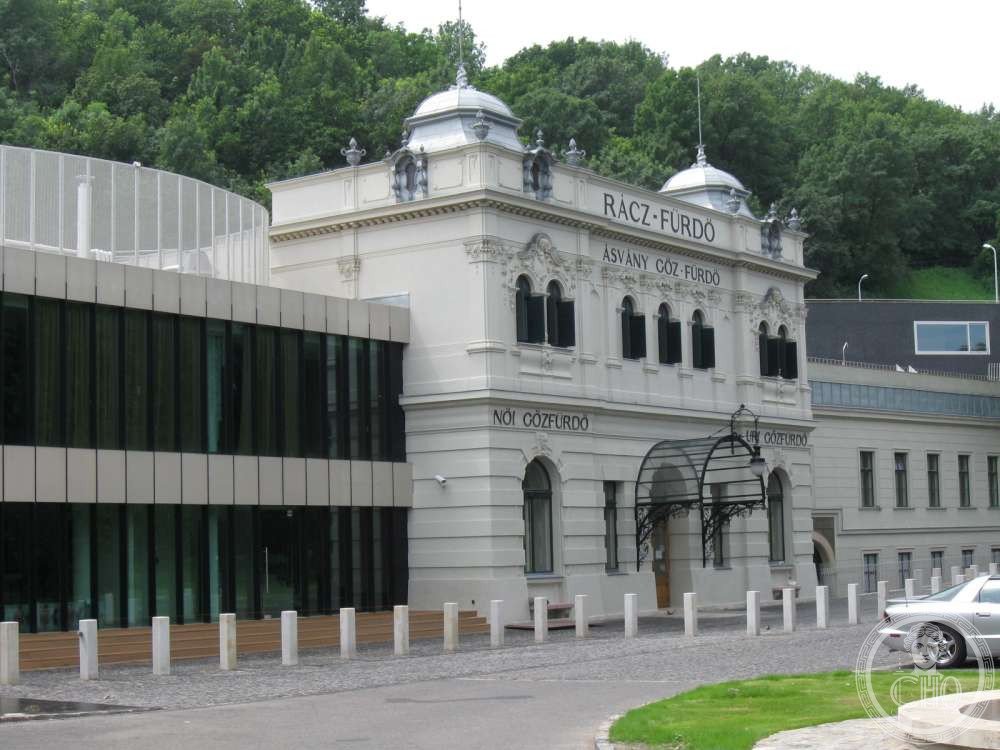
A storied thermal complex blending Ottoman hammam traditions with Austro-Hungarian imperial grandeur, closed since the early 2000s and still awaiting a full rehabilitation.
At a glance
The Rác Thermal Bath spans 8,000 square metres in Budapest’s historic Tabán district. Its hammam survives from the 16th century, while imperial pools and shower corridors reflect the Austro-Hungarian era. The bath has been closed to bathers since the early 2000s, and its rehabilitation has been entrusted to Budapest Gyógyfürdői és Hévizei Zrt.
History
The bath draws its name from the Rác—an old Hungarian designation for Serbs—one of the diverse communities that inhabited Tabán throughout its varied past. The hammam’s 16th-century origins mark the Ottoman period’s influence on Budapest’s thermal culture. Later additions in the imperial age introduced the grand pools and spa corridors characteristic of Austro-Hungarian luxury. Recent restoration has integrated the historic baths into a new hotel and thermal spa development while preserving their heritage significance.
What you see
The complex preserves a 16th-century hammam, the bath’s oldest element, alongside later imperial-era pools and an ornate shower corridor. Later building phases were raised directly on the Ottoman core, so the bath reads as a record of successive centuries of construction.
Cultural significance
The Rác Thermal Bath represents Budapest’s multicultural history and its position as a crossroads of Ottoman and European empires. Its 16th-century hammam documents the lasting influence of Turkish spa culture, while its imperial additions reflect the city’s prominence under Austro-Hungarian rule. The site’s UNESCO status underscores its importance to world heritage.
Key facts
- Location: Budapest, Hungary
- Coordinates: 47.49°N, 19.04°E
- Size: 8,000 square metres
- Oldest element: 16th-century hammam
- UNESCO World Heritage Site
- Current use: closed to bathers, rehabilitation planned
Practical information & getting there
The Rác Thermal Bath is accessible in central Budapest’s Tabán neighbourhood, a short walk from the Danube. It is not currently open to bathers. Contact the hotel directly for current hours, admission, and spa services.
The 19th-century halls were added by Miklós Ybl, who set Romantic and Neo-Renaissance rooms around the Ottoman core, and in 1931 the bath was renamed Szent Imre Bath for the 900th anniversary of Saint Emeric’s death, a name used alongside Rác until the 1980s.
Sources & resources
Find it on the map
See this place and what’s around it →
📷 Become a Cultural Heritage Online photographer
Share your photos of places: they stay published under your name as the author. The more they're seen, the more you get noticed — and soon a contest will reward the most appreciated photos.
Log in or sign up free to add a photoIs this page about you?
This page is read by travellers and heritage enthusiasts who find it on Google. Tell us how you are connected to this place and we will take it from there.
This entry stays online and free either way — and a free account lets you add to it yourself.