
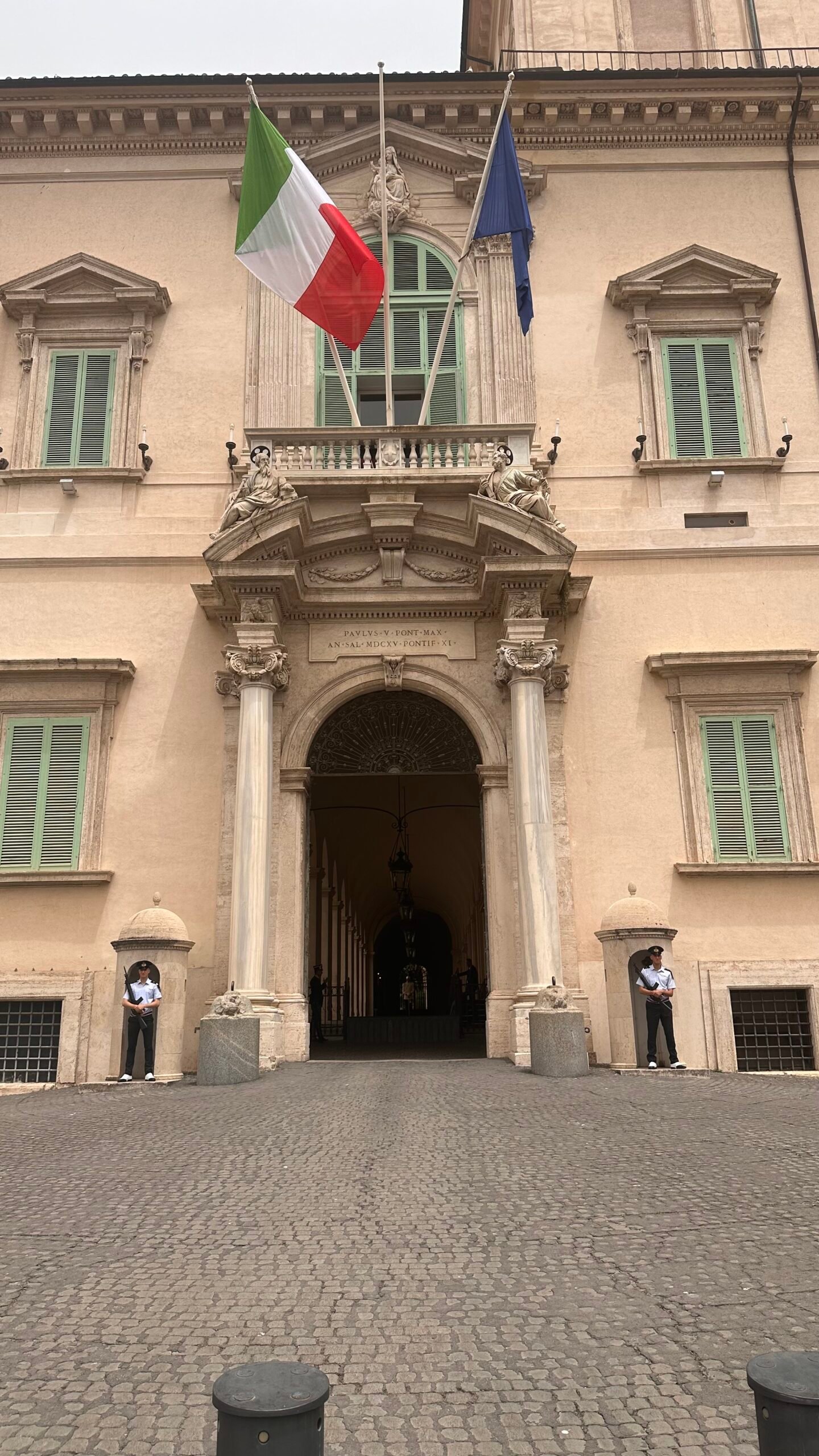
On the highest of Rome’s seven hills stands the palace that housed popes, then kings, and now the head of state.
At a glance
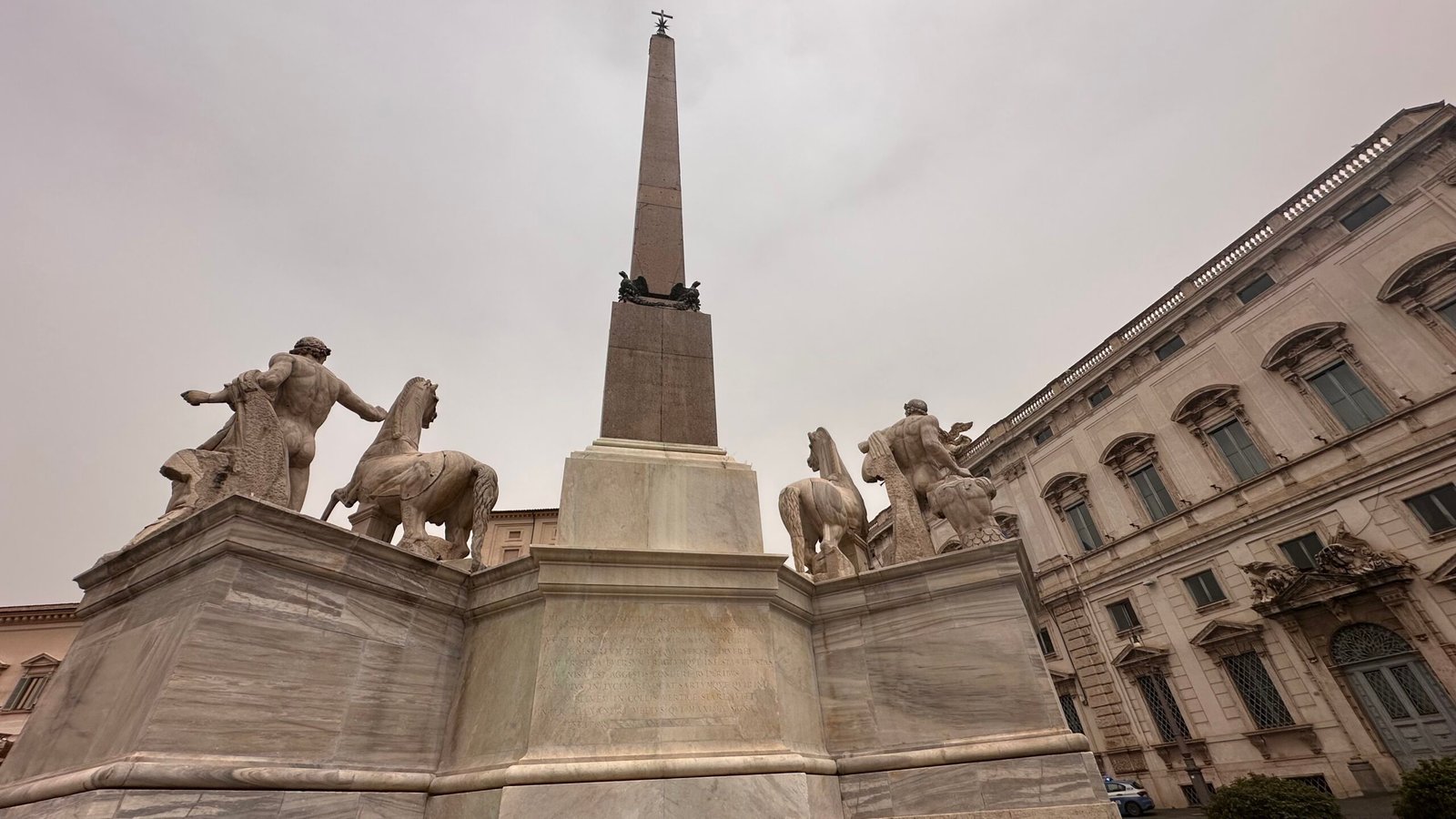
The Quirinal Palace crowns the Quirinal Hill above a piazza framed by colossal statues and an Egyptian obelisk. For more than four centuries it has been a seat of Roman power in one form or another, and its long facade sets the tone of the square below.
History
Pope Gregory XIII began the palace in 1583, seeking the cooler air of the hilltop as a summer residence away from the low, malarial ground by the Vatican. Successive architects — among them Ottaviano Mascherino, Domenico Fontana, Carlo Maderno and Gian Lorenzo Bernini — enlarged it over the following century, including the long wing, the manica lunga, that runs along the piazza.
It served the popes until 1870. In 1871 it became the royal palace of the Kings of Italy, and since 1948 it has been the official residence of the President of the Italian Republic. Few buildings have passed so directly from one form of Roman authority to the next.
What you see
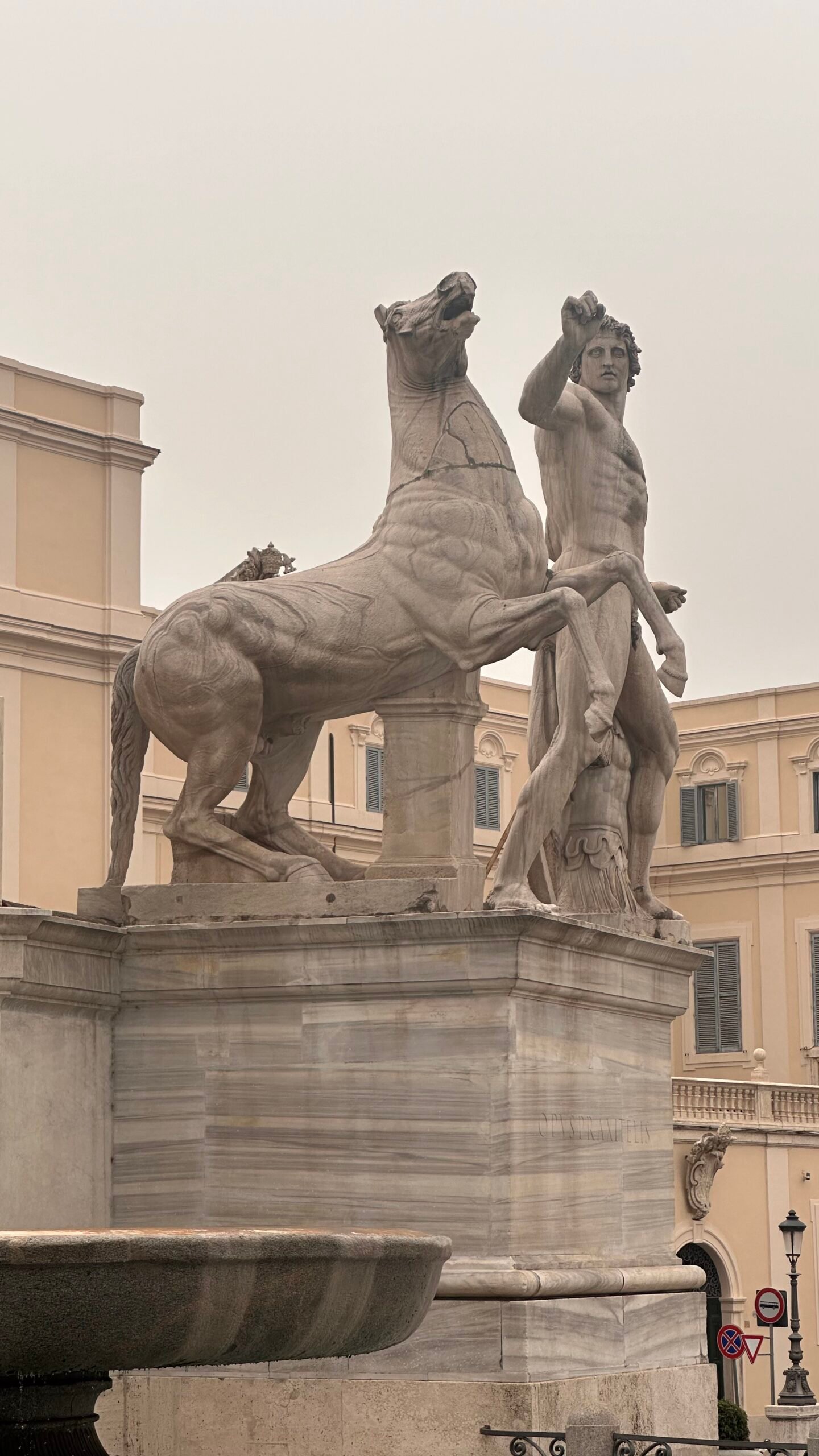
The piazza is held by the Fountain of the Dioscuri: colossal statues of Castor and Pollux restraining their rearing horses, Roman copies after Greek originals, set on either side of an Egyptian obelisk brought here from the Mausoleum of Augustus. Below them a great granite basin catches the water.
The palace facade itself is long and deliberately sober, a wall of authority rather than display. On the hour, the mounted Corazzieri and the guard change in front of it, a ceremony that draws a quiet crowd.
Key facts
- Location: Piazza del Quirinale, Rome, Lazio, Italy
- Begun: 1583, under Pope Gregory XIII
- Role: papal residence to 1870; royal palace from 1871; presidential residence since 1948
- Piazza: Fountain of the Dioscuri — Castor and Pollux, an Egyptian obelisk and a granite basin
- Setting: the Quirinal, highest of Rome’s seven hills
Practical information
- The palace and gardens open to visitors on set days; advance booking is required
- The piazza and the Dioscuri fountain are always accessible
- Photo identification is needed for palace tours
Getting there
The Quirinal is a short uphill walk from the Trevi Fountain and from Via Nazionale. The nearest Metro station is Barberini (Line A), roughly ten minutes on foot. Several bus routes serve the surrounding streets.
Gallery
The Quirinal, photographed by Luigi De Marchi.
See the place
Sources
- Quirinale — official site of the Presidency of the Italian Republic (quirinale.it)
- Turismo Roma — Roma Capitale (turismoroma.it)
Find it on the map
See this place and what’s around it →Historical events at this place (3)
📷 Become a Cultural Heritage Online photographer
Share your photos of places: they stay published under your name as the author. The more they're seen, the more you get noticed — and soon a contest will reward the most appreciated photos.
Log in or sign up free to add a photoIs this page about you?
This page is read by travellers and heritage enthusiasts who find it on Google. Tell us how you are connected to this place and we will take it from there.