

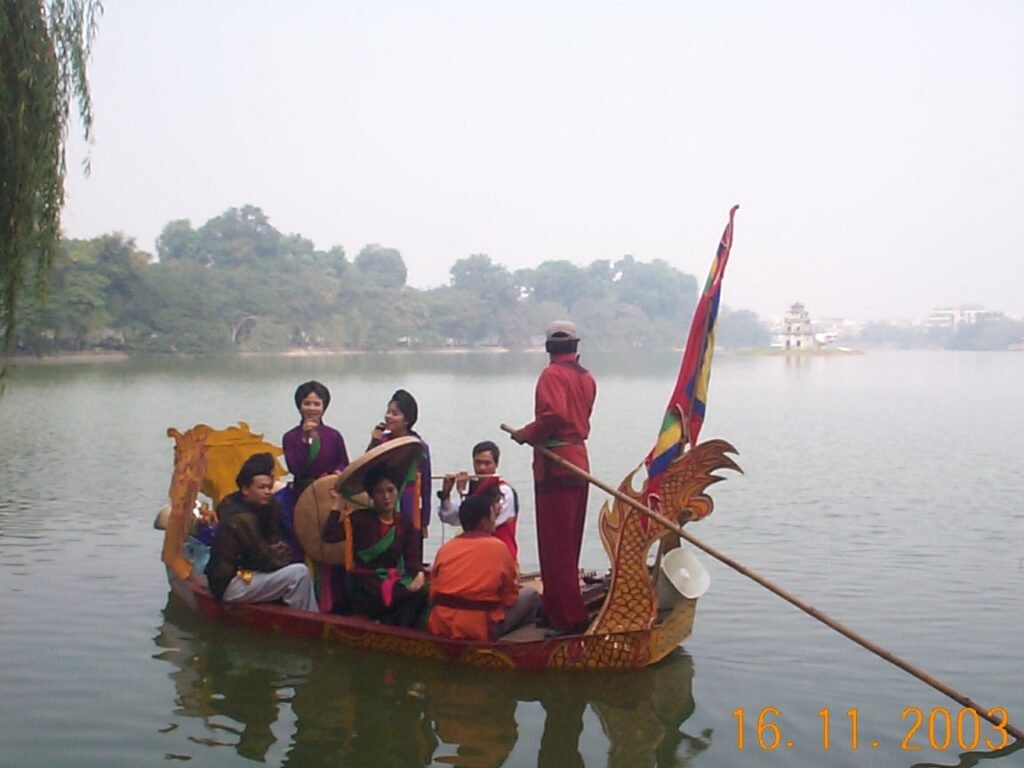
An antiphonal singing tradition where groups of female and male singers exchange musical challenges and responses, rooted in spring festivals and steeped in themes of love and youth.
In UNESCO’s words
In the provinces of Bắc Ninh and Bắc Giang in northern Viet Nam, many of the villages are twinned, reinforcing their relationship through social customs such as Quan họ Bắc Ninh folk songs. The songs are performed as alternating verses between two women from one village who sing in harmony, and two men from another village who respond with similar melodies, but with different lyrics. The women traditionally wear distinctive large round hats and scarves; the men’s costumes include turbans, umbrellas and tunics. The more than 400 song lyrics, sung with 213 different melody variations, express people’s emotional states of longing and sadness upon separation, and the happiness of the meeting of lovers, but custom forbids marrying a singing partner. Quan họ singing is common at rituals, festivals, competitions and informal gatherings, where guests will perform a variety of verses for their hosts before singing farewell. Younger musicians of both sexes may practice the four singing techniques – restrained, resonant, ringing and staccato – at parties organized around singing. Quan họ songs express the spirit, philosophy and local identity of the communities in this region, and help forge social bonds within and between villages that share a cherished cultural practice.
Official description, UNESCO Intangible Cultural Heritage List — Quan Họ Bắc Ninh folk songs
At a glance
Quan họ is a folk singing tradition from northern Viet Nam in which pairs of female singers from one village alternate verses with pairs of male singers from another village. The singers perform in harmony, with the men responding to the women using similar melodies but different lyrics. The tradition draws from more than 400 song lyrics set to 213 different melody variations, expressing emotions of longing, sadness, and the joy of lovers meeting.
Origins & history
The tradition flourishes in the twinned villages of Bắc Ninh and Bắc Giang provinces, where it reinforces social bonds between communities. Quan họ has long been performed at rituals, festivals, competitions and informal gatherings. Guests customarily perform verses for their hosts before singing farewell, a practice that continues today.
The practice
Singers wear distinctive costumes: women don large round hats and scarves, while men wear turbans, carry umbrellas and wear tunics. Performers master four singing techniques—restrained, resonant, ringing and staccato—often practiced at singing parties. Both male and female musicians, including younger practitioners, learn the extensive repertoire through this social practice.
Cultural significance
Quan họ expresses the spirit, philosophy and local identity of these communities, embodying their emotional and social life. The songs convey people's experiences of longing and separation as well as happiness upon reunion. Custom forbids singers from marrying their singing partners, reinforcing the tradition's role as a social connector. Through shared performance, the practice strengthens bonds within and between villages.
Key facts
- Country: Viet Nam
- Inscribed: 2009
- UNESCO list: Representative List of the Intangible Cultural Heritage of Humanity
- UNESCO reference: 00183
- UNESCO vocabulary: Awards; Duet; Vocal music
- Map: Bắc Ninh — the locality named in UNESCO’s official description of this element
Where to experience it
Quan họ thrives in the provinces of Bắc Ninh and Bắc Giang in northern Vietnam, where twinned villages maintain this tradition through seasonal festivals, rituals, and informal gatherings. Visitors may encounter performances at spring celebrations following the Vietnamese New Year, as well as at competitions and social events where younger musicians practice the four singing techniques at organized parties. The songs remain central to village life, performed by community members who sing alternating verses between villages and exchange verses with guests.
Sources & resources
- UNESCO — official element page: Quan Họ Bắc Ninh folk songs
- UNESCO — open data record: Intangible Heritage List, reference 00183
- UNESCO — official video: UNESCO film on this element — embedded on this page
- UNESCO — official photograph: Photograph of this element — Dương Thanh Giang — 2005, by Vietnam Institute of Culture and Arts Studies
- Reference — Wikipedia (secondary): Quan h%E1%BB%8D — consulted as a secondary reference, not as confirmation
- Cultural Heritage Online: Our archive and city guides

Find it on the map
See this place and what’s around it →📷 Become a Cultural Heritage Online photographer
Share your photos of places: they stay published under your name as the author. The more they're seen, the more you get noticed — and soon a contest will reward the most appreciated photos.
Log in or sign up free to add a photo