

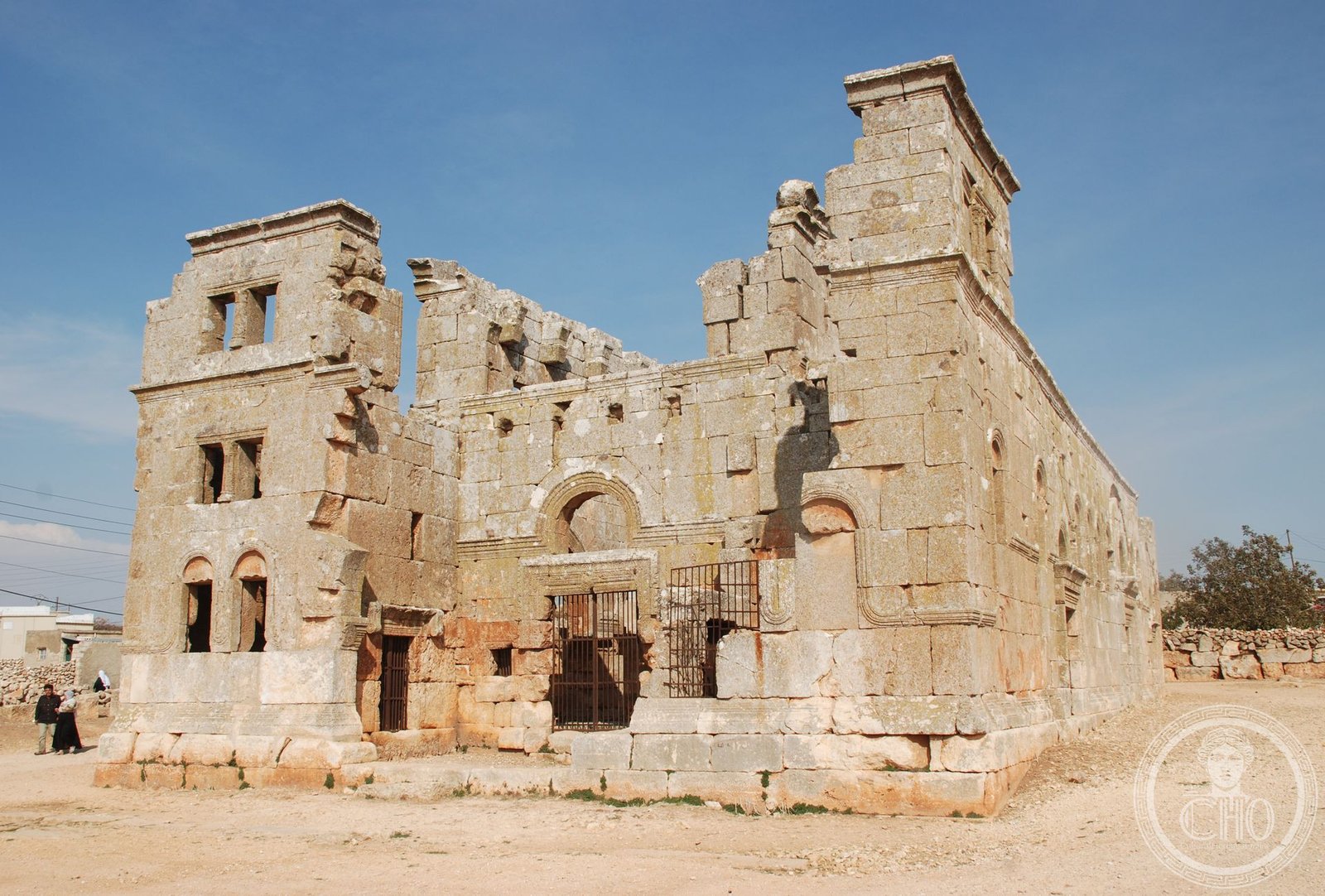
A Druze village in northwestern Syria, Qalb Loze preserves a remarkable 5th-century Byzantine church and stands among the celebrated “Dead Cities” of the Levant. Its name means “Heart of the Almond.”
At a glance
Qalb Loze lies about 35 kilometres west of Aleppo in the A’la Mountain, near the Turkish border. The village is predominantly inhabited by Druze, a monotheistic faith that emerged from Islam. Its economy has long centred on agriculture—tobacco for the local cigarette industry and olives.
History
Qalb Loze flourished during the Byzantine period, when the wider region of the “Dead Cities” witnessed intensive Christian settlement and construction. The 5th-century church that defines the village belongs to this era of prosperity. According to the Syria Central Bureau of Statistics, the village held a population of 1,290 at the 2004 census.
What you see
The 5th-century church stands as the village’s most significant structure and principal archaeological feature. Byzantine-era ruins scattered across the site attest to the settlement’s historical importance. The surviving architecture testifies to skilled masonry and the cultural vitality of early Christian Syria.
Cultural significance
Qalb Loze forms part of the “Dead Cities”—a collection of Byzantine and pre-Islamic Arab settlements in northwestern Syria renowned for their archaeological value. The survival of the 5th-century church offers rare insight into early Christian architecture in the Levantine highlands. The village embodies centuries of continuous settlement and the layering of cultures across this strategic border region.
Key facts
- Country: Syria
- Region: Idlib Governorate
- Coordinates: 36.169°N, 36.581°E
- Population (2004 census): 1,290
- Primary inhabitants: Druze
- Notable monument: 5th-century Byzantine church
Practical information & getting there
Qalb Loze is located approximately 35 kilometres west of Aleppo in northwestern Syria, in a mountainous area near the Turkish frontier. Current travel conditions and accessibility depend on the broader security situation in the region. Before planning a visit, consult reliable travel advisories and local authorities regarding safe passage and site access.
Sources & resources
Find it on the map
See this place and what’s around it →📷 Become a Cultural Heritage Online photographer
Share your photos of places: they stay published under your name as the author. The more they're seen, the more you get noticed — and soon a contest will reward the most appreciated photos.
Log in or sign up free to add a photoIs this page about you?
This page is read by travellers and heritage enthusiasts who find it on Google. Tell us how you are connected to this place and we will take it from there.