
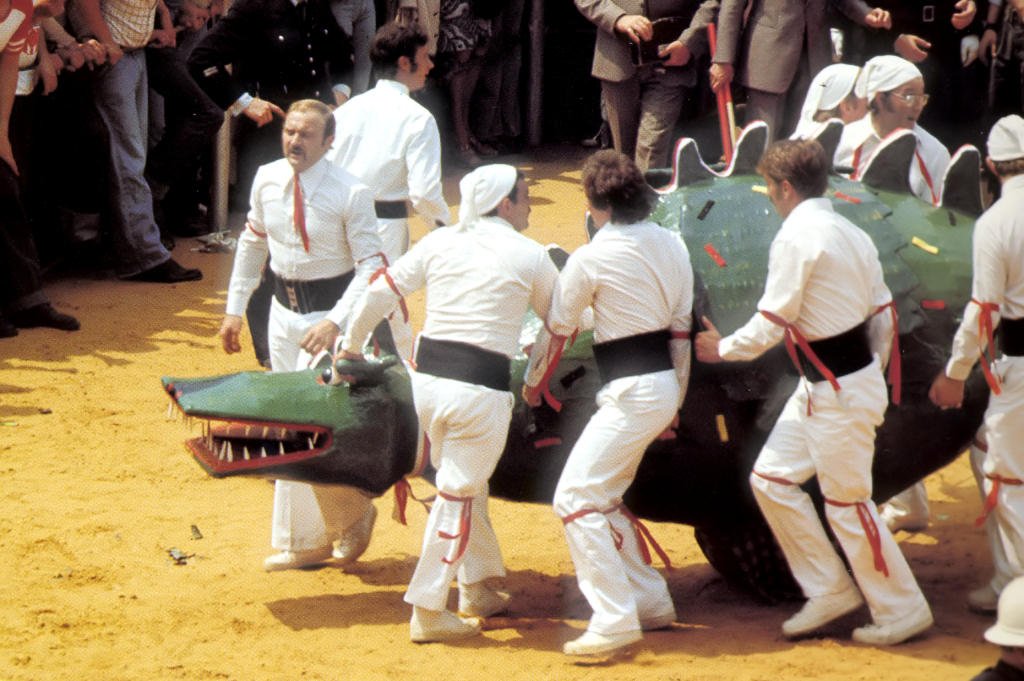
Colossal wooden figures parade through streets in Belgium and France, their movements choreographed by teams of bearers, in festivals that transform towns into stages for centuries-old ritual theatre.
In UNESCO’s words
__On 2 December 2022, the seventeenth session of the Intergovernmental Committee for the Safeguarding of the Intangible Cultural Heritage has decided to remove the ‘Ducasse of Ath’ of the element ‘Processional giants and dragons in Belgium and France’ (Belgium and France) from the Representative List of the Intangible Cultural Heritage of Humanity (Decision 17.COM 8.a).__ __For further information, see document LHE/22/17.COM/8.a__ Traditional processions of huge effigies of giants, animals or dragons encompass an original ensemble of festive popular manifestations and ritual representations. These effigies first appeared in urban religious processions at the end of the fourteenth century in many European towns and continue to serve as emblems of identity for certain Belgian (Brussels, Dendermonde, Mechelen and Mons) and French towns (Cassel, Douai, Pézenas and Tarascon), where they remain living traditions. The giants and dragons are large-scale models measuring up to nine metres in height and weighing as much as 350 kilos. They represent mythical heroes or animals, contemporary local figures, historical, biblical or legendary characters or trades. St. George fighting the dragon is staged in Mons; Bayard, the horse from the Charlemagne legend, parades in Dendermonde; and Reuze Papa and Reuze Maman, popular family characters, parade at Cassel. The performances, often mixing secular procession and religious ceremony, vary from town to town, but always follow a precise ritual in which the giants relate to the history, legend or life of the town. Giants and dragons enliven popular festivals where they are the main actors at least once a year, as each effigy has its specific feast day. They act out historical scenes and dance in the streets to the accompaniment of fanfares and costumed people. The crowd follows the procession, and many participants help in the preparations at different stages of the festival. The construction of a giant and its ongoing maintenance require months of work and know-how in many techniques given the range of materials used. Although these expressions are not threatened with immediate disappearance, they do suffer from a number of pressures, such as major changes to town centres and increasing tourism, leading to the detriment of the popular, spontaneous nature of the festival.
Official description, UNESCO Intangible Cultural Heritage List — Processional giants and dragons in Belgium and France
At a glance
Processional giants and dragons are large-scale effigies—some reaching nine metres tall and weighing up to 350 kilos—that represent mythical heroes, animals, historical figures, or local characters. They appear in traditional processions that combine secular celebration with religious ceremony, serving as emblems of identity for towns in Belgium and France.
Origins & history
These effigies first emerged in urban religious processions at the end of the fourteenth century across many European towns. They continue today as living traditions in specific Belgian towns (Brussels, Dendermonde, Mechelen and Mons) and French towns (Cassel, Douai, Pézenas and Tarascon), where they remain tied to local history, legend, and community life.
The practice
Giants and dragons enliven popular festivals at least once yearly on their specific feast day. Costumed participants help carry and animate the figures through streets while fanfares play. The construction and maintenance of each effigy demands months of work and knowledge of many techniques, drawing on a range of materials. Performances vary by town but always follow precise ritual sequences in which the giants act out historical scenes and dance.
Cultural significance
These traditions embody the identity of their communities and connect people to local history and legend. Though not facing immediate disappearance, they encounter pressures from major changes to town centres and increasing tourism, which can undermine the popular and spontaneous character of the festivals.
Key facts
- Country: Belgium, France
- Inscribed: 2008
- UNESCO list: Representative List of the Intangible Cultural Heritage of Humanity
- UNESCO reference: 00153
- UNESCO vocabulary: Effigies; Procession
- Map: Ath — the locality named in UNESCO’s official description of this element
Where to experience it
Processional giants and dragons thrive across Belgium and France, each town maintaining its own festival traditions. In Belgium, visitors can encounter these effigies in Brussels, Dendermonde, Mechelen, and Mons, where St. George battles the dragon in Mons and the legendary horse Bayard parades through Dendermonde. French towns including Cassel, Douai, Pézenas, and Tarascon also celebrate these traditions, with Reuze Papa and Reuze Maman delighting crowds at Cassel. Each giant has its specific feast day when it enlists in processions mixing secular celebration with ritual ceremony. Local tourism offices provide current festival dates and schedules.
Sources & resources
- UNESCO — official element page: Processional giants and dragons in Belgium and France
- UNESCO — open data record: Intangible Heritage List, reference 00153
- UNESCO — official video: UNESCO film on this element — embedded on this page
- UNESCO — official photograph: Douai — Mairie de Douai
- Reference — Wikipedia (secondary): Processional giants and dragons in Belgium and France — consulted as a secondary reference, not as confirmation
- Cultural Heritage Online: Our archive and city guides

Find it on the map
See this place and what’s around it →📷 Become a Cultural Heritage Online photographer
Share your photos of places: they stay published under your name as the author. The more they're seen, the more you get noticed — and soon a contest will reward the most appreciated photos.
Log in or sign up free to add a photo