
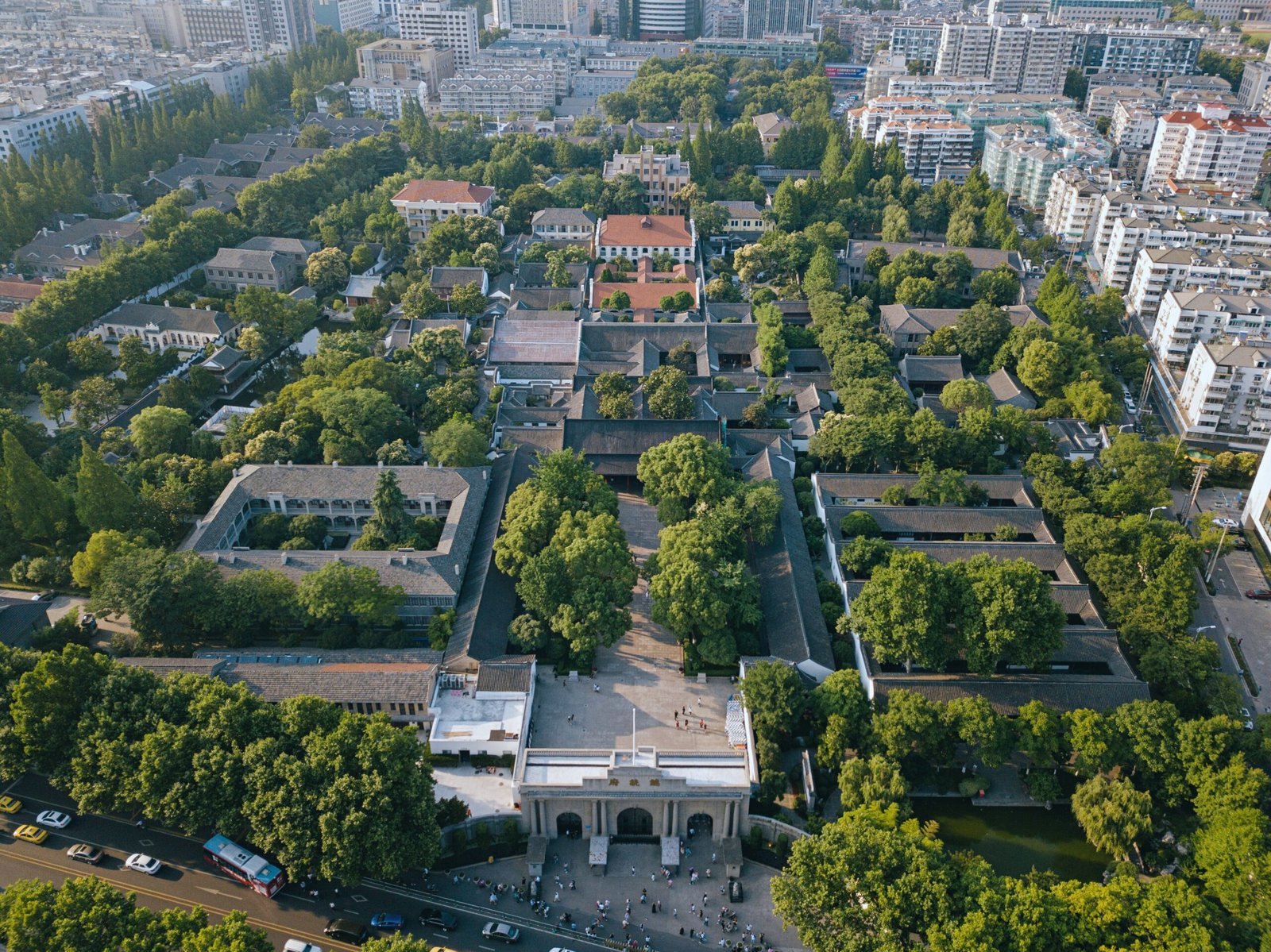
The seat of China’s Republic government for two decades, this palace witnessed pivotal moments in modern Chinese history before the capital moved to Taiwan.
At a glance
A neoclassical administrative complex that served as the official residence and workplace of the President of the Republic of China. Now preserved as the China Modern History Museum, it documents a crucial era in the nation’s twentieth-century transformation.
History
The palace functioned as the presidential office from 1927, when Nanjing became the capital of the Republic of China. It retained this role until 1949, when the Nationalist government relocated the capital to Taipei following the Communist victory in the Chinese Civil War. The building survived this upheaval and was repurposed as a museum to preserve its historical significance.
What you see
The structure reflects early twentieth-century neoclassical design principles, combining Western architectural conventions with Chinese governmental traditions. Its layout and decoration reflect the formal protocols of republican administration during the period.
Cultural significance
The Presidential Palace embodies a transformative period in modern Chinese history. It stands as a physical record of the Republic of China’s governance during its mainland years, making it essential for understanding the political and cultural transitions of the era.
Key facts
- Country: China
- City: Nanjing, Jiangsu Province
- Coordinates: 32.04527778°N, 118.79222222°E
- Address: No. 292 Changjiang Road (formerly Lin Sen Road), Xuanwu District
- Current use: China Modern History Museum
Practical information & getting there
The museum is accessible in central Nanjing. Consult current opening hours and admission details before your visit, as museum operations and access policies may vary seasonally.
Sources & resources
Find it on the map
See this place and what’s around it →📷 Become a Cultural Heritage Online photographer
Share your photos of places: they stay published under your name as the author. The more they're seen, the more you get noticed — and soon a contest will reward the most appreciated photos.
Log in or sign up free to add a photoIs this page about you?
This page is read by travellers and heritage enthusiasts who find it on Google. Tell us how you are connected to this place and we will take it from there.