
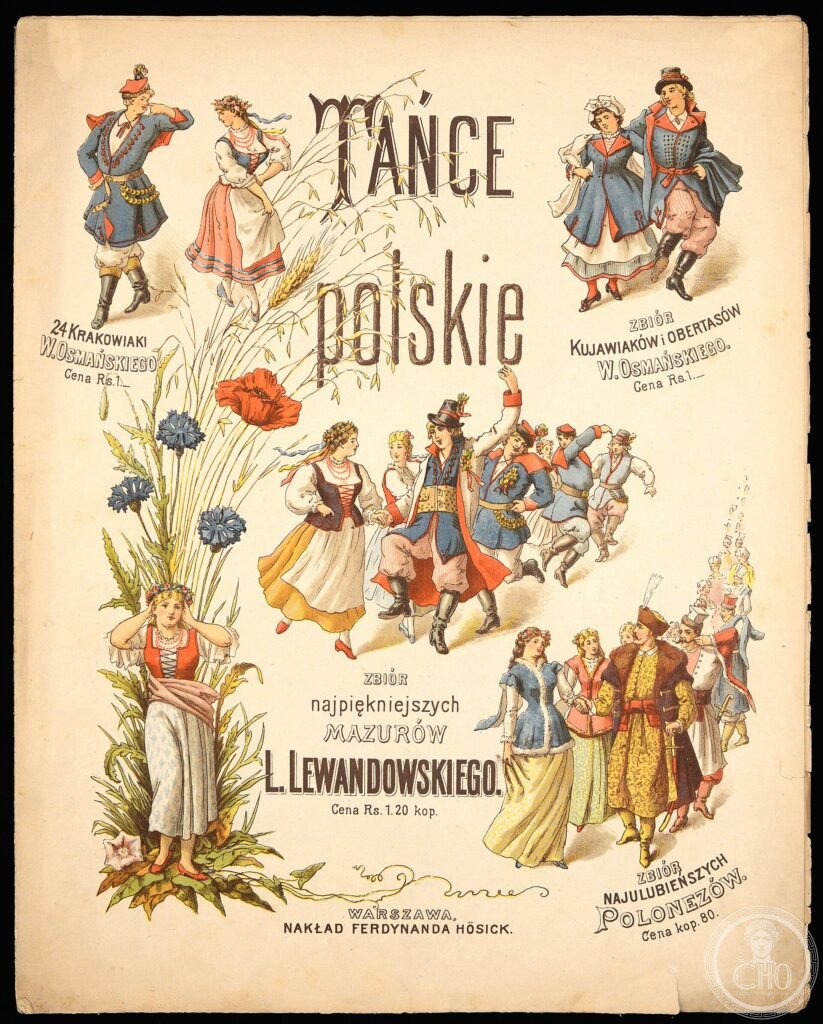
A stately Polish walking dance in triple time, the polonaise opens celebrations across the country—from New Year’s balls to student proms—as a ritual of collective joy and social unity.
At a glance
The polonaise is one of Poland’s five national dances, recognized in 2023 by UNESCO as a form of joint celebration that marks important moments in family and community life. Known in Polish as chodzony—a walking dance—it is performed at formal gatherings, national ceremonies, and the studniówka, the traditional Polish student ball held approximately 100 days before school exams.
Origins & history
The polonaise originated in Poland and shares rhythmic kinship with the Swedish polska, the two dances likely stemming from common roots during the period of Polish–Swedish union under the Vasa dynasty. From its homeland, the polonaise traveled into European ballrooms and concert halls, shaping both folk traditions and classical music composition across the continent.
The practice
The polonaise moves in triple metre (3/4 time), with a characteristic rhythm close to that of the Swedish polska. Dancers typically perform it in procession or in couples, moving with measured, dignified steps—the name chodzony captures this walking quality at its heart. The dance requires no special costume or instrument; it is a performed tradition that any community can claim at formal occasions.
Cultural significance
In contemporary Poland, the polonaise remains the opening dance at New Year’s balls, national celebrations, and official state events. At studniówka balls, it carries particular symbolic weight as the first dance of the evening, inaugurating a rite of passage roughly 100 days before final examinations. UNESCO recognized the dance as embodying cooperation, reconciliation, and equality—values inscribed in its ritual function as a shared moment of celebration.
Key facts
- One of five Polish national dances, performed in 3/4 time
- Original Polish name: chodzony (walking dance)
- Anchor community: Warsaw, Poland (52.22772°N, 21.00737°E)
- UNESCO Intangible Cultural Heritage inscription: 2023 (Reference 01982)
- Central to Polish formal celebrations, particularly studniówka student balls
Where to experience it
The polonaise thrives in Warsaw and throughout Poland at formal events open to the public: New Year’s balls, national day celebrations, and official ceremonies. Student balls (studniówka) held in schools across the country each feature the polonaise as the opening dance, though attendance is typically limited to students, families, and invited guests.
Sources & resources
- Polonaise – Wikipedia
- Polonaise: Traditional Polish Dance – UNESCO Intangible Cultural Heritage
- Cultural Heritage Online
Find it on the map
See this place and what’s around it →📷 Become a Cultural Heritage Online photographer
Share your photos of places: they stay published under your name as the author. The more they're seen, the more you get noticed — and soon a contest will reward the most appreciated photos.
Log in or sign up free to add a photo