
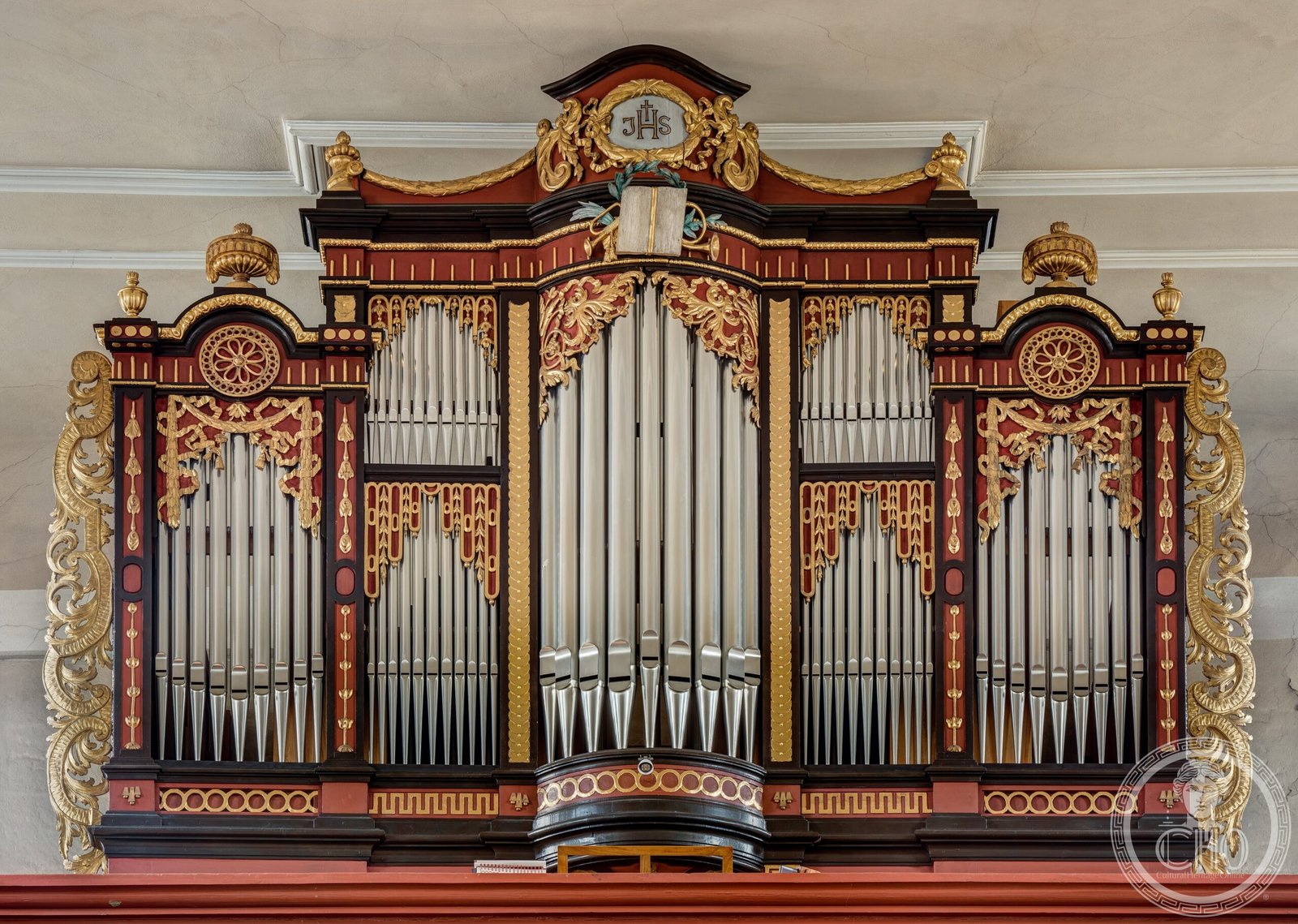
In Leipzig, the pipe organ tradition—spanning over five centuries of innovation and mastery—continues as both a technical craft and a profound musical language, recognized by UNESCO as an intangible heritage of humanity.
At a glance
The pipe organ is a keyboard instrument that produces sound by directing pressurised air through carefully tuned pipes selected by the player. Each organ consists of multiple ranks—sets of pipes sharing the same tonal quality but spanning different pitches—which can be combined through controls called stops to create infinite variations of timbre and volume. A player manipulates one or more hand keyboards and typically a pedalboard with the feet, each controlling its own division of stops housed in the console. Unlike pianos or harpsichords, the organ’s continuous wind supply allows notes to sustain indefinitely as long as keys remain pressed.
Origins and history
The pipe organ descends from the hydraulis of ancient Greece in the 3rd century BC, which used water pressure to supply wind. By the 6th or 7th century AD, Byzantine craftsmen had developed bellows to power their organs. A pivotal gift of “great leaden pipes” from Byzantine emperor Constantine V to Pepin the Short in 757 introduced the instrument to the West, establishing its central role in European church music when Charlemagne requested one for his chapel at Aachen in 812.
England’s Winchester Cathedral housed the first documented organ in the 10th century—a monumental machine with 400 pipes requiring two players and 70 men to operate the bellows. From the 12th century onward, the organ evolved into an increasingly complex instrument capable of producing varied timbres. By the 17th century, most timbral possibilities of the modern classical organ had been realized, and for centuries the pipe organ remained humanity’s most intricate mechanical device—a distinction it held until telephone exchanges surpassed it in the late 19th century.
The tradition today
Leipzig remains a centre of organ craftsmanship and performance, where makers and musicians preserve centuries-old techniques while serving contemporary concert halls, churches, and recording studios. The smallest portable organs may contain only one or two dozen pipes and a single manual; the largest installations exceed 33,000 pipes and seven manuals, each representing thousands of hours of handwork by specialist craftspeople. Modern organ builders draw on historical knowledge while employing both traditional and contemporary methods to create instruments suited to classical music, sacred music, and an expanding repertoire.
Today, pipe organs accompany liturgy, anchor concert programming, feature in educational settings, and inspire new compositions. A renaissance of organ installation in concert halls has emerged in the 21st century, affirming the instrument’s enduring cultural relevance.
Cultural significance
The pipe organ represents an extraordinary convergence of engineering, acoustics, and artistry. Its craft demands mastery across multiple disciplines: metallurgy, woodworking, mathematics, and design. The tradition of organ building and playing carries philosophical and spiritual dimensions rooted in centuries of European cultural practice.
UNESCO recognition of organ craftsmanship and music acknowledges this living tradition as essential to human creative expression and technical heritage. In Leipzig, the continuation of this work—by builders, restorers, performers, and students—ensures that future generations may experience the instrument’s singular capacity to fill large spaces with sustained, complex, and deeply moving sound.
Key facts
- Country: Germany
- Anchor community: Leipzig
- UNESCO Intangible Cultural Heritage: Organ craftsmanship and music (Representative List)
- Ancient origins: Hydraulis (Ancient Greece, 3rd century BC); bellows-powered organs (Byzantine, 6th–7th century AD)
- European establishment: 757 (Constantine V gifts organ to Pepin the Short); 812 (Charlemagne requests organ for Aachen chapel)
- Range of scale: Smallest organs: ~24 pipes, one manual; largest: 33,000+ pipes, seven manuals
- Repertoire span: Over 500 years of composed music
- Modern uses: Churches, synagogues, concert halls, schools, and private properties
Where to experience it
Visit Leipzig’s concert halls, churches, and music institutions to hear pipe organs in performance. Contact local venues to learn about upcoming recitals, services featuring organ music, and opportunities to observe craftspeople at work. Many institutions offer guided tours explaining organ construction and acoustics.
Sources & resources
- Pipe organ – Wikipedia
- Cultural Heritage Online
Find it on the map
See this place and what’s around it →📷 Become a Cultural Heritage Online photographer
Share your photos of places: they stay published under your name as the author. The more they're seen, the more you get noticed — and soon a contest will reward the most appreciated photos.
Log in or sign up free to add a photo