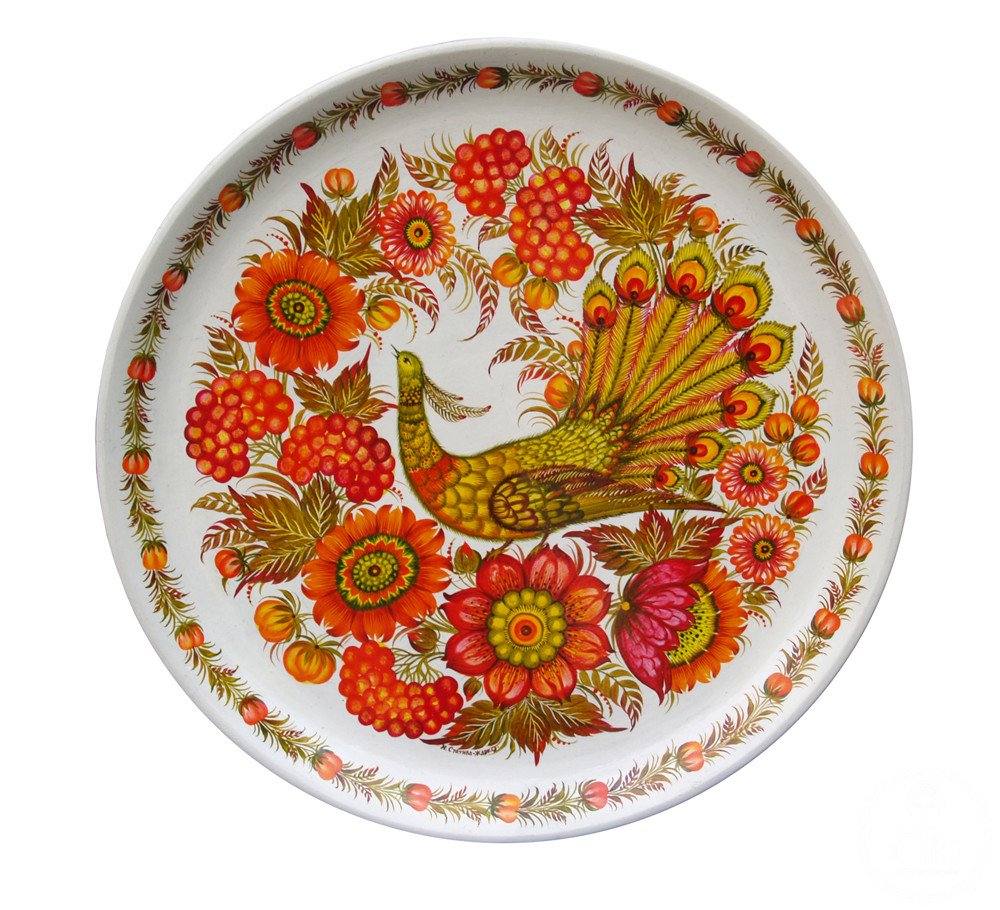
A distinctive Ukrainian decorative painting tradition, born in a rural village and refined across three centuries, transforms everyday objects and interior walls into celebrations of botanical form.
In UNESCO’s words
The people of the village of Petrykivka decorate their living quarters, household belongings and musical instruments with a style of ornamental painting that is characterized by fantastic flowers and other natural elements, based on careful observation of the local flora and fauna. This art is rich in symbolism: the rooster stands for fire and spiritual awakening, while birds represent light, harmony and happiness. In folk belief, the paintings protect people from sorrow and evil. Local people, and in particular women of all ages, are involved in this folk art tradition. Every family has at least one practitioner, making decorative painting an integral part of daily existence in the community. The painting traditions, including the symbolism of the ornamental elements, are transferred, renewed and enhanced from one generation to another. Local schools at all levels, from pre-school to college, teach the fundamentals of Petrykivka decorative painting, with all children given the opportunity to study it. The community willingly teaches its skills and know-how to anyone who shows an interest. The tradition of decorative and applied arts contributes to the renewal of historical and spiritual memory and defines the identity of the entire community.
Official description, UNESCO Intangible Cultural Heritage List — Petrykivka decorative painting as a phenomenon of the Ukrainian ornamental folk art
At a glance
Petrykivka painting is an ornamental folk art in which people decorate their homes, household belongings, and musical instruments with fantastic flowers and other natural elements drawn from careful observation of local plants and animals. The paintings are full of symbolism: roosters represent fire and spiritual awakening, while birds stand for light, harmony, and happiness. According to folk belief, these decorations protect people from sorrow and evil.
Origins & history
The painting traditions of Petrykivka have been passed down through generations, with each generation renewing and enhancing the knowledge of symbolism and technique. Local schools at all levels—from pre-school through college—now teach the fundamentals of this decorative painting, ensuring that all children have the opportunity to learn it. The community also willingly shares its skills with anyone interested in learning.
The practice
Women of all ages are the primary practitioners, with at least one painter in every family, making the art an integral part of daily life. The work involves painting designs onto walls, household items, and musical instruments. The symbolic meanings of the ornamental elements—including the flowers and natural forms—are deliberately chosen and transferred through instruction and practice from one generation to the next.
Cultural significance
Petrykivka decorative painting defines the identity of the entire community and contributes to the renewal of its historical and spiritual memory. This folk art tradition is woven into the fabric of local existence, connecting people to their heritage and to each other through a shared visual language and set of beliefs about protection and well-being.
Key facts
- Country: Ukraine
- Inscribed: 2013
- UNESCO list: Representative List of the Intangible Cultural Heritage of Humanity
- UNESCO reference: 00893
- UNESCO vocabulary: Decorative arts; Folk art; Painting
- Map: Petrykivka — the locality named in UNESCO’s official description of this element
Where to experience it
The village of Petrykivka remains the centre of this tradition, where every family maintains at least one practitioner of decorative painting. Visitors can encounter the art in homes and studios throughout the community, where local people actively continue the work. Schools at all levels teach the fundamentals to children and welcome anyone interested in learning. The tradition thrives through daily practice and intergenerational transmission, making it an integral part of village life where the symbolism and techniques of these ornamental paintings are continuously renewed and shared.
Sources & resources
- UNESCO — official element page: Petrykivka decorative painting as a phenomenon of the Ukrainian ornamental folk art
- UNESCO — open data record: Intangible Heritage List, reference 00893
- UNESCO — official video: UNESCO film on this element — embedded on this page
- UNESCO — official photograph: Icon of the Virgin Mary and Baby. Unknown author, the end of the XVIII century — V. I. Zolotarev — artmuseumdp2011
- Reference — Wikipedia (secondary): Petrykivka painting — consulted as a secondary reference, not as confirmation
- Cultural Heritage Online: Our archive and city guides

Find it on the map
See this place and what’s around it →📷 Become a Cultural Heritage Online photographer
Share your photos of places: they stay published under your name as the author. The more they're seen, the more you get noticed — and soon a contest will reward the most appreciated photos.
Log in or sign up free to add a photo