
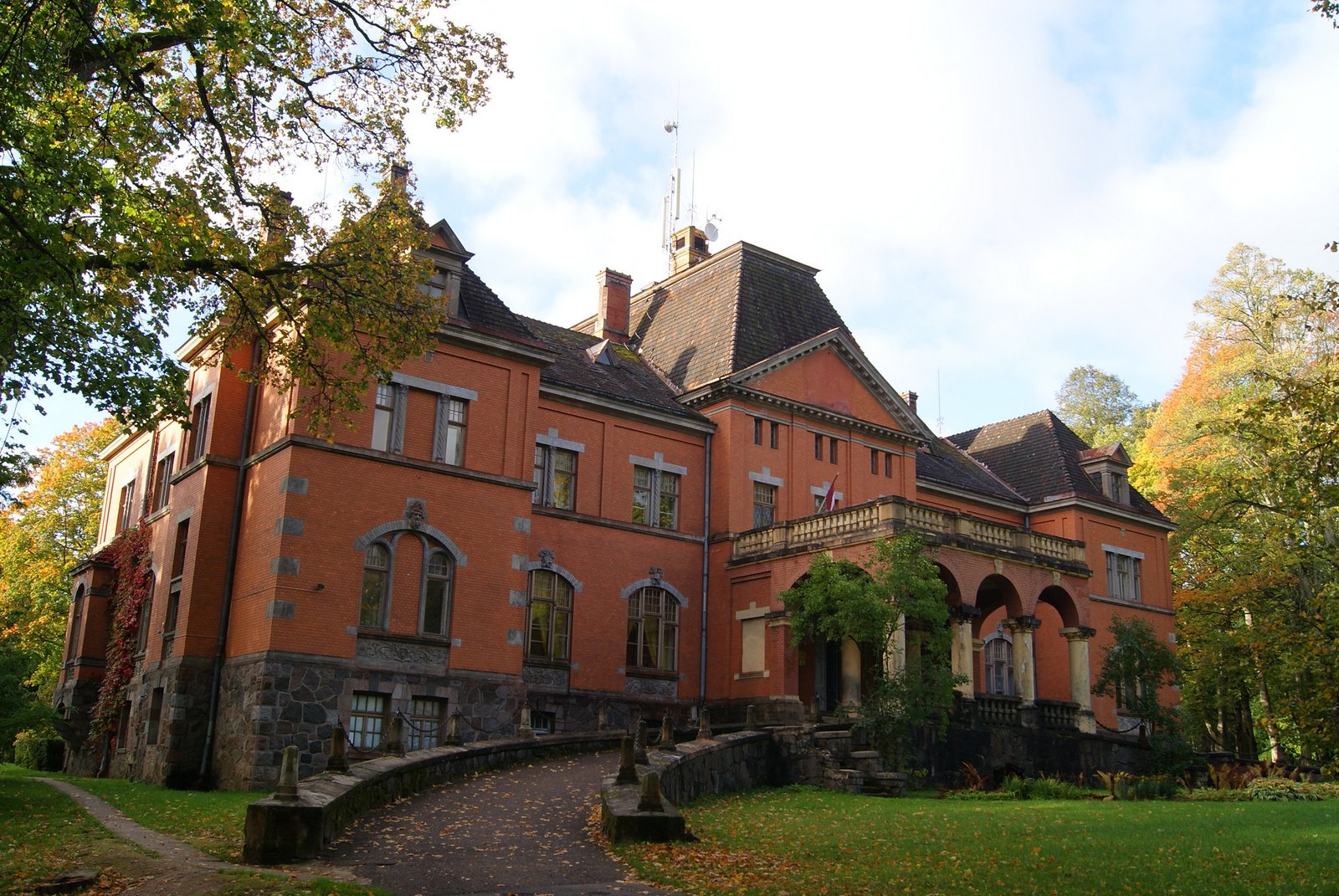
A Courland manor house that bridges German architectural traditions with emerging Latvian modernism, Pelči Palace embodies the stylistic ferment of early 20th-century Baltic design.
At a glance
Pelči Palace sits in the rural Pelči Parish of Kuldīga Municipality, in the Courland region of southwestern Latvia. Built under the patronage of Prince Anatoly Lieven, the palace represents a transitional moment in Latvian architectural taste, when manor houses began to absorb influences from Art Nouveau alongside established Neo-Renaissance and Baroque vocabularies.
History
The palace was constructed during Prince Anatoly Lieven’s tenure as owner. Its creation marks an important phase in the development of early Latvian manors, when progressive artistic currents began to reshape the region’s landed estates. The specific date of construction is not documented in available sources.
What you see
The building displays an eclectic blend of architectural languages. Art Nouveau elements signal modernist impulses, while German Neo-Renaissance and Baroque features anchor the design in older courtly traditions. This stylistic layering reflects the cultural crosscurrents of the Baltic nobility during the region’s transformative early decades.
Cultural significance
Pelči Palace stands as one of Latvia’s early manors to embrace Art Nouveau, documenting a pivotal shift in regional taste and artistic identity. It testifies to the cosmopolitan networks of Courland’s landed gentry and their engagement with contemporary European design movements.
Key facts
- Country: Latvia
- Region: Courland (Kurzeme)
- Municipality: Kuldīga
- Parish: Pelči
- Coordinates: 56.92°N, 21.97°E
- Patron: Prince Anatoly Lieven
Practical information & getting there
Pelči Palace is located in the rural Pelči Parish. The palace remains a private property; visiting hours and access policies are not documented. The nearest significant town is Kuldīga, approximately 30 km away.
Sources & resources
Find it on the map
See this place and what’s around it →📷 Become a Cultural Heritage Online photographer
Share your photos of places: they stay published under your name as the author. The more they're seen, the more you get noticed — and soon a contest will reward the most appreciated photos.
Log in or sign up free to add a photoIs this page about you?
This page is read by travellers and heritage enthusiasts who find it on Google. Tell us how you are connected to this place and we will take it from there.