
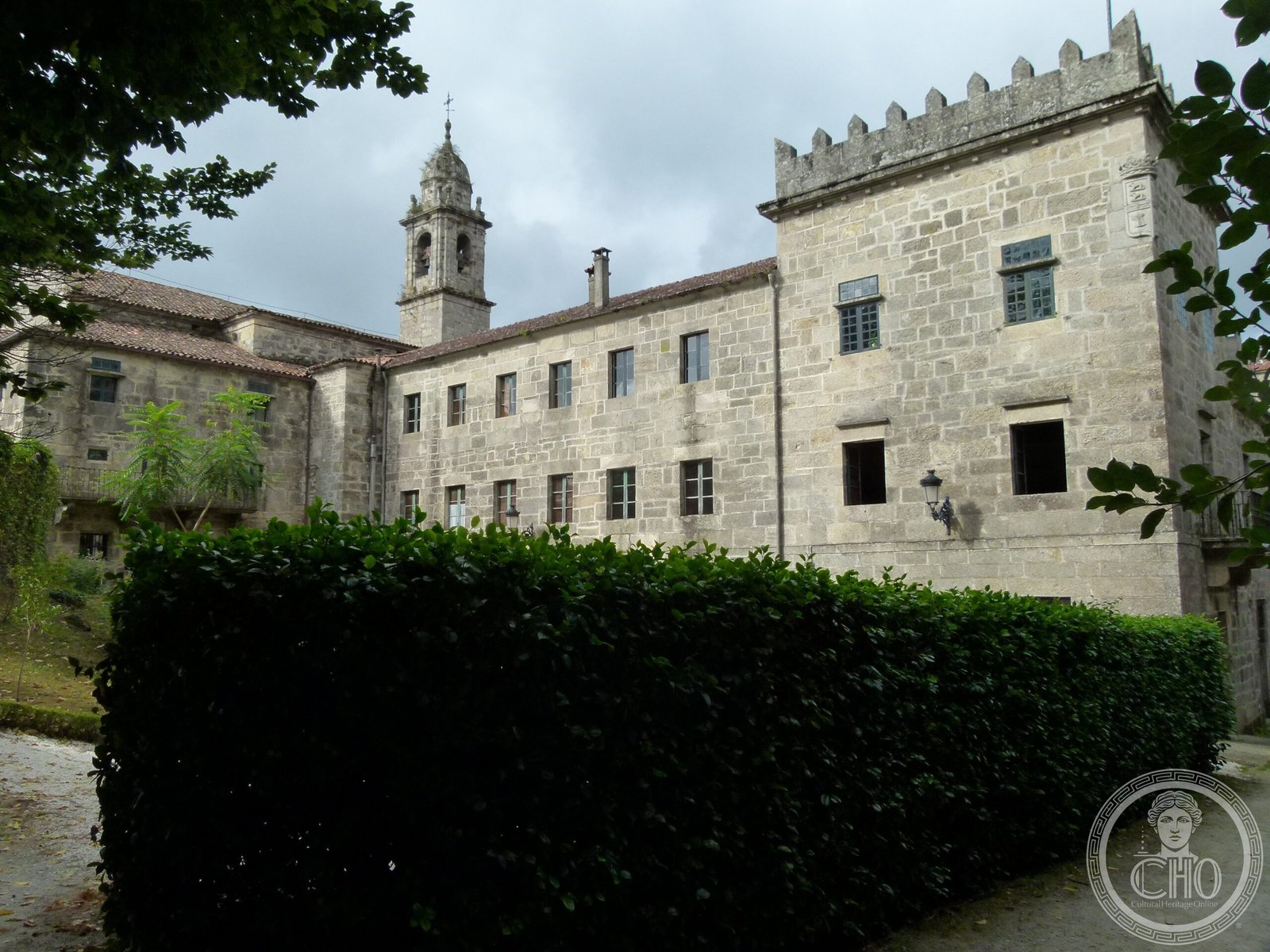
A medieval palace in Santiago de Compostela, originally built as a monastery in the 13th century and later transformed into a residential pazo.
At a glance
This fortified palace stands in Santiago de Compostela, the capital of Galicia in northwestern Spain. Built initially as a monastic foundation, it exemplifies the dual heritage of religious and secular architecture that shaped medieval Galician culture. The structure reflects centuries of adaptation and reuse across Iberian history.
History
Founded in the 13th century as a monastery, Pazo de San Lorenzo de Trasouto began its existence within the region’s flourishing religious landscape. Over subsequent centuries, the complex transitioned from monastic use to a residential palace—a pazo—reflecting broader patterns of land redistribution and architectural repurposing across Galicia. The transformation preserves the building’s medieval core while accommodating evolving domestic needs.
What you see
The pazo retains structural elements characteristic of 13th-century construction, blending monastic severity with later palatial additions. Galician pazos typically feature stone masonry, defensive elements, and organized courtyards; this example maintains such traditional features while showing evidence of centuries of modification and maintenance.
Cultural significance
The pazo represents an important layer in Santiago de Compostela’s architectural heritage. As both monastery and palace, it documents the interplay between religious institutions and noble families in medieval and early modern Galicia. Few structures so clearly embody this transition from the sacred to the secular in Iberian architecture.
Key facts
- Built: 13th century
- Original function: Monastery
- Later function: Residential palace
- Location: Santiago de Compostela, La Coruña, A Coruña, Spain
- Coordinates: 42.8781°N, 8.5577°W
Practical information & getting there
The pazo is located in Santiago de Compostela, accessible by road through Galicia’s regional network. As a private residence, viewing is subject to owner permission. Contact local tourism offices in Santiago de Compostela for current access information and visiting guidelines.
Sources & resources
Find it on the map
See this place and what’s around it →📷 Become a Cultural Heritage Online photographer
Share your photos of places: they stay published under your name as the author. The more they're seen, the more you get noticed — and soon a contest will reward the most appreciated photos.
Log in or sign up free to add a photoIs this page about you?
This page is read by travellers and heritage enthusiasts who find it on Google. Tell us how you are connected to this place and we will take it from there.