
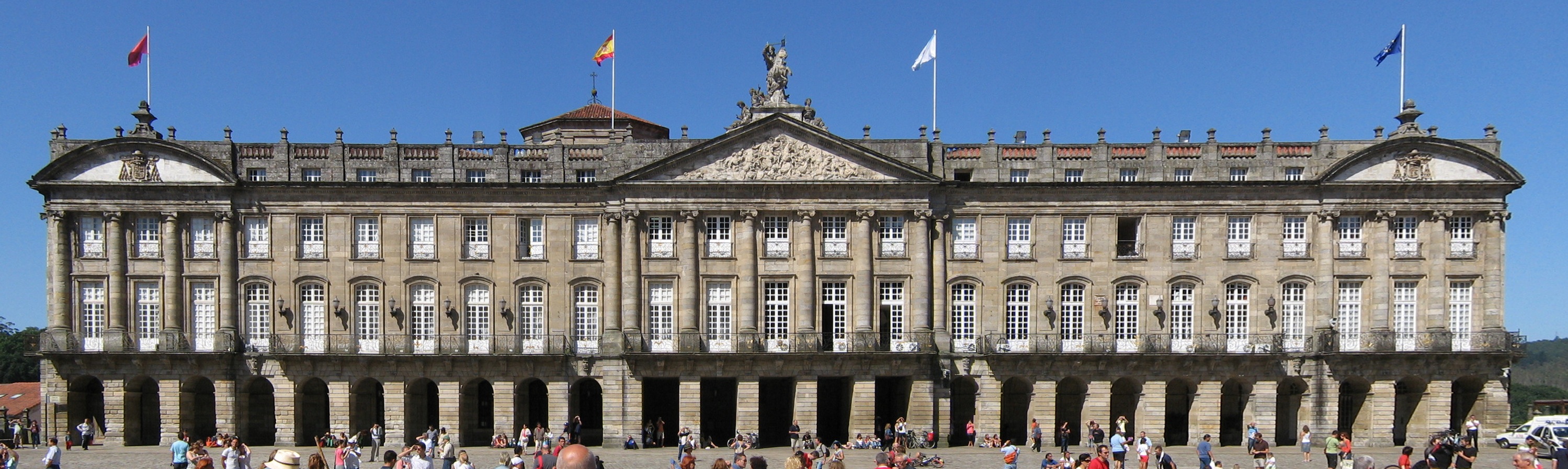
A neoclassical palace completed in 1766, standing boldly on the cathedral square in Santiago de Compostela.
At a glance
The Pazo de Raxoi commands the plaza facing the Cathedral of Santiago de Compostela. Its neoclassical design marks a sophisticated architectural statement within Galicia’s ecclesiastical heart. The palace was finished in 1766, a period of expanding secular authority and refined taste in Iberian architecture.
History
Completed in 1766, the Pazo de Raxoi emerged during an era when neoclassical principles were reshaping European civic architecture. Positioned directly across from the cathedral on Santiago’s principal square, it embodies the architectural confidence of eighteenth-century Galicia. The palace reflects both secular patronage and the cosmopolitan ideals spreading across Spain.
What you see
The building displays hallmark neoclassical features characteristic of its period. Its placement on the cathedral square creates a dynamic architectural dialogue—rational, ordered forms set against the cathedral’s sacred silhouette. The palace’s proportions and stylistic vocabulary represent the refined aesthetic preferences of eighteenth-century elites.
Cultural significance
The Pazo de Raxoi stands as a testament to neoclassical ambitions in Galicia. Its prominent location and architectural authority illustrate the interplay between religious and secular power in colonial-era Santiago. The palace remains integral to understanding the town’s identity as both spiritual destination and civic center.
Key facts
- Country: Spain
- Location: Santiago de Compostela, Galicia
- Completed: 1766
- Style: Neoclassical
- Coordinates: 42.8806, -8.5461
Practical information & getting there
The Pazo de Raxoi occupies the square in front of Santiago de Compostela’s cathedral. The plaza is accessible to visitors exploring the historic city center. For current opening hours and visiting conditions, contact local tourism authorities or check the official Santiago de Compostela visitor resources.
Sources & resources
Find it on the map
See this place and what’s around it →📷 Become a Cultural Heritage Online photographer
Share your photos of places: they stay published under your name as the author. The more they're seen, the more you get noticed — and soon a contest will reward the most appreciated photos.
Log in or sign up free to add a photoIs this page about you?
This page is read by travellers and heritage enthusiasts who find it on Google. Tell us how you are connected to this place and we will take it from there.