
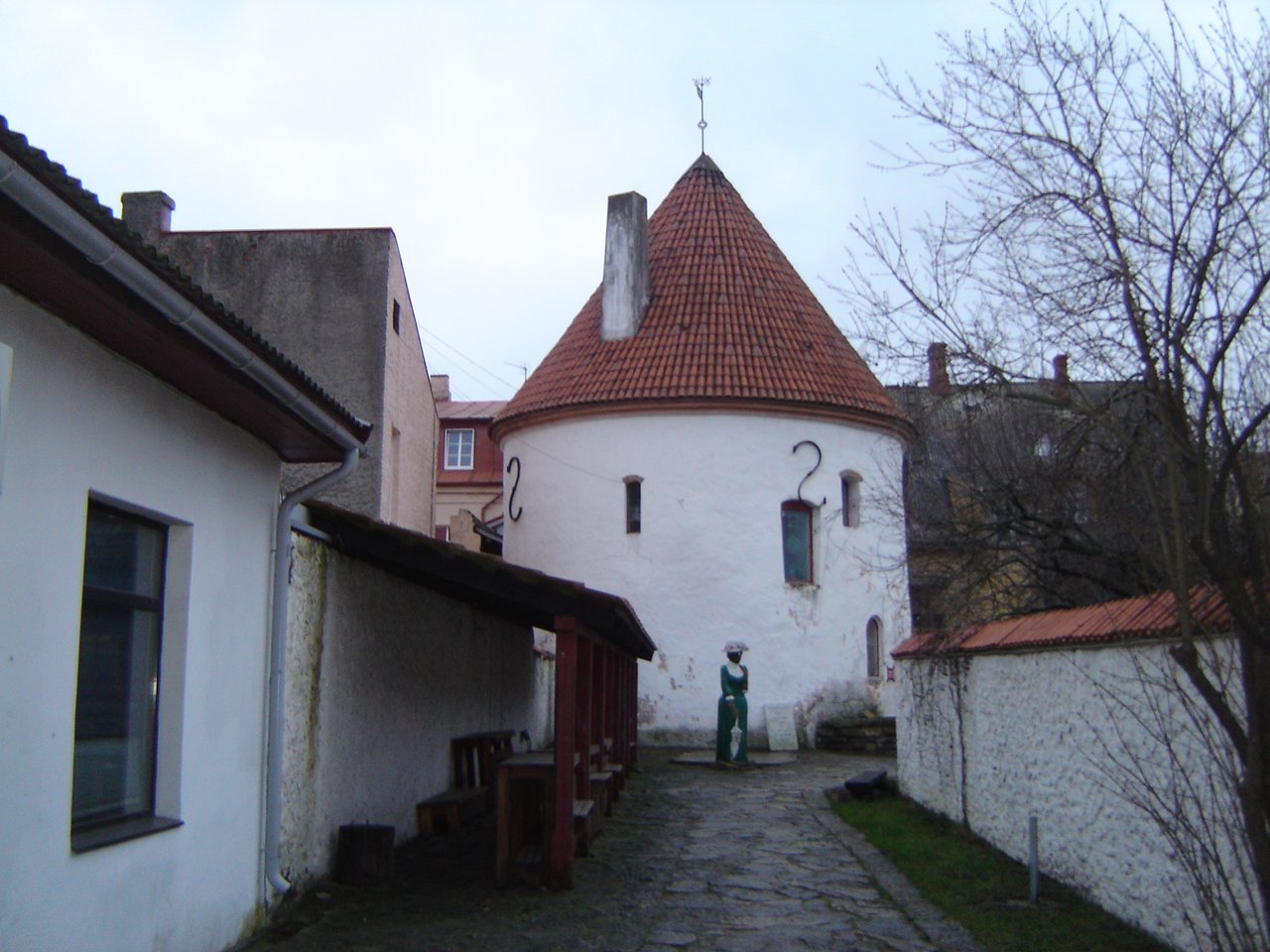
A surviving medieval defensive tower built in 15th-century Pärnu, this fortress structure was originally designed as a prison and remains the last standing tower of the Hanseatic settlement of New-Pärnu.
At a glance
The Red Tower stands as a solitary reminder of Pärnu’s fortified past. Built during the 15th century, it functioned first as a prison, then as municipal archives, adapting to the town’s changing needs across four centuries.
History
Constructed in the 15th century as a defensive fortification for the Hanseatic town of New-Pärnu, the tower served multiple purposes throughout its life. By the 17th century, it stood four stories tall with a prison cell extending 6 meters below ground level. In the 19th century, its role shifted from confinement to preservation, when it was converted into the town archives. Today only three stories remain, evidence of centuries of use and weathering.
What you see
The Red Tower exhibits the sturdy construction typical of medieval Hanseatic defenses. Its current three-story form represents the upper portion of the original structure; the deep prison cell that once occupied its depths is no longer accessible. The tower’s name derives from the color of its exterior.
Cultural significance
As the last surviving defensive tower of New-Pärnu, the Red Tower embodies the town’s medieval character and its importance as a Hanseatic trading center. Its transformation from military installation to civic archive reflects broader changes in European urban development and security needs.
Key facts
- Country: Estonia
- City: Pärnu
- Built: 15th century
- Original function: Prison and defensive tower
- Coordinates: 58.385°N, 24.5028°E
- Current status: Three stories remaining (originally four)
Practical information & getting there
The Red Tower is located in Pärnu’s Old Town district. For current visiting hours, admission details, and accessibility information, contact the Pärnu Tourist Information Centre or check local tourism resources before your visit.
Sources & resources
Find it on the map
See this place and what’s around it →📷 Become a Cultural Heritage Online photographer
Share your photos of places: they stay published under your name as the author. The more they're seen, the more you get noticed — and soon a contest will reward the most appreciated photos.
Log in or sign up free to add a photoIs this page about you?
This page is read by travellers and heritage enthusiasts who find it on Google. Tell us how you are connected to this place and we will take it from there.