
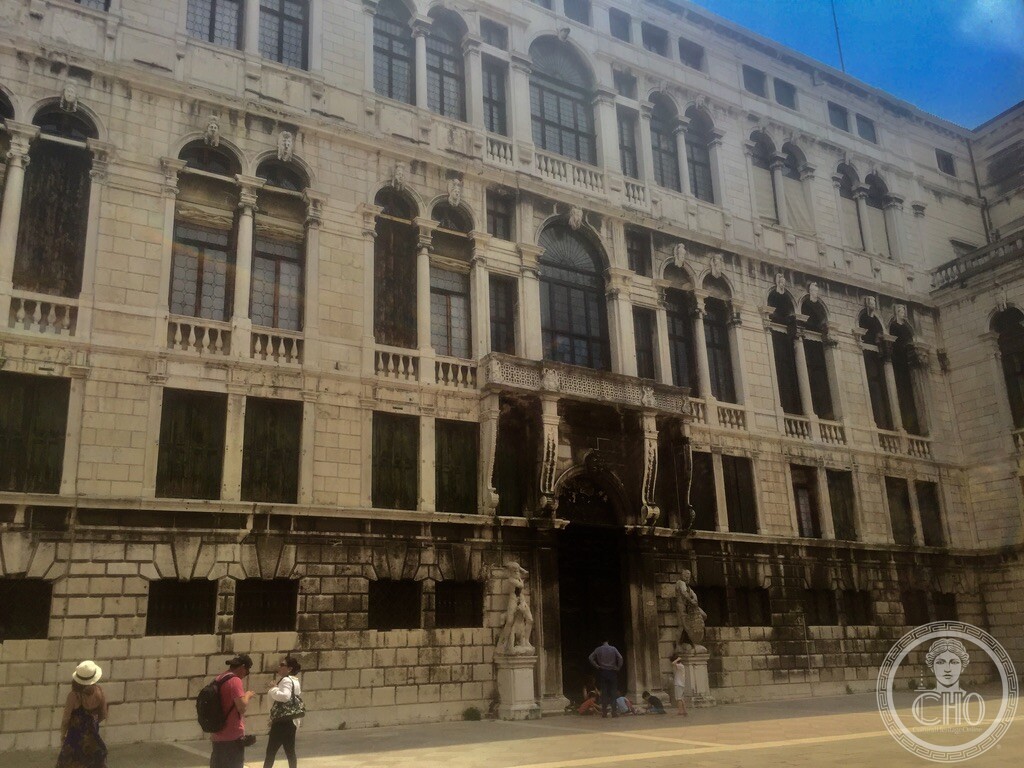
A Loredan palace on Campo Santo Stefano whose atrium holds a marble “pantheon” of illustrious Venetians, eighty years in the making — and, since 1891, the working home of one of Italy’s oldest learned academies.
At a glance
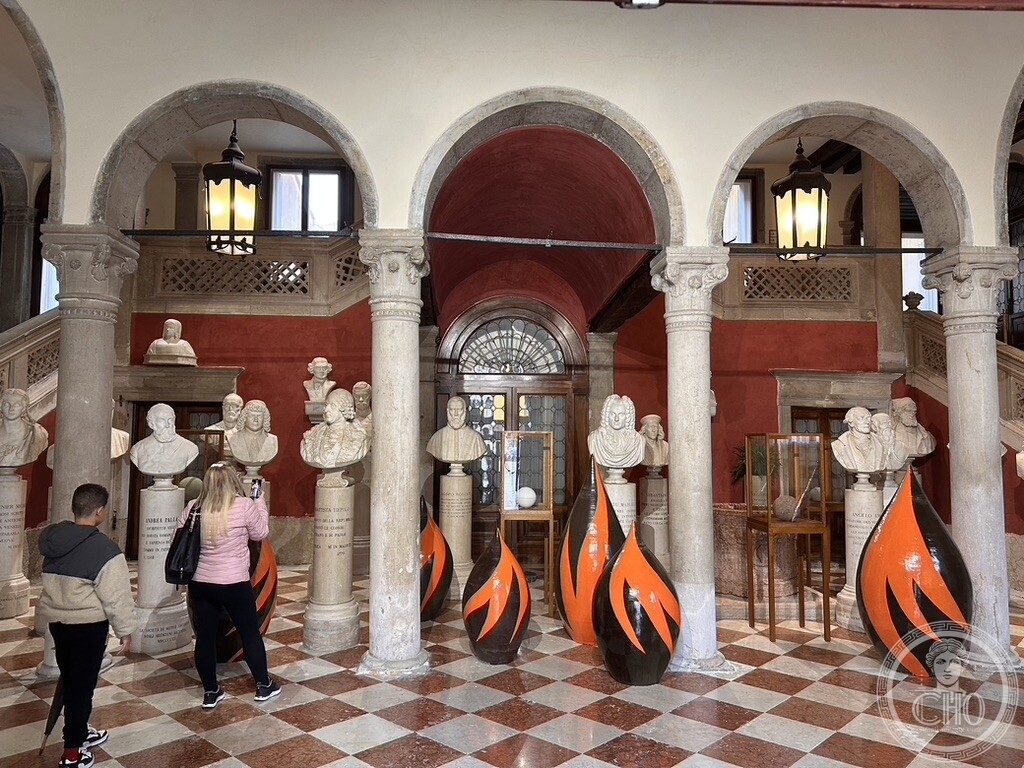
Palazzo Loredan looks onto Campo Santo Stefano with a grand Renaissance facade of statue-filled niches and arched windows, the result of a 1536 rebuilding for the Loredan family over an older Gothic complex once owned by the Mocenigo. After passing through Austrian and municipal administrative use in the nineteenth century, the palace was assigned in 1888 to the Istituto Veneto di Scienze, Lettere ed Arti, which moved in in 1891 and remains there today. Its arcaded atrium houses the Panteon Veneto, a collection of marble busts of notable Venetians assembled over more than eighty years.
Key facts
- Original building: Gothic-era complex, once owned by the Mocenigo family
- Rebuilt: 1536, for the Loredan family, in Renaissance style attributed to Antonio Scarpagnino
- 19th-century uses: seat of the Ministry of War and military court (from 1813), then the provincial public works office (1855–1862)
- Institute founded: 1838, continuing the activity of earlier Venetian scientific academies
- Institute’s seat: assigned 1888, occupied since 1891
- Panteon Veneto: a collection of busts and medallions of illustrious Venetians in politics, the military, navigation, science, literature and the arts, assembled 1847–1932 and now displayed in the atrium
- Location: Campo Santo Stefano, San Marco, Venice
- GPS: 45.43273, 12.33011 · Open in Google Maps
History
The palace began as a cluster of adjoining Gothic buildings belonging to the Mocenigo family. The Loredan acquired it in 1536 and had it rebuilt in the new Renaissance manner then transforming Venice’s grandest facades, work attributed to Antonio Scarpagnino. After the fall of the Republic, the last Loredan heir sold the palace around 1802–1805; the Austrian state bought it in 1813 and installed the Ministry of War with its military court and the governor’s residence, before the provincial public works office took the south wing in the 1850s and altered it for offices.
In 1888 the palace passed to the Istituto Veneto di Scienze, Lettere ed Arti, a learned academy whose continuous activity dates to 1838. The Institute moved in in 1891, restoring and refitting the building for its new role. Its most distinctive addition to the palace is displayed today in the arcaded ground-floor atrium: the Panteon Veneto, a collection of marble busts and medallions honouring notable Venetians across politics, the military, navigation, science, literature and the arts, first proposed in 1847 for the loggias of the Palazzo Ducale (where the Institute was then based) and assembled over the following eighty-five years, through 1932, before finding its present home here.
Getting there
Palazzo Loredan fronts Campo Santo Stefano, San Marco, a short walk from the Accademia bridge and the Sant’Angelo or Accademia vaporetto stops.
Sources
- Wikipedia (Italian), Palazzo Loredan (Campo Santo Stefano) — it.wikipedia.org: the palace’s Mocenigo origins, the 1536 Loredan rebuilding, and its 19th-century administrative uses before 1891
- Istituto Veneto di Scienze, Lettere ed Arti, Panteon Veneto — istitutoveneto.it: the 1847–1932 formation of the bust collection and its move from the Palazzo Ducale loggias to the Palazzo Loredan atrium
- Istituto Veneto di Scienze, Lettere ed Arti, institutional history — the Institute’s continuous activity since 1838 and its 1891 move into Palazzo Loredan
- Coordinates cross-checked against OpenStreetMap Nominatim for Campo Santo Stefano
Photo gallery
Photographs contributed by a Cultural Heritage Online member.
Find it on the map
See this place and what’s around it →Record researched and written by Carla Szathvary for Cultural Heritage Online, 2026.
📷 Become a Cultural Heritage Online photographer
Share your photos of places: they stay published under your name as the author. The more they're seen, the more you get noticed — and soon a contest will reward the most appreciated photos.
Log in or sign up free to add a photoIs this page about you?
This page is read by travellers and heritage enthusiasts who find it on Google. Tell us how you are connected to this place and we will take it from there.