

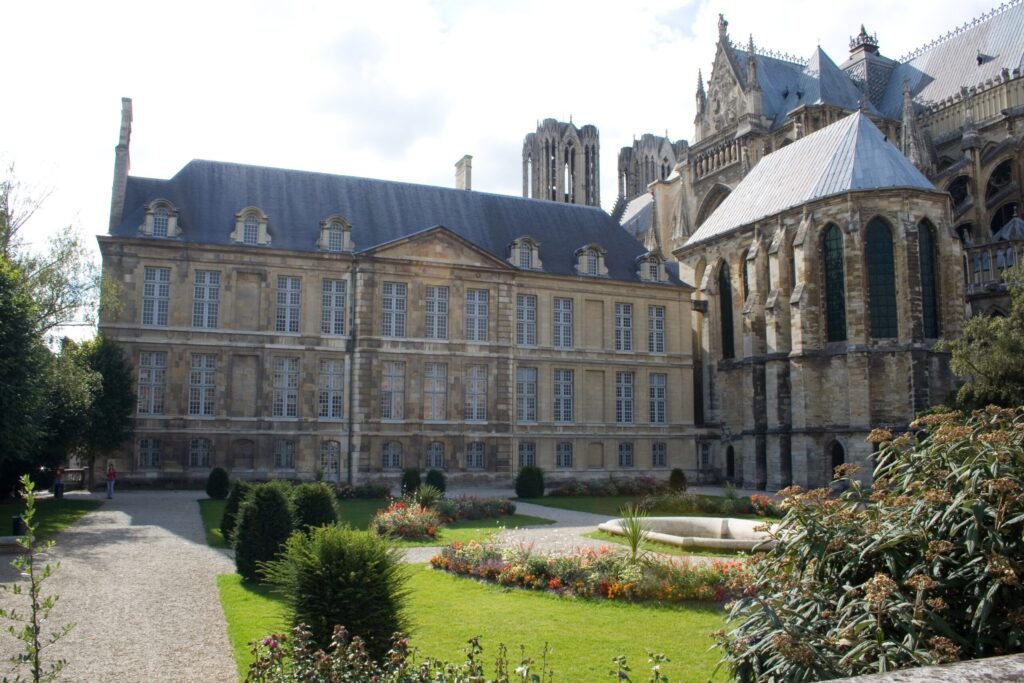
The Archbishop of Reims’s former palace, where French kings celebrated their coronations with grand banquets beside the cathedral.
At a glance
The Palace of Tau (Palais du Tau) stands in Reims as a monument to French royal ceremony and ecclesiastical power. For centuries it functioned as the residence of the Archbishop and the ceremonial heart of coronation celebrations. Its rooms witnessed the feasts that followed the sacred anointing of monarchs in the adjacent cathedral.
History
The palace served as the seat of the Archbishop of Reims and held profound significance for French monarchy. When kings were crowned in the nearby Cathedral of Notre-Dame de Reims, the coronation banquets took place within these walls—a tradition that bound the palace inseparably to the nation’s political and spiritual identity. This association with royal ceremony secured its place in French cultural memory.
Cultural significance
The Palace of Tau embodies the intertwining of religious authority and royal power in French history. Its role as the setting for coronation banquets made it a stage for some of France’s most solemn state occasions. In 1991, UNESCO recognized this historical importance by inscribing the palace on the World Heritage List. Today it hosts cultural events that continue its tradition of bringing the city together for significant occasions.
Key facts
- Location: Reims, France
- Coordinates: 49.2531, 4.0344
- Former residence of the Archbishop of Reims
- Coronation banquet venue for French kings
- UNESCO World Heritage List: inscribed 1991
Practical information & getting there
The palace is located in Reims and continues to serve as a venue for cultural events. For current visiting hours, admission details, and upcoming programmes, contact Reims tourism or the palace directly. The site’s proximity to the Cathedral of Notre-Dame de Reims makes it convenient to visit both monuments in a single visit.
The palace now presents the memory of the cathedral and the splendour of the coronations, through sculptures, tapestries, paintings, embroidered costumes, ornaments and goldsmith work forming a collection that runs from the Middle Ages to the nineteenth century.
Sources & resources
Find it on the map
See this place and what’s around it →
Advertisement. Pictured, from the Cleveland Museum of Art (CC0) and not for sale: a parure of about 1850, a Lalique brooch, a Castellani bangle. How we handle this
📷 Become a Cultural Heritage Online photographer
Share your photos of places: they stay published under your name as the author. The more they're seen, the more you get noticed — and soon a contest will reward the most appreciated photos.
Log in or sign up free to add a photoIs this page about you?
This page is read by travellers and heritage enthusiasts who find it on Google. Tell us how you are connected to this place and we will take it from there.
This entry stays online and free either way — and a free account lets you add to it yourself.