
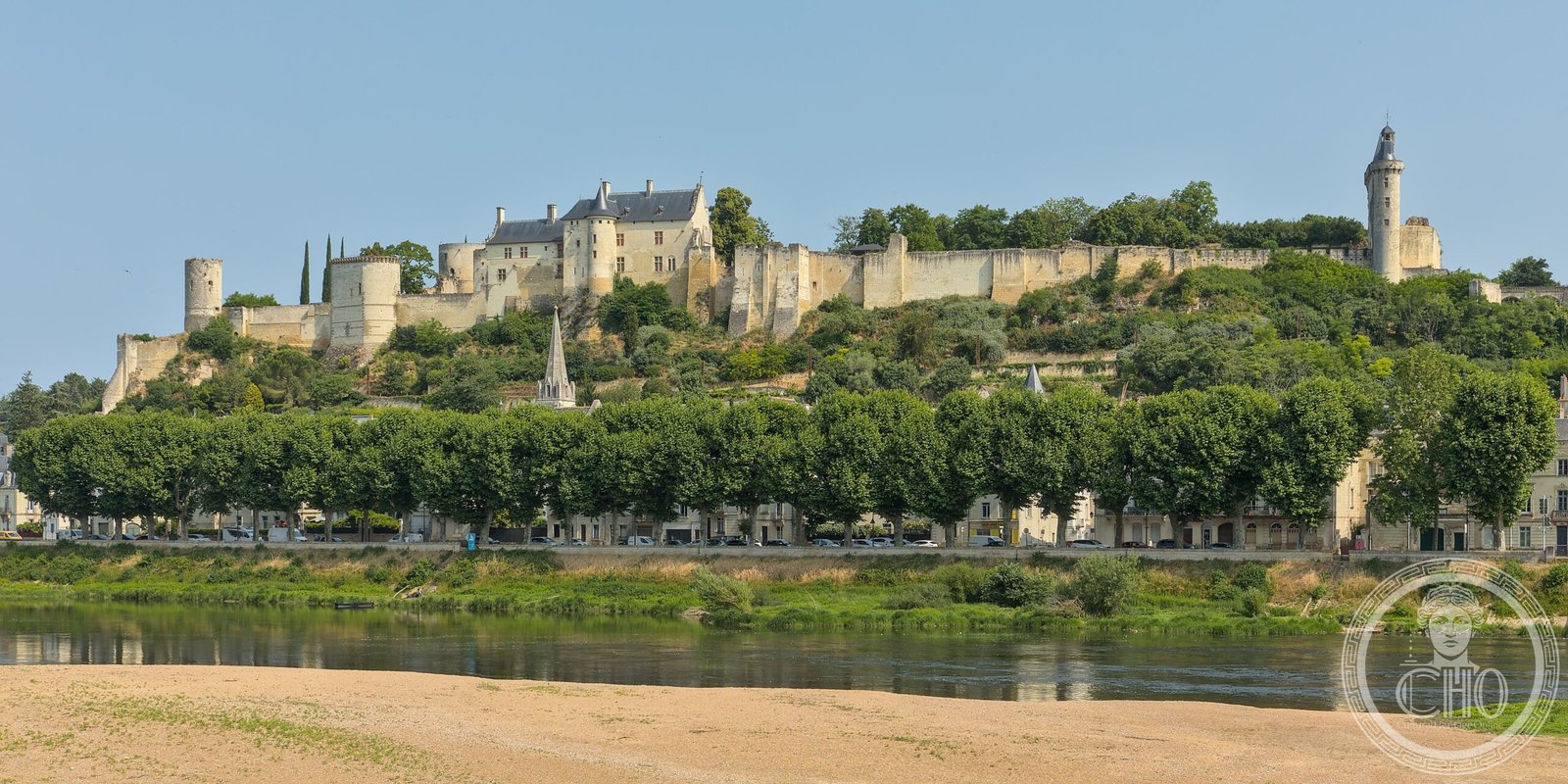
A fortress that shaped dynasties, Château de Chinon rose on the Vienne’s north bank as the favoured seat of English kings and the instrument of French power. Now restored, it stands as one of France’s most commanding medieval monuments.
At a glance
This hilltop stronghold dominates the Loire Valley landscape near the town of Chinon. Founded in the 11th century and reshaped through centuries of war and statecraft, the château shifted from royal residence to strategic fortress to prison to ruin—and finally, in modern times, to museum and heritage landmark.
History
Theobald I, Count of Blois, founded Chinon, which passed to the counts of Anjou by the 11th century. In 1156, Henry II of England seized it from his brother Geoffrey after Geoffrey’s second rebellion. Henry made it his preferred residence and was responsible for most of the surviving structures; he died there in 1189.
French King Philip II besieged and captured Chinon in 1205, ending English rule. The castle remained French thereafter. When Philip IV persecuted the Knights Templar in the early 14th century, leading members of the order were imprisoned within its walls.
Charles VII used it as a royal residence in the 15th century. By the second half of the 16th century it served as a prison, then fell into abandonment and decay. The French Ministry of Culture recognized it as a historic monument in 1840. A major restoration began in the early 21st century, costing €14.5 million.
What you see
The standing masonry bears the mark of Henry II’s 12th-century reign, when the fortress was substantially rebuilt. Its layout reflects medieval military engineering—defensive walls, towers, and chambers built into the rocky outcrop above the Vienne.
Cultural significance
Chinon embodies the contested history of medieval France and England. As the seat where Henry II held court, it witnessed the power of the Angevin dynasty at its height. Its transformation into a French stronghold symbolized Philip II’s triumph in recovering lost English territories in France. The imprisonment of Templars connected it to one of Europe’s most dramatic religious and political conflicts.
Key facts
- Country: France
- City: Chinon, Indre-et-Loire
- Founded: 11th century
- Coordinates: 47.1681°N, 0.2361°E
- Ownership: Indre-et-Loire General Council
- Status: Monument historique (1840); contains a museum
Practical information & getting there
The château is open to the public as a museum and major tourist attraction. It is located on the north bank of the river Vienne in central France. For current hours, admission fees, and accessibility details, consult the site directly or local tourism resources.
Sources & resources
Find it on the map
See this place and what’s around it →📷 Become a Cultural Heritage Online photographer
Share your photos of places: they stay published under your name as the author. The more they're seen, the more you get noticed — and soon a contest will reward the most appreciated photos.
Log in or sign up free to add a photoIs this page about you?
This page is read by travellers and heritage enthusiasts who find it on Google. Tell us how you are connected to this place and we will take it from there.