
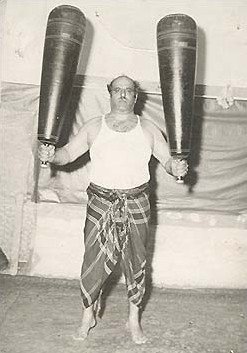
An ancient Iranian system of martial arts, strength training and ritual movement performed in sacred domed spaces, blending pre-Islamic tradition with the spirituality of Persian Shia Islam.
At a glance
Pahlevani and zoorkhaneh rituals represent a living martial tradition that has trained warriors and athletes in Iran for centuries. Performed in a domed gymnasium called a zurkhāneh, the practice combines calisthenics, wrestling, and rhythmic movement set to music. It remains a vital expression of Iranian identity, drawing on both ancient Persian culture and Islamic spirituality.
Origins & history
This system of athletics originated in Iran as a method to prepare warriors for combat and physical endurance. It draws from elements of pre-Islamic and post-Islamic Iranian culture—including Zoroastrianism and Gnosticism—integrated with the spirituality of Persian Shia Islam and Sufism. The practice was introduced to Iraq by Iranian immigrants in the mid-19th century, where it persisted until the 1980s. Zoorkhanehs have also appeared in Azerbaijan and Afghanistan.
The practice
Training takes place in the zurkhāneh, a traditionally domed structure that serves as the heart of the community. Sessions consist mainly of ritual gymnastic movements performed with precision and grace, accompanied by live music. A master drummer keeps rhythm on the traditional dohol while participants move through sequences of calisthenics and strength exercises. The training climaxes with koshti pahlavāni, a distinctive folk wrestling style that represents the martial core of the tradition. Participants wear traditional leather vests and move with deliberate, controlled gestures that echo both combat preparation and spiritual devotion.
Cultural significance
Pahlevani rituals embody the Iranian ideals of heroism, moral strength and spiritual discipline. The practice transmits values of courage and community solidarity across generations, linking modern practitioners to ancient Persian warrior culture. Within the zurkhāneh, social bonds strengthen through shared exertion and ritual participation. The tradition also preserves a distinctive form of folk knowledge about human movement, strength conditioning and the integration of body and spirit.
Key facts
- Primary location: Tehran, Iran (35.68878°N, 51.39466°E)
- UNESCO Intangible Cultural Heritage list, reference 00378
- Practice type: Martial arts, calisthenics, strength training and ritual movement
- Performance space: The zurkhāneh, a domed gymnasium
- Core wrestling style: Koshti pahlavāni (folk wrestling)
- Musical accompaniment: Traditional dohol drumming
Where to experience it
Tehran remains the heartland of pahlevani and zoorkhaneh rituals, where active zoorkhanehs continue to welcome practitioners and observers. The practice is best experienced by visiting a functioning zurkhāneh during training sessions, where you can witness the full ritual of movement, music and community participation firsthand.
Sources & resources
- Pahlevani and Zoorkhaneh Rituals — Wikipedia
- Pahlevani and Zoorkhanei Rituals — UNESCO Intangible Cultural Heritage
- Cultural Heritage Online
Find it on the map
See this place and what’s around it →📷 Become a Cultural Heritage Online photographer
Share your photos of places: they stay published under your name as the author. The more they're seen, the more you get noticed — and soon a contest will reward the most appreciated photos.
Log in or sign up free to add a photo