
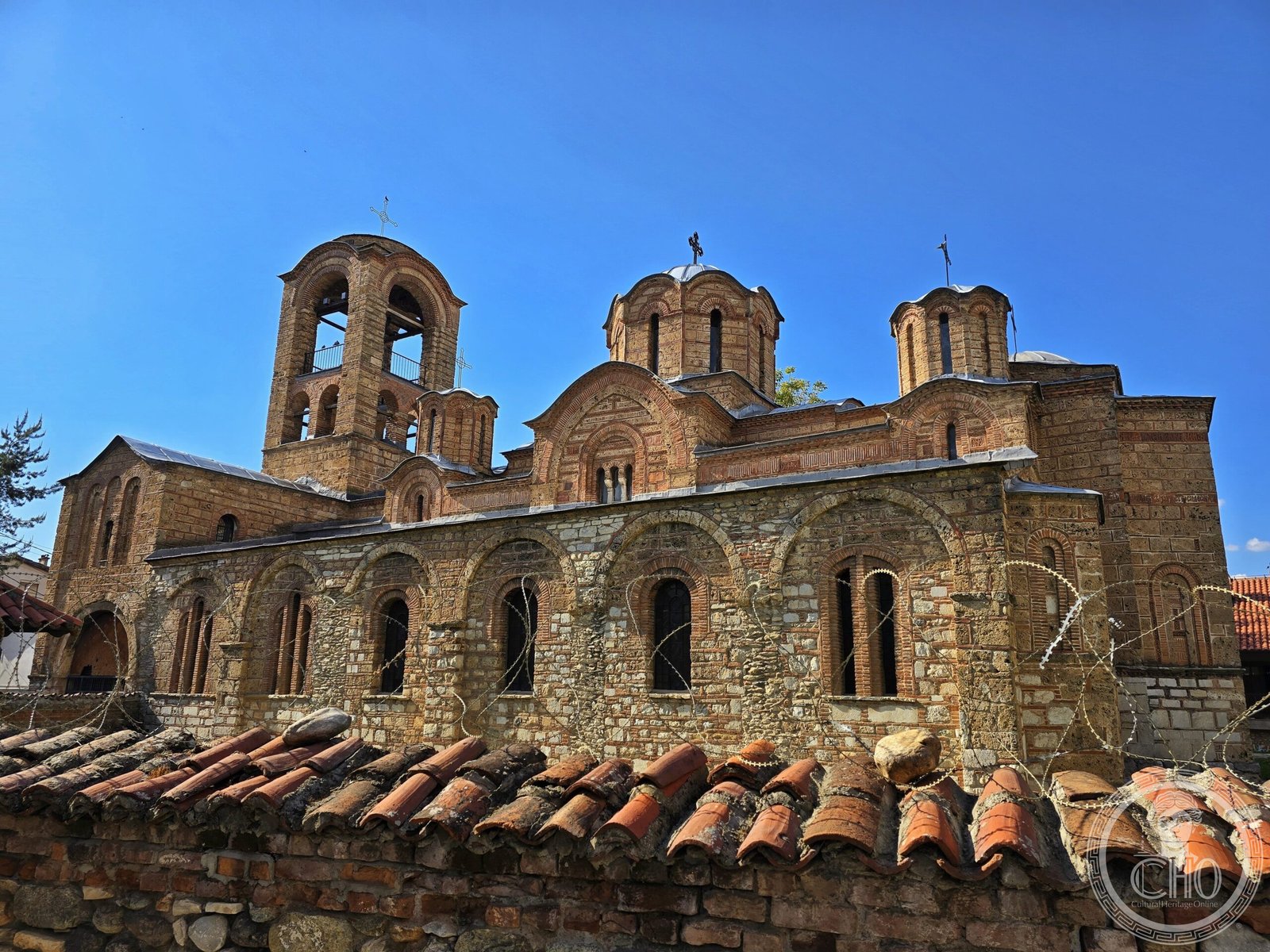
A Serbian Orthodox church transformed by empires, from Byzantine splendour to Ottoman mosque and back again, now a fragile monument to medieval Balkan faith.
At a glance
Our Lady of Ljeviš stands in Prizren as a remarkable palimpsest of religious history. Built in the early 14th century by Serbian King Stefan Milutin, the church bears frescoes by celebrated Byzantine painters Michael and Eutychios Astrapas. Its stone walls have witnessed the rise and fall of empires across six centuries.
History
Stefan Milutin commissioned the church in the early 14th century on the foundations of an earlier Byzantine structure, embedding it within a continuous tradition of Orthodox devotion. Byzantine masters decorated its interior with frescoes of exceptional skill.
Following Ottoman conquest and annexation in the 15th century, the church was converted into a mosque and a minaret was added to the complex. This transformation reflected the religious and political reorganisation of the region. In 1912, Serbian military annexation restored the church’s Orthodox function.
Post-World War II restoration converted it into a museum and extended its preservation. The 2004 Kosovo unrest caused severe damage, prompting ongoing restoration efforts that continue today.
What you see
The church’s architecture synthesises early Serbian Orthodox and Byzantine styles. Its most precious elements are the frescoes by Astrapas, among the finest examples of Byzantine painting. The later minaret remains visible, a physical reminder of Ottoman occupation.
Cultural significance
Our Lady of Ljeviš represents medieval Serbian artistic and spiritual achievement at its height. The Astrapas frescoes rank among the masterworks of late Byzantine painting. UNESCO recognition in 2006, as part of Medieval Monuments in Kosovo, acknowledges the site’s importance to European cultural heritage and the complex history of the Balkans.
Key facts
- Built: early 14th century, commissioned by King Stefan Milutin
- Frescoes by: Michael and Eutychios Astrapas (Byzantine painters)
- Location: Prizren, Kosovo
- Coordinates: 42.21°N, 20.74°E
- UNESCO World Heritage Site: Medieval Monuments in Kosovo (inscribed 2006)
Practical information & getting there
The church is located in Prizren’s old town. Current access and visiting conditions may be affected by ongoing restoration work; verify opening hours and access before planning a visit. The site remains vulnerable and restoration is ongoing.
Sources & resources
Find it on the map
See this place and what’s around it →📷 Become a Cultural Heritage Online photographer
Share your photos of places: they stay published under your name as the author. The more they're seen, the more you get noticed — and soon a contest will reward the most appreciated photos.
Log in or sign up free to add a photoIs this page about you?
This page is read by travellers and heritage enthusiasts who find it on Google. Tell us how you are connected to this place and we will take it from there.