
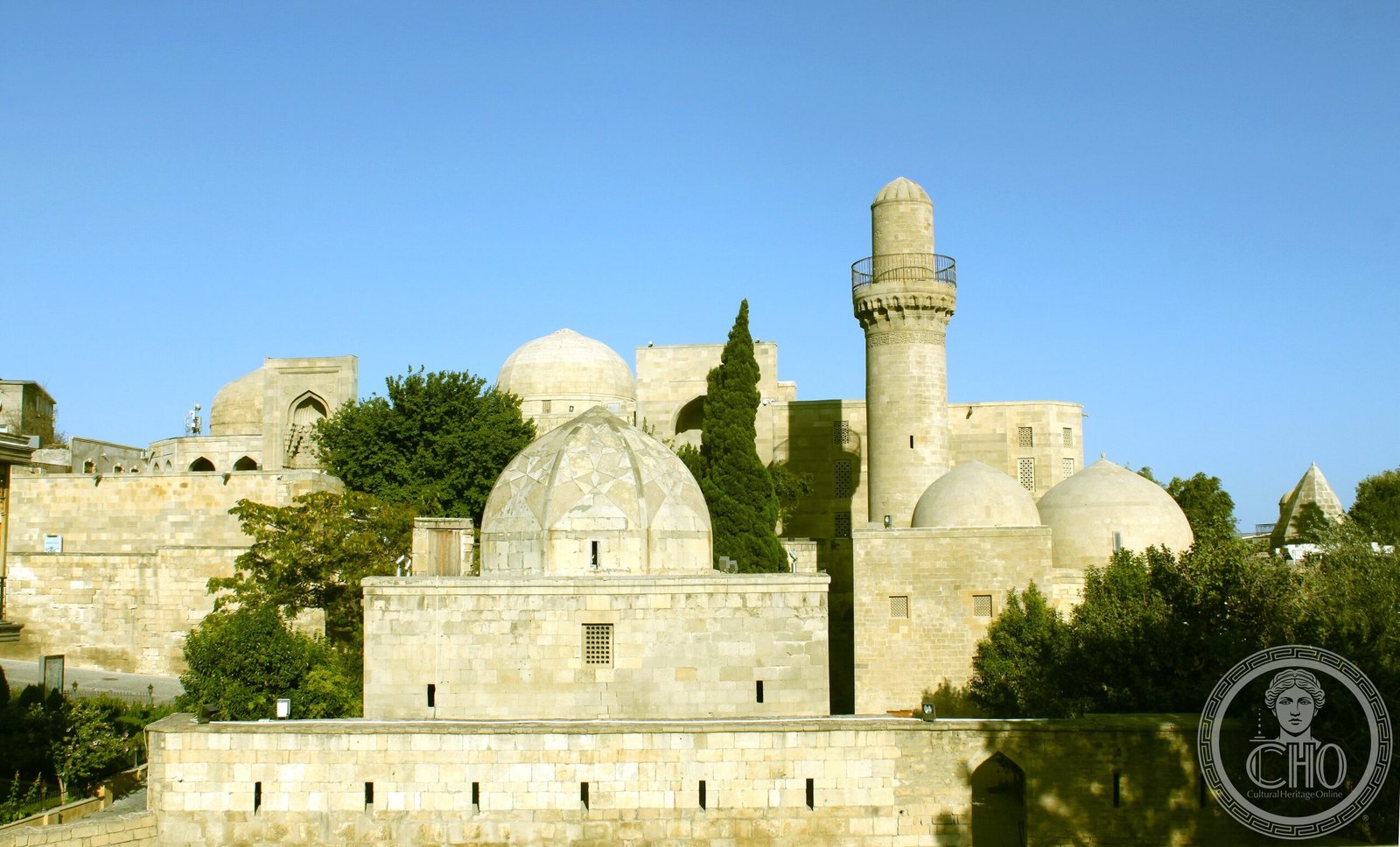
A masterpiece of Shirvan-Absheron architecture, this 15th-century palace complex stands as one of Azerbaijan’s finest monuments, its harmonious ensemble preserved within Baku’s historic Inner City.
At a glance
The Palace of the Shirvanshahs forms the centrepiece of Baku’s Inner City, paired with the Maiden Tower as a UNESCO World Heritage ensemble. Built by the Shirvanshahs, the complex showcases unified architectural principles across structures raised at different periods, all constructed from carefully laid stone masonry.
History
The palace was built in the 15th century under the Shirvanshahs, with construction dates determined from inscriptions on the tomb and minaret bearing the name of ruler Shirvan Khalil. The tomb carries the date 845 (Islamic calendar); the minaret inscription provides corresponding evidence.
Originally fortified by walls and towers, the complex served as the inner stronghold of Baku fortress. By the 1920s, only fragmentary foundation remains were visible on the north-eastern side. The palace was declared a museum-preserve in 1964 and gained UNESCO World Heritage status in 2000 alongside the Maiden Tower and the city’s fortified walls.
What you see
The ensemble comprises several interconnected structures: the main palace building, the Divanhane (council chamber), the Shah’s mosque with minaret, burial vaults, Seyid Yahya Bakuvi’s mausoleum to the south, an eastern portal known as Murad’s gate, a reservoir, and bath-house ruins. All major buildings share identical stone construction and masonry techniques.
The architects employed the traditions of the Shirvan-Absheron school, unifying structures built at different times through consistent scale, rhythm, and proportionality. Cubic volumes, domes, and architectural details create visual cohesion throughout the complex.
Cultural significance
UNESCO describes the palace as “one of the pearls of Azerbaijan’s architecture.” Its significance lies in the harmonious synthesis of religious, administrative, and residential functions within a single fortified complex, demonstrating the architectural sophistication of medieval Shirvan. The palace appears on both the 10,000 manat banknote (1994–2006) and the 10 new manat note issued since 2006, affirming its status as a national symbol.
Key facts
- Country: Azerbaijan
- City: Baku, Inner City
- Coordinates: 40.3661°N, 49.8334°E
- UNESCO status: World Heritage Site (2000)
- Period: 15th century
- Museum status: Declared museum-preserve in 1964
Practical information & getting there
The palace complex is located in Baku’s Inner City (Icherisheher), the historic walled quarter at the heart of the modern capital. As a UNESCO site and state-protected museum, it is open to visitors year-round. For current hours, admission fees, and access conditions, consult official Baku tourism resources or the palace’s official information.
Sources & resources
Find it on the map
See this place and what’s around it →📷 Become a Cultural Heritage Online photographer
Share your photos of places: they stay published under your name as the author. The more they're seen, the more you get noticed — and soon a contest will reward the most appreciated photos.
Log in or sign up free to add a photoIs this page about you?
This page is read by travellers and heritage enthusiasts who find it on Google. Tell us how you are connected to this place and we will take it from there.