
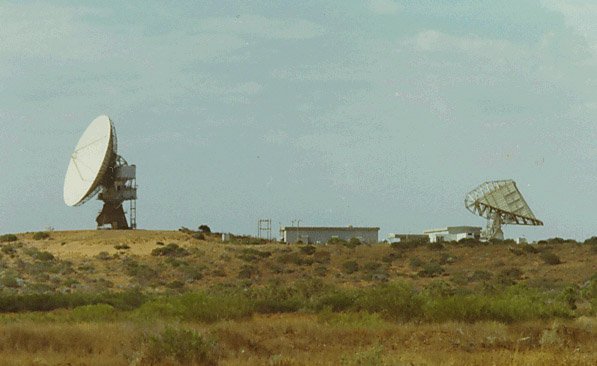
A pioneering communications facility built to support NASA’s Apollo program, this Australian earth station enabled critical real-time transmissions between the agency’s tracking network and mission control in the United States.
At a glance
The OTC Satellite Earth Station Carnarvon stands as a landmark of Cold War-era space infrastructure. Operated by Australia’s Overseas Telecommunications Commission (OTC), it served as the essential link between NASA’s tracking station near Carnarvon, Western Australia and mission control centers in the USA during the Apollo missions.
History
NASA contracted the Overseas Telecommunications Commission to establish an earth station near Carnarvon, recognizing the need for reliable, high-quality communications to support the Apollo program. To enhance this network, NASA also contracted COMSAT to launch three Intelsat-2 communications satellites, creating a coordinated system of ground and orbital infrastructure.
What you see
The station represents the functional design of 1960s telecommunications facilities, built to receive and transmit signals to orbiting satellites with precision and clarity.
Cultural significance
The Carnarvon facility was integral to human spaceflight achievement. It exemplifies Australia’s critical but often overlooked role in the Apollo program—a nation whose remote western location made it strategically vital for tracking spacecraft and maintaining real-time communication with astronauts during their journey to the Moon and beyond.
Key facts
- Country: Australia
- Location: Carnarvon, Western Australia
- Coordinates: 24°52′8″S, 113°42′17″E
- Operated by: Overseas Telecommunications Commission (OTC)
- Function: Apollo program communications relay
Practical information & getting there
The site is located in remote Western Australia, approximately 900 kilometres north of Perth. Carnarvon is accessible by road and commercial flight. For current information on visiting or viewing the facility, contact local tourism services in Carnarvon.
Sources & resources
Find it on the map
See this place and what’s around it →📷 Become a Cultural Heritage Online photographer
Share your photos of places: they stay published under your name as the author. The more they're seen, the more you get noticed — and soon a contest will reward the most appreciated photos.
Log in or sign up free to add a photoIs this page about you?
This page is read by travellers and heritage enthusiasts who find it on Google. Tell us how you are connected to this place and we will take it from there.