
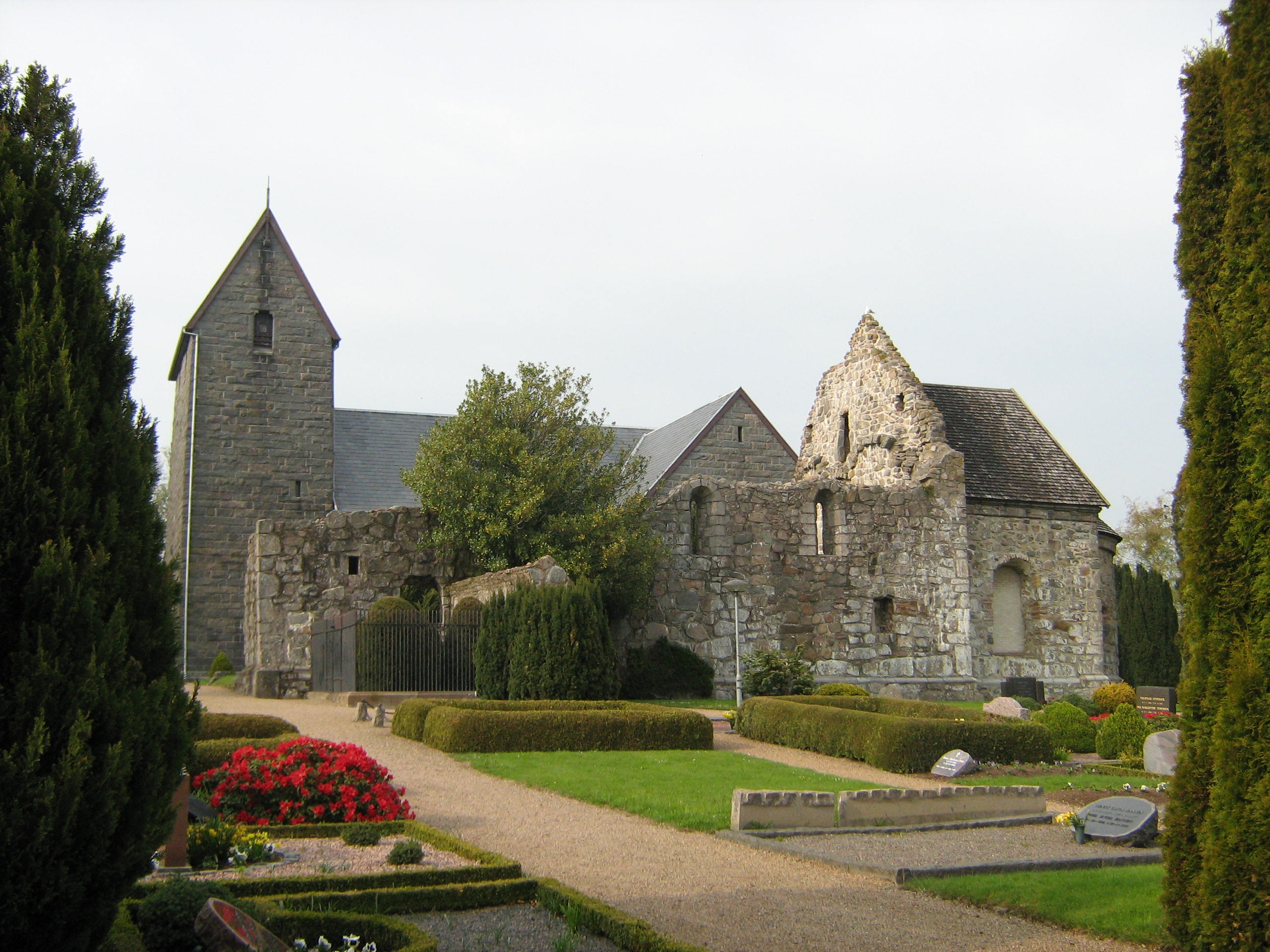
A Romanesque parish church saved from demolition by the discovery of its architectural merit, now representing two centuries of Danish religious building.
At a glance
Østermarie Church stands in the village of Østermarie, near Svaneke on Bornholm. The original structure dates to the early 13th century and exemplifies Romanesque design. A replacement, also Romanesque, was completed in 1891.
History
The church was constructed in the early 13th century as a parish church for the local community. In 1890, as the building faced demolition, work was halted when its considerable architectural interest was recognized. Rather than restore the medieval structure, a new Romanesque church was built on the site, completed in 1891.
What you see
Both the original 13th-century church and its 1891 successor employ Romanesque architectural language, characterized by rounded arches and solid masonry typical of the period. The 19th-century rebuilding preserved stylistic continuity with its medieval predecessor.
Cultural significance
Østermarie Church represents a pivotal moment in Danish heritage conservation. The decision to halt its demolition upon discovery of its architectural value marked an early recognition of medieval craftsmanship worth preserving. The 1891 replacement demonstrates 19th-century respect for historical continuity.
Key facts
- Country: Denmark
- Location: Østermarie, near Svaneke, Bornholm
- Original construction: Early 13th century
- Replacement church: 1891
- Architectural style: Romanesque
- Coordinates: 55.13833333, 15.01611111
Practical information & getting there
Østermarie Church is located in the village of Østermarie on the island of Bornholm. The island is accessible by ferry from mainland Denmark or by air. Consult local tourism resources for current visiting hours and services.
Sources & resources
- Østermarie Church – Wikipedia
- Cultural Heritage Online
Find it on the map
See this place and what’s around it →📷 Become a Cultural Heritage Online photographer
Share your photos of places: they stay published under your name as the author. The more they're seen, the more you get noticed — and soon a contest will reward the most appreciated photos.
Log in or sign up free to add a photoIs this page about you?
This page is read by travellers and heritage enthusiasts who find it on Google. Tell us how you are connected to this place and we will take it from there.