
Each late summer, north Salem’s 185-acre fairgrounds fill with livestock barns, midway lights and the smell of fried food, a ritual Oregon has kept alive almost without interruption since 1862.
At a glance
The Oregon State Fair is the state’s official agricultural and cultural fair, held every August into September. It occupies a purpose-built fairgrounds in north Salem, now managed year-round by the Oregon State Fair & Exposition Center under the Oregon Parks and Recreation Department. The site holds two buildings on the National Register of Historic Places and a heritage oak grove used long before the fair existed.
History
Oregon’s fair tradition grew from local agricultural societies formed as farming expanded in the early nineteenth century. The Oregon Fruitgrowers Association staged an unofficial first fair in 1858, the year still recognized as the anniversary date. County groups merged into the Oregon State Agricultural Society in 1860, and after one year in the Gladstone area, the fair moved to Salem in 1862. Homesteader John Savage donated eight acres for the grounds. Pioneer John Minto paid for the fence around them. The city annexed the fairgrounds in 1921.
The fair has run on that same ground nearly every year since, pausing only in 1905 for Portland’s Lewis and Clark Centennial Exposition and during 1943–44, when the site was leased to the military for bivouac. Arson destroyed several structures just before opening in 1967. Governor Tom McCall insisted the fair proceed anyway, and donated tents and volunteer labor kept it running. Financial troubles led the legislature to hand management to the state parks department in 2006.
What you see
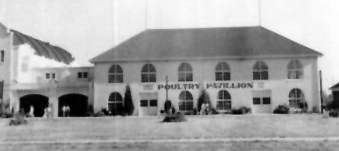
Two survivors anchor the historic core. The 1919 horse stadium is Oregon’s oldest state building still in continuous use. Nearby stands the 1921 poultry building, its exterior decorated with carved chicken-head reliefs, an odd and memorable detail. Both were added to the National Register in 2002 as the Oregon State Fair Stadium and Poultry Building Ensemble.
Newer facilities sit alongside them. The Oregon State Fairgrounds Pavilion, completed in 2004, seats 5,000 and replaced a failing 1929 grandstand and its racetrack; ornaments salvaged from the old grandstand’s facade were worked into the new building. Outdoor concerts happen at the L. B. Day Amphitheatre, named in 1987 for the state senator who championed the fair. Across the street, a 200-year-old grove of Oregon White Oaks was named an Oregon Heritage Tree site in 2007.
Cultural significance
Long before wagons and tents, the oak grove served the Kalapuya as a gathering place for acorn and camas harvesting. Fairgoers later adopted the same grove for camping, a custom that persisted into modern times. The fair itself has stayed the state’s central showcase for crops, livestock, arts and entertainment, adding events like Lucha Libre wrestling in 2007 to a program built over more than a century and a half.
Key facts
- Location: North Salem, Oregon, United States
- Founded (unofficial): 1858; permanent Salem site since 1862
- Site size: 185 acres (0.75 km²)
- Heritage listing: Oregon State Fair Stadium and Poultry Building Ensemble, National Register of Historic Places (2002)
- Notable structures: 1919 horse stadium, 1921 poultry building, 2004 Pavilion (5,000 seats)
- Managed by: Oregon State Fair & Exposition Center, Oregon Parks and Recreation Department
Practical information & getting there
The fair runs annually across late August into September at the Oregon State Fairgrounds in north Salem. You can drive in from Interstate 5 in a matter of minutes, and the grounds sit within easy reach of downtown Salem. Outside of the fair’s run, the Pavilion and Amphitheatre host year-round events, so check the official calendar before visiting off-season.
Sources & resources
Find it on the map
See this place and what’s around it →📷 Become a Cultural Heritage Online photographer
Share your photos of places: they stay published under your name as the author. The more they're seen, the more you get noticed — and soon a contest will reward the most appreciated photos.
Log in or sign up free to add a photoIs this page about you?
This page is read by travellers and heritage enthusiasts who find it on Google. Tell us how you are connected to this place and we will take it from there.